
About Kusumi Morikage
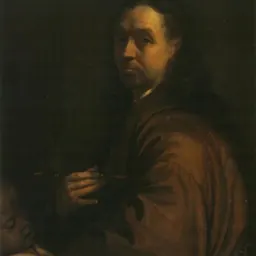
Lived 1620 – 1690 (aged 69–70). Kusumi Morikage was a Japanese painter.
was a Japanese painter of the Edo period. He came from Kaga Province, the centre of the lands of the Maeda clan. He fell afoul of his teacher, Kanō Tan'yū, and became the Maeda clan's official painter. His sympathy for farmers and the poor people of the Edo period is reflected in his works.
Background Little is documented about Morikage's career as an artist. It is apparent, however, that his skills were revered amongst the most talented Kanō pupils. His work was most prominent when he was commissioned as a proficient Kanō painter to paint the Landscape of the Four Seasons. Today, Morikage is best known as the Kanō pupil who departed from the famous school and its rigid beliefs to pursue individual expression. His passion is evident in the transformation of his conservative art style into one that captured cultural values of Edo Japan, ultimately creating art that held social value. Although his artistic career is not well chronicled, Kusumi Morikage can be considered a pioneer who visually conceptualised “rural manners and customs”. Some notable works include: Family Enjoying the Evening Cool, Falconry Folding Screens and Farming in the Four Seasons.
Edo Period
Morikage is best known as a Kanō artist in the Edo period. This period was also known as the Tokugawa period (1603 – 1867), named after its founder, Tokugawa Ieyasu. In this era, Tokugawa created a nation that aimed for economic growth, political stability and social harmony in order to maintain overall peace and national prosperity. In his shogunate, determining that the nation was still susceptible to the influence of external ideas and interventions, Tokugawa implemented a long era of national seclusion to protect his rule from political and religious instability.
However, since it was vital to preserve social order in a way that would continue to sustain the nation and generate economic profit without external affiliations, the shogun tightened the reins on social order and outlawed movement between social classes. These social classes were divided into four groups - warriors, farmers, merchants and artisans, where farmers made up eighty percent of the population and were prohibited from engaging in activities that were non-agricultural. Also known as the Kanō School, this art academy was run by a family of artists who crafted a specific style of art considered to be politically ideal for many generations. It was founded during a period where Chinese cultural ideals were popular. However, under the guidance of Kanō Motonobu, it incorporated the Japanese style of ink painting, thereby transforming it into the “Kanō style”. It is thought that Masanobu implemented this style in order to maintain a favourable political standing with the shoguns of that time. When Morikage was cast out by his master, Kanō Tan’yū, he was appointed as the official painter for the Maeda Clan of the Kaga Province. The artist then became known as the celebrated Kanō school student who left the academy to pursue his desire for individual expression.
Maeda Clan The Maeda Clan was a powerful family from the Kaga Province that stood second in power to the ruling Tokugawa family. They were allies with the Tokugawa family and maintained a stable relationship all throughout the Edo period. As a result, the Kaga Domain also held strong ties with Kanō school's artists. It is thus assumed that Morikage's connection to the Maeda family was formed when he contributed to work on painting the fusuma (sliding door), Landscape of the Four Seasons, in the clan’s family temple, Zuiryuji. For most farmers, rice thus became a symbol of pain and pride, and the ‘sustenance of the Japanese soul’.
Kiyohara Yukinobu Morikage's daughter, Kiyohara Yukinobu (1643 - 1682), developed an artistic reputation that was well-received and recognised by numerous artists at the time. Yukinobu's popularity as an artist was often defined by her elegant style and feminine delicacy in the use of line and colour. Her accomplishments are said to have stemmed from Tan’yū's traditional Kanō teachings, and came to be known as the most celebrated female artist in the Kanō School of Painting. During her time as a Kanō pupil, Yukinobu is said to have later eloped with another student in Tan’yū's atelier.
Hikojuro Also a Kanō student who studied under Tan’yū, Hikojuro was a talented painter who was admonished for frequenting houses of ill reputation, such as the Yoshiwara pleasure quarter, and was eventually exiled to Sado Island after showing hostile behaviour towards another student. However, despite this tumultuous reputation, it's understood that Hikojuro continued to receive commissions for paintings even while in exile due to his faithful mastery of Kanō teachings and traditions.
Notable works Morikage's view of the world was evident in his vivid depictions, including animals rendered with human expressions and plants brought to life with expressive brush strokes. Examining his most notable artworks reveals his ‘rich array of ideas’ and ‘breadth of his artistic terrain’.
Family Enjoying the Evening Cool
Family Enjoying the Evening Cool is Morikage's most notable folding screen painting as it indicates that Morikage depicted happiness in a family structure that was not common at the time. The nuclear family depicted in this painting - a husband, wife and child - reflects major rural familial changes that occurred in the beginning of the seventeenth century. Considered a national treasure, this painting illustrates a peasant family using a combination of fine brushwork, rough brush strokes as well as dilute ink.
Additionally, other than visualising a unique take on rural and familial structures in Edo Japan, it is also proposed that Morikage was inspired by a waka poem by the poet Kinoshita Katsutoshi (1569 - 1649), otherwise known by his pen name, Chōshōshi. Another study observes that the painting is constructed with ‘eremitic recluse ideas that would have been learned in a Chinese style education’, found in motifs such as the gourd. The overall significance of this piece in rendering a peaceful peasant family amidst agricultural crisis prompted its selection for the Tokyo National Museum exhibition in 2001.
Falconry Folding Screens Falconry Folding Screens is regarded as one of the most important pieces by Kusumi Morikage. The painting largely illustrates falconry, while other birds such as swans and cranes are also hunted – depicting a scene that would be common in the Tokugawa family. The realist renditions of the birds and the people on the folding screen appear to be reminiscent of Tan’yū's style. While the screen is adorned with Mitsuba-aoi crests of the Tokugawa family, it also depicts various trees, of which plum trees were often associated with the Maeda family's crest. The artwork is an important piece as it demonstrates a connection between the Maeda and Tokugawa families.
Farming in the Four Seasons screens Painted as a pair of six folding screens, Farming in the Four Seasons depicts rural customs in Japan, representing Morikage's sympathy for the agricultural industry. Peasants are illustrated to be working in the fields to produce crops over the span of four seasons, Spring, Summer, Autumn and Winter. However, the order of the seasons are reversed, showcasing Morikage's art style as a personal touch on a classical subject and reveals a vision that set Morikage apart from other artists of his time.
Gallery
Don’t just read it —
keep it.
Full-length biographies made to live with: read them, listen on the way to work, watch them tonight.
- E-book
- Audio
- Video
Instant download · yours to keep · every purchase keeps this site free
Important facts
more
Bōin, Jūzan Musegai, Kazuhisa, Mugesai, Juzan, Boin, MorikageFamily & relationships
People in Kusumi Morikage's life
Named in this biography and alive at the same time
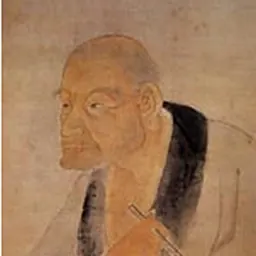
Related people
Same field, nearest in time


Contemporaries
People whose lives overlapped Kusumi Morikage's





Frequently asked questions
Who was Kusumi Morikage?
Japanese artist (1620-1690)
When was Kusumi Morikage born?
Kusumi Morikage was born in 1620 in Ishikawa Prefecture.
When did Kusumi Morikage die?
Kusumi Morikage died in 1690.
What was Kusumi Morikage's occupation?
Kusumi Morikage was a painter.
What nationality was Kusumi Morikage?
Kusumi Morikage was Japanese.
Sources & further reading
Cite this page
APA: Biography.guide. (2026). Kusumi Morikage. https://biography.guide/kusumi-morikage/
MLA: "Kusumi Morikage." Biography.guide, https://biography.guide/kusumi-morikage/.
Chicago: "Kusumi Morikage." Biography.guide. https://biography.guide/kusumi-morikage/.
Data last updated: 2026-09-20 · Spot an error? Report a correction.
Page generated 2026-09-27 05:18 UTC