
About Kurt Pinthus
Lived 1886 – 1975 (aged 89). Kurt Pinthus was a German writer, university teacher, journalist, theatre critic, film critic and literary critic.
Kurt Pinthus (identified sometimes by his pseudonym as Paulus Potter: 29 April 1886 – 11 July 1975) was a German author, journalist, critic and commentator.
Life Provenance and early years Kurt Pinthus was born in Erfurt. He grew up in Magdeburg and Erfurt. His father Louis Pinthus (1852–1912) was a Jewish businessman, who married his mother Bertha Rosenthal (1864–1934) in 1885. Kurt attended the "Königliche Gymnasium" (as it was known at that time), one of the two church-sponsored secondary schools in Erfurt.
The First World War was followed by economic collapse and a succession of revolutionary uprisings in the ports and cities. With thousands of other disillusioned and unemployed former soldiers, Pinthus participated in the Soldiers' Soviet movement. During 1919/20 he compiled and published Menschheitsdämmerung ("The Twilight of humanity"), an anthology of expressionist poetry from 23 poets (of whom six had been killed during the war). The book was originally produced with a small print run by a small publishing firm in 1919, but following a favourable reception was re-published with a larger print-run in 1920 by Rowohlt. The compilation caught the mood of the times and became a standard literary work, acknowledged by commentators as a chronicle of the development of expressionist literature.
Berlin Like his friends Walter Hasenclever and Oskar Kokoschka, in the early summer of 1919 Kurt Pinthus moved to Berlin where he was involved in the postwar refounding of the Rowohlt Publishing Firm. He worked briefly during 1920/21 as a dramaturge at Max Reinhardt's strikingly modernised privately funded and directed theatre in Berlin. The more enduring career that Pinthus built in Berlin during the 1920s was as a critic of stage, literature and film. His contributions appeared regularly in a range of German and international publications, most particularly in "Das Tage-Buch", "Die literarische Welt" and the newly (in 1922) founded "8 Uhr-Abendblatt)". In 1925 he was recruited by Funk-Stunde AG Berlin the first and during this time largest radio broadcaster in Germany, to present a series of literary programmes. His first programme concerned the respected novelist-dramatist Franz Werfel. The series quickly became very popular, and Pinthus continued to work with the broadcaster for eight years, till 1933. As it developed an administrative infrastructure, he became a member of the organisation's literary commission in 1929. It was also in 1929 that he began to lecture regularly at the prestigious Lessing Academy. Pinthus was hugely productive and also, it appears, happy and fulfilled during thin period, attending virtually every new play, film and variety show, a frequent presence at social events, and always surrounded by friends. That ended in 1933. Due to the number of Jewish exiles from Nazi Germany who had already gravitated to the city he found himself with a ready made network of contacts in the literary arts world. Despite having found employment relatively quickly, he nevertheless regularly met with "severe financial problems" for several years. Between October 1941 and the end of 1947 he also held a post as academic consultant in respect of the Theatre Collection at the Library of Congress in Washington, D.C.
Returning to New York, between 1947 and 1961 Kurt Pinthus taught Theatre History at the Columbia University where he accepted a permanent professorship. In 1967 he returned to Germany. Magdeburg and Erfurt, the cities in which he had grown up, had ended up after 1945 administered as part of the Soviet occupation zone, relaunched in October 1949 as the Soviet sponsored German Democratic Republic (East Germany), but the version of Germany in which he now made his home was the US backed German Federal Republic (West Germany). Kurt Pinthus settled at Marbach, known to literary scholars as the birthtown of Friedrich Schiller, and located along the Neckar, the river between Stuttgart and Mannheim. and it was here that Kurt Pinthus worked during his final years. On 27 April 1971 Pinthus marked his eighty-fifth birthday by formally transferring his very considerable personal library to the German Schiller Society. He had acquired most of his collection during the 1920s and 1930s and succeeded in shipping it to New York between December 1937 and May 1938. Reflecting his work as a literary reviewer during the "Weimar years", it includes numerous first editions of volumes that had become very rare thanks to their inclusion in the Nazi book burnings.
Published output (selection) Das Kinobuch, Leipzig: Wolff, 1914 Kriegsabenteuer aus alter Zeit, München: Georg Müller, 1914 Deutsche Kriegsreden, München, Berlin: Georg Müller, 1916 as compiler-producer: Menschheitsdämmerung, Symphonie jüngster Dichtung, Rowohlt, Berlin 1920; second edition: Menschheitsdämmerung – Ein Dokument des Expressionismus, with an important biographical appendix, Rowohlt, Reinbek 1959ff, Der Zeitgenosse, Stuttgart: Klett, 1971
Don’t just read it —
keep it.
Full-length biographies made to live with: read them, listen on the way to work, watch them tonight.
- E-book
- Audio
- Video
Instant download · yours to keep · every purchase keeps this site free
Important facts
People in Kurt Pinthus's life
Named in this biography and alive at the same time


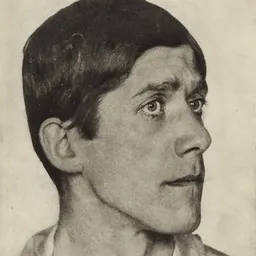

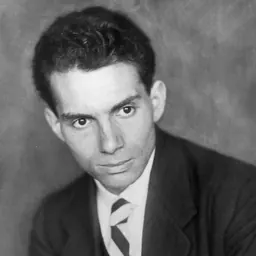
Related people
Same field, nearest in time
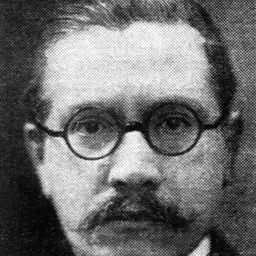


Contemporaries
People whose lives overlapped Kurt Pinthus's



Frequently asked questions
Who was Kurt Pinthus?
German writer (1886–1975)
When was Kurt Pinthus born?
Kurt Pinthus was born on 29 April 1886 in Erfurt.
When did Kurt Pinthus die?
Kurt Pinthus died on 11 July 1975 in Marbach am Neckar.
What was Kurt Pinthus's occupation?
Kurt Pinthus was a writer, university teacher, journalist, theatre critic, film critic and literary critic.
What nationality was Kurt Pinthus?
Kurt Pinthus was German.
Sources & further reading
Cite this page
APA: Biography.guide. (2026). Kurt Pinthus. https://biography.guide/kurt-pinthus/
MLA: "Kurt Pinthus." Biography.guide, https://biography.guide/kurt-pinthus/.
Chicago: "Kurt Pinthus." Biography.guide. https://biography.guide/kurt-pinthus/.
Data last updated: 2026-09-20 · Spot an error? Report a correction.
Page generated 2026-09-27 05:27 UTC