
About Kunihiko Hashimoto
Lived 1904 – 1949 (aged 44). Kunihiko Hashimoto was a Japanese violinist, composer, conductor, music educator and conducting.
(September 14, 1904 – May 6, 1949) was a Japanese composer, violinist, conductor, and musical educator.
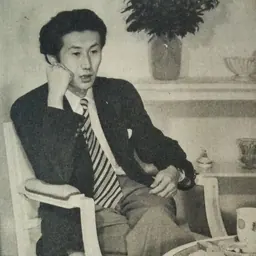
Biography Hashimoto was born in the Hongō district of Tokyo. In 1923, he entered the Tokyo Music School (presently Tokyo National University of Fine Arts and Music) where he studied violin and conducting. In composition, he was largely self-taught, but later he would study that subject as a graduate student at the same school. Initially, he was active as a composer and arranger, but he soon made himself a name as an accomplished teacher, and in 1933 was appointed as professor at his alma mater. Some of his students who would go on to become distinguished composers in their own right were Akio Yashiro, Yasushi Akutagawa, Ikuma Dan, and Toshiro Mayuzumi.
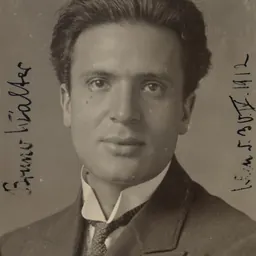
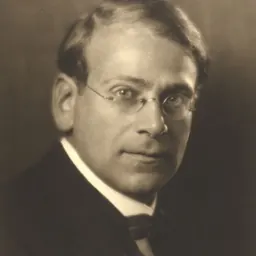
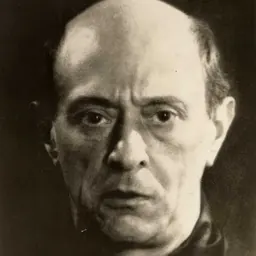
Between 1934 and 1937, he visited Wien as a Japanese government scholar to study with Egon Wellesz. During this period, he was introduced to the likes of Alban Berg, Wilhelm Furtwängler, and Bruno Walter. Before returning, he also made a sojourn to Los Angeles, where he studied with Arnold Schoenberg.
In February 1949, Hashimoto converted to Catholicism. He died at age 44 on May 6, 1949, in Kamakura from gastric cancer.
List of works
Orchestral Three Characteristic Dances for Strings (1927) Scherzo con sentimento (1927/28) Symphony No. 1 in D (1940) Symphony No. 2 in F (1947)
Ballet Hydrangea Otaxa (1927) Yaya the Witch (1927) Yoshida Palace (1931) Heavenly Maiden and Fisherman (1932)
Chamber Etude for Violin and Cello (1930)
Choral Celebrating the Birth of the Prince, Cantata (1934)
Vocal Mould (黴, Kabi) for voice and piano (1928); words by Sumako Fukao (深尾須磨子) Tiger Beetle (斑猫, Hanmyo) for voice and piano (1928); words by Sumako Fukao (深尾須磨子) Cakes and a Girl (お菓子と娘, Okashi-to-Musume) for voice and piano (1928); words by Yaso Saijō (西條八十) Looking at Mount Fuji (富士山見たら, Fujisan-Mitara) for voice and piano (1929); words by Shōji Kubota (久保田宵二) Dance (舞, Mai) for voice and piano (1929); words by Sumako Fukao (深尾須磨子) Rice Planting Song (田植唄, Taue-Uta) for voice and piano (1930); words by Ryuha Hayashi (林柳波) Winter Suite for solo voice and chamber ensemble (1945); words by Sumako Fukao (深尾須磨子) Three Wasan (Three Prayers of Japanese Buddhists) (三つの和讃, Mittsu no Wasan) for solo voice and orchestra (1948)
Don’t just read it —
keep it.
Full-length biographies made to live with: read them, listen on the way to work, watch them tonight.
- E-book
- Audio
- Video
Instant download · yours to keep · every purchase keeps this site free
Important facts
People in Kunihiko Hashimoto's life
Named in this biography and alive at the same time

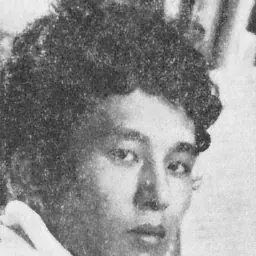

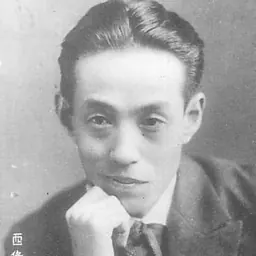
Related people
Same field, nearest in time
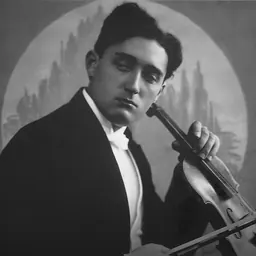

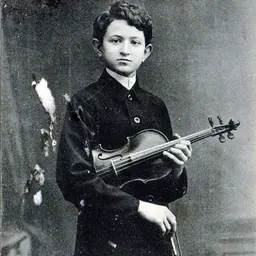


Contemporaries
People whose lives overlapped Kunihiko Hashimoto's





Frequently asked questions
Who was Kunihiko Hashimoto?
Japanese composer (1904–1949)
When was Kunihiko Hashimoto born?
Kunihiko Hashimoto was born on 14 September 1904 in Tokyo, Hongō-ku.
When did Kunihiko Hashimoto die?
Kunihiko Hashimoto died on 6 May 1949 in Kamakura.
What was Kunihiko Hashimoto's occupation?
Kunihiko Hashimoto was a violinist, composer, conductor, music educator and conducting.
What nationality was Kunihiko Hashimoto?
Kunihiko Hashimoto was Japanese.
Sources & further reading
· Wikipedia: Kunihiko Hashimoto
Cite this page
APA: Biography.guide. (2026). Kunihiko Hashimoto. https://biography.guide/kunihiko-hashimoto/
MLA: "Kunihiko Hashimoto." Biography.guide, https://biography.guide/kunihiko-hashimoto/.
Chicago: "Kunihiko Hashimoto." Biography.guide. https://biography.guide/kunihiko-hashimoto/.
Data last updated: 2026-09-25 · Spot an error? Report a correction.
Page generated 2026-09-27 05:12 UTC