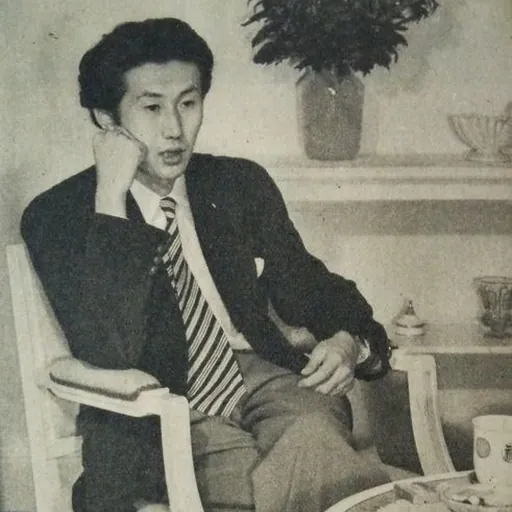
About Ikuma Dan
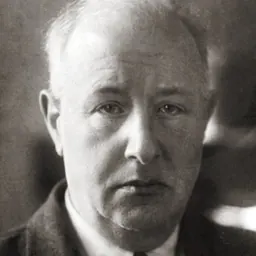
Lived 1924 – 2001 (aged 77). Ikuma Dan was a Japanese conductor, composer, musicologist and essayist.
was a Japanese composer. Dan was born in Tokyo, the descendant of a prominent family, his grandfather Baron Dan Takuma having been President of Mitsui before being assassinated in 1932. He graduated from Aoyama Gakuin and Tokyo Music School in 1946. He studied with teachers including Kosaku Yamada, Kunihiko Hashimoto, Kan'ichi Shimofusa, Saburō Moroi, and Midori Hosokawa.
During his career he completed six symphonies, all recorded and released on the Decca label in Japan, and wrote seven operas as well as a number of filmscores, and many songs. He wrote celebratory music for the Japanese imperial family, actively promoted cultural exchange with China (from 1979 until his death in Suzhou, China, in 2001), and received the commission to write an opera (Takeru) for the 1997 opening of the New National Theatre, Tokyo, Japan's main opera house.
Dan is known in Japan for his 1951 opera Yūzuru (Twilight Crane), which is regularly revived there.
Honors 19th Yomiuri Prize, 1968 Japan Foundation Award, 1998
Works
Stage Yūzuru (Twilight Crane), opera in 1 act, text by Junji Kinoshita, (Osaka, 1952) Kikimimizukin (The Listening Cap), opera in 3 acts, text by Junji Kinoshita (Osaka, 1955) Yōkihi (Yang Guifei), opera in 3 acts, text by Jirō Osaragi (Tokyo, 1958) Futari Shizuka, dance drama (1961) Hikarigoke (Luminous Moss), opera in 2 acts, text by Taijun Takeda (Osaka, 1972) Chanchiki, opera in 2 acts, text by Yoko Mizuki (Tokyo, 1975) Master Flute Player, ballet (1989) Susanō, opera, text by Ikuma Dan (1994) Takeru, opera, text by Ikuma Dan and Kenya Oda (Tokyo, 1997)
Symphonies Symphony No. 1 in A (1948-49/56-57) Symphony à la Burlesque (1954) Symphony No. 2 in B (1955-56/88) Symphony No. 3 (1960) Symphony No. 4 "1965 Kanagawa" (1965) Symphony No. 5 "Suruga" (1965) Sinfonietta (1974) Symphony No. 6 "Hiroshima" for soprano, nohkan, shinobue and orchestra, text by Edmund Blunden (1985) Symphony No. 7 "Jashūmon (Heretics)", text by Hakushū Kitahara - unfinished
Orchestral Dance Suite (1948) Symphonic Poem "Peace Coming" (1948) Orchestral Suite "The Silk Road" (1955) Symphonic Suite "Journey through Arabia" (1958) Symphonic Reportage "Arab" (1958) Grand March "Celebration" for wind orchestra (1959) Overture "Tokyo Olympic" (1963) Festival Overture (1965) Concerto Grosso (1965) Letters from Japan No. 1 (1967) Letters from Japan No. 2 (1968) Letters from Japan No. 3 (1974) Symphonic Poem "Nagasaki" for mixed chorus and orchestra (1974) Fantasia No. 1 for violin and orchestra (1974) Symphonic Poem "Imari" for mixed chorus and orchestra (1979) "Night" for orchestra (1982) Fantasia No. 2 for violin and orchestra (1983) Symphonic Fantasy "The Great Wall of China" (1984) Fantasia all'antica for two violins and string orchestra (1988) Nocturne Et Dance for flute and orchestra (1990) Orchestral Fantasy "Flying Devi" (1991) Grand March "The Royal Wedding" for wind orchestra (1992)
Chamber and instrumental Three Intermezzi for piano (1937–38) String Trio in A minor (1947) Piano Sonata in C (1947) String Quartet in B (1948) Divertimento for piano 4 hands (1949) String Quartet in C (1953) Fantasia No. 1 for violin and piano (1973) "Night" for 12 cellos (1981) 3 Novelettes for piano (1983) Fantasia No. 2 for violin and piano (1983) Fantasia No. 3 for violin and piano (1984) Sonata for flute and piano (1986) Sonata for 4 bassoons (1988) Sonata for violin and piano (1990) "Hagoromo" for flute and harp (1992) Sonata for solo cello (1998) Sonata for bassoon quartet (1988) Sonata for solo violin No. 1 (1998) Sonata for solo violin No. 2 (1999) "Three Letters" for trombone and harp (1999) "Black and Yellow" for solo violin and string quartet (2001)
Vocal , text by Hakushū Kitahara (1945) Five Fragments, text by Hakushū Kitahara (1945) Four Songs by Sakutaro Hagiwara (1948) To the People of Mino, text by Hakushū Kitahara (1950) Three Flowers Songs (1955) Three ko-uta, text by Hakushū Kitahara (1958) Huit morceaux de Cocteau (1962) Chansons Malaises, text by Yvan Goll (2000)
Popular songs , text by Shōko Ema (1947)
Children's songs , text by Ei-ichi Sekine , text by Michio Mado (1952) , text by Michio Mado
Choral works Suite "The Chikugo River" for mixed chorus and piano/orchestra (1968) "Ode to Saikai" for mixed chorus and orchestra (1969)
Film scores Dedication of the Great Buddha (1952) Sword for Hire (1952) An Inlet of Muddy Water (1953) Samurai I: Musashi Miyamoto (1954) Samurai II: Duel at Ichijoji Temple (1955) Samurai III: Duel at Ganryu Island (1956) Rickshaw Man (aka "The Life of Wild Matsu") (1958) Submarine I-57 Will Not Surrender (1959) Storm Over the Pacific (1960) The Twilight Story (1960) The Last War (1961) The Retreat from Kiskaja (1965) Sayonara Jupiter (1984)
Music for the radio The Second Radio taiso (1952)
Don’t just read it —
keep it.
Full-length biographies made to live with: read them, listen on the way to work, watch them tonight.
- E-book
- Audio
- Video
Instant download · yours to keep · every purchase keeps this site free
Important facts
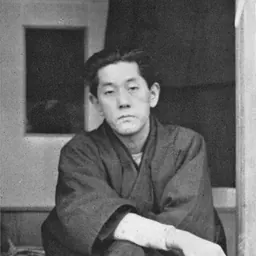
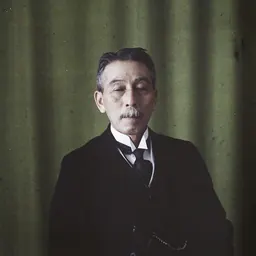
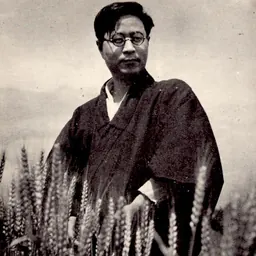
People in Ikuma Dan's life
Named in this biography and alive at the same time




Related people
Same field, nearest in time

Contemporaries
People whose lives overlapped Ikuma Dan's


Frequently asked questions
Who was Ikuma Dan?
Japanese composer, essayist (1924–2001)
When was Ikuma Dan born?
Ikuma Dan was born on 7 April 1924 in Tokyo, Shinjuku.
When did Ikuma Dan die?
Ikuma Dan died on 17 May 2001 in Suzhou.
What was Ikuma Dan's occupation?
Ikuma Dan was a conductor, composer, musicologist and essayist.
What nationality was Ikuma Dan?
Ikuma Dan was Japanese.
Sources & further reading
Cite this page
APA: Biography.guide. (2026). Ikuma Dan. https://biography.guide/ikuma-dan/
MLA: "Ikuma Dan." Biography.guide, https://biography.guide/ikuma-dan/.
Chicago: "Ikuma Dan." Biography.guide. https://biography.guide/ikuma-dan/.
Data last updated: 2026-09-22 · Spot an error? Report a correction.
Page generated 2026-09-27 05:09 UTC