
About Kumi Sugai
Lived 1919 – 1996 (aged 77). Kumi Sugai was a Japanese painter, printmaker, sculptor, calligrapher and graphic artist.
was a Japanese painter and printmaker. Driven by an interest in avant-garde painting, Sugai moved to Paris in 1952 where he quickly attracted critical attention, participating in numerous exhibitions in Paris and abroad. First working in a style resembling informalism or lyrical abstraction, he became affiliated with the Nouvelle École de Paris. During the early 1960s, his artworks radically transformed when he developed a hard-edge abstract style influenced by his interest in automobiles and contemporary urban living. While he did not officially associate himself with any single artistic movement or group, he collaborated on multiple projects with his poet friends, Jean-Clarence Lambert and Makota Ōoka.
Biography
Early life and career in Japan Born in Kobe in 1919 to parents of Malay origin, Sugai's upbringing proved unstable. After being given to an adoptive family, he was later entrusted to his biological parents again, now divorced. Hospitalized for heart failure as a young boy, he remained bedridden for two years. At fourteen, he studied briefly at the Osaka School of Fine Arts but was unable to complete his studies due to his ill health.
Sugai began his career in advertising for the Osaka-Kobe based railway company Hankyu, where he worked from 1937 to 1945. To make ends meet, he illustrated elementary school textbooks. After studying Japanese-style painting (nihonga) with the renowned Nihon Bijutsuin member Teii Nakamura, he became interested in avant-garde painting. In 1957, he illustrated La Quête sans fin, a book of Jean-Clarence Lambert's poems, with his lithographs. That same year, he married a painter Kawamoto Mitsuko, whom he met in Paris. Sugai's style changed drastically after 1962. He abandoned informel-style materiality for matte, crisp surfaces, which ultimately led to his adoption of acrylic paint. The vaguely calligraphic signs that filled the canvases of the late 1950s were replaced by clearly-delineated geometric forms. He also began working on more monumental formats.
A significant catalyst in the development of this new, hard-edge, technological aesthetic was his purchase in 1960 of a Porsche. Between 1964 and 1968, Sugai produced about fifty works, each of which containing the word "Auto" in their titles, including Autoroute de l'après-midi, Autoroute du matin, Festival Autoroute, Autoroute au soleil.
During an interview, Sugai expressed his interest in the universality of road signs and symbols: "On the highway, road signs transmit a clear message that any driver, irrespective of nationality or culture, can grasp in a fraction of a second. In the same way, I only want to use the most direct terms [...] This is why I use basic primary colors." In an essay, the painter Ousami Keiji argued that Sugai's autoroute aesthetic allowed the artist to break away from the stereotypes of japonisme in order to impose his own identity.
In 1967, Sugai and his wife suffered a major car accident while driving at extremely high speeds. While neither were killed, Sugai broke his neck and was hospitalized in Paris. However, this did not keep the artist from getting back on the road, and he soon purchased another Porsche. To aid him in his return to the studio, he hired an assistant, who began helping the artist prepare for his exhibition at the Japanese Pavilion of the Venice Biennale in 1968.
In 1969, Sugai returned to Japan after 18 years of absence, having been commissioned to create a 16-meter long, 3.6 meter high mural in the entryway of the National Museum of Modern Art, Tokyo. Entitled Festival of Tokyo, the mural was the largest work the artist created during his career. Two solo exhibitions in Tokyo and Kyoto were held during his brief stay in Japan, his first ever solo exhibitions in his home country.
From the 1970s onwards, Sugai began working in series, and in 1977 he began focusing mainly on the production of lithographs. He regularly returned to Japan where a large number of retrospectives of his work were held.
In 1981, he created artworks with his longtime friend, the poet Makoto Ōoka. At the occasion of an important retrospective organized in 1983 at the Seibu Museum of Art, Tokyo, the artist and poet reunited to create a work 10 meters long and 1.3 meters high, composed around an illustrated poem.
Sugai was regularly featured in international exhibitions from the 1960s onwards and received numerous prizes. These include the Grand Prix at the 1961 Grenchen International Triennial of Color Printing, the Grand Prix at the 1965 Krakow International Print Biennial, and the Prix d'honneur at the 1972 International Print Biennial in Norway.
In 1996, Sugai returned to Japan to receive the Shiju-Hosho prize, awarded by the Emperor of Japan to individuals with high cultural merit. He died Kobe on May 14 of that same year.
Collections and Selected Exhibitions Sugai's work has been collected by numerous international institutions, including: the Metropolitan Museum of Art, the Solomon R. Guggenheim Museum, the Museum of Fine Arts Boston, the Carnegie Museum of Art, the Art Institute of Chicago, the Brooklyn Museum, the Los Angeles County Museum of Art, the San Francisco Museum of Modern Art, the Walker Art Center, the Victoria and Albert Museum, the Centre Georges Pompidou, the National Museum, Oslo, the Boymans-Van Beuningen Museum, the Neue Nationalgalerie, the Gothenburg Museum of Art, the National Museum of Modern Art, Tokyo, the Bridgestone Museum of Art, the National Museum of Art, Osaka, the National Museum of Modern Art, Kyoto, the Museum of Modern Art, Toyama, the Yokohama Museum of Art, the Hyogo Prefectural Museum of Art, Kobe, and the Shizuoka Prefectural Museum of Art.
Selected solo exhibitions
1954: Galerie Craven, Paris 1959, 1960, 1961, 1962, 1964 : Kootz Gallery, New York 1960: Städtisches Museum, Leverkusen 1967: National Gallery, Oslo 1969: National Art Museum, Kyoto 1976: Maison de la Culture, Orléans 1977: Umeda Museum of Art, Osaka 1983: Retrospective Exhibition 1952-1983, Seibu Museum of Art, Tokyo 1988: Galerie Brusberg, Berlin 1990: Galerie Artcurial, Paris 1992: Ohara Museum of Art, Kurashiki 1997: Travelling exhibition of prints (1955-1995) throughout Japan: Takamatsu, Hamamatsu, Machida, Tendo, Kaga, Ashiya 1999: Kumi Sugaï, les plus grands tableaux de ses dernières années, Japanese cultural House in Paris (French: Maison de la culture du Japon à Paris), Paris, France 2000: Kumi Sugai, Museum of Contemporary Art, Tokyo 2019: Kumi Sugai: The Eternal Challenger, Umi-Mori Art Museum, Hiroshima
Selected group exhibitions
1953: Octobre, Galerie Craven, Paris 1955, 1958, 1961, 1964: Carnegie International Exhibition, Pittsburgh 1959 and 1964: documenta Kassel, West Germany 1959 and 1965: Bienal de São Paulo 1962: École de Paris, Tate Gallery, London 1964: Painting and Sculpture of the Decade, Tate Gallery, London 1966: The New Japanese Painting and Sculpture, MoMA, New York 1967: Participation in the French Pavilion at the Exposition Internationale of Montreal 1968: Painting in France 1900-1967, National Gallery of Art, Washington D.C. 1969: Contemporary Art: Dialogue between the East and the West, National Museum of Modern Art, Tokyo 1970: Participation in Expo '70, Osaka 1979: Contemporary Art/Postwar, Museum of Modern Art, Kamakura 1986: Japon des avant-gardes, Centre Pompidou, Paris 2022: Modernités cosmiques, Fondation Vaserely, Aix-en-Provence
Don’t just read it —
keep it.
Full-length biographies made to live with: read them, listen on the way to work, watch them tonight.
- E-book
- Audio
- Video
Instant download · yours to keep · every purchase keeps this site free
Important facts
People in Kumi Sugai's life
Named in this biography and alive at the same time
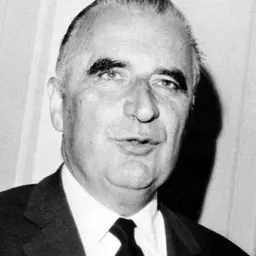

Related people
Same field, nearest in time

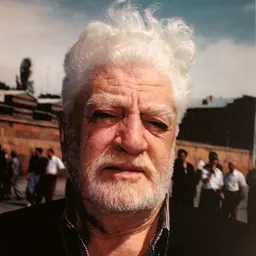
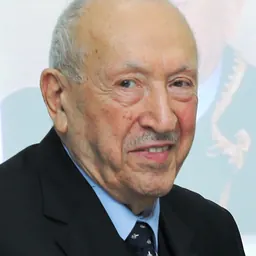
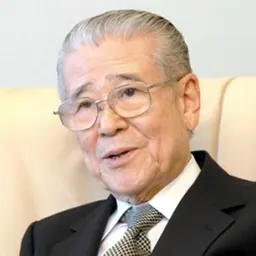
Contemporaries
People whose lives overlapped Kumi Sugai's




Frequently asked questions
Who was Kumi Sugai?
Japanese painter, sculptor and printmaker (1919–1996)
When was Kumi Sugai born?
Kumi Sugai was born on 13 March 1919 in Kobe.
When did Kumi Sugai die?
Kumi Sugai died on 14 May 1996 in Kobe.
What was Kumi Sugai's occupation?
Kumi Sugai was a painter, printmaker, sculptor, calligrapher and graphic artist.
What nationality was Kumi Sugai?
Kumi Sugai was Japanese.
Sources & further reading
Cite this page
APA: Biography.guide. (2026). Kumi Sugai. https://biography.guide/kumi-sugai/
MLA: "Kumi Sugai." Biography.guide, https://biography.guide/kumi-sugai/.
Chicago: "Kumi Sugai." Biography.guide. https://biography.guide/kumi-sugai/.
Data last updated: 2026-09-22 · Spot an error? Report a correction.
Page generated 2026-09-27 05:20 UTC