
About Kumaran Asan
Lived 1873 – 1924 (aged 50). Kumaran Asan was an Indian writer and poet.
Mahakavi Kumaran Asan (12 April 1871 – 16 January 1924) was a poet of Malayalam literature, Indian social reformer and philosopher. He is known to have initiated a revolution in Malayalam poetry during the first quarter of the 20th century, transforming it from the metaphysical to the lyrical and his poetry is characterised by its moral and spiritual content, poetic concentration and dramatic contextualisation. He is one of the modern triumvirate poets of Kerala and a disciple of Narayana Guru. In 1922, the Madras university awarded him the prefix "Mahakavi" which means "great poet".
Biography Kumaran Asan (standing right) with Narayana Guru (seated middle). Asan was born on 12 April 1873, in a merchant family belonging to Ezhava community in Kayikkara village, Chirayinkeezhu taluk, Anchuthengu Grama Panchaayath in Travancore to Narayanan Perungudi, a polyglot well versed in Malayalam and Tamil languages, and Kochupennu as the second of their nine children. His early schooling was at a local school by a teacher by name, Udayankuzhi Kochuraman Vaidyar, who taught him elementary Sanskrit after which he continued his studies at the government school in Kayikkara until he was thirteen. Subsequently, he joined the school as a teacher in 1889 but had to quit as he was not old enough to hold a government job. It was during this time, he studied the verses and plays of Sanskrit literature. Later, he started working as an accountant at a local wholesale grocer in 1890, the same year he met Shree Narayana Guru and became the spiritual leader's disciple.
Narayana Guru's influence led Asan to spiritual pursuits and he spent some time at a local temple, in prayers and teaching Sanskrit. He returned to Aruvippuram in 1900. The same year, he founded Vivekodayam, a literary journal in Malayalam, and assumed its editorship. Under his leadership, the magazine became a monthly from a bi-monthly. In 1913, he was elected to the Sree Moolam Popular Assembly (Sri Moolam Praja Sabha), He relinquished the position at SNDP in 1919 and a year later, took over the editorship of Pratibha, another literary magazine In 1921, he started a clay tile factory, Union Tile Works, in Aluva but when it was found that the factory was polluting the nearby palace pond, he shifted the project to a site near Aluva river and handed over the land to SNDP for building an Advaitashramam. Later, he moved to Thonnakkal, a village in the periphery of Thiruvananthapuram, where he settled with his wife.
Asan married Bhanumathiamma, the daughter of Thachakudy Kumaran Writer in 1917.
Death Asan died on 16 January 1924, after a boat named Redeemer carrying him capsized in the Pallana river in Alappuzha. His body was recovered after two days and the place where his mortal remains were cremated is known as Kumarakodi.
Legacy Remove the bonds of your effete tradition / Or it will ruin you within your own selves, Excerpts from Duravastha - Kumaran Asan Some of the earlier works of the poet were Subramanya Sathakam and Sankara Sathakam, which were devotional in content but his later poems were marked by social commentary. He published Veena Poovu (the fallen flower) in December 1907 in Mithavadi of Moorkoth Kumaran which went on to become a literary classic in Malayalam; its centenary was celebrated in 2017 when a book, Veenapoovinu 100 was published which carried an introduction by M. M. Basheer and an English translation of the poem by K. Jayakumar. Prarodanam, an elegy, mourning the death of his contemporary, friend and grammarian, A. R. Raja Raja Varma, Khanda Kavyas (poems) such as Nalini, Leela, Karuna, Chandaalabhikshuki, Chinthaavishtayaaya Seetha, and Duravastha are some of his other major works. Besides, he wrote two epics, Buddha Charitha in 5 volumes and Balaramayanam, a three-volume work.
Honours In 1958, when Joseph Mundassery was the Minister of Education, the Government of Kerala acquired Asan's house in Thonnakkal and established the Kumaran Asan National Institute of Culture (Kanic), as a memorial for the poet, the first instance in Kerala history when the government took over a poet's property to convert it into a memorial. It houses an archives, a museum and a publications division. Asan Memorial Association, a Chennai-based organization, has built a memorial at Kayikkara, the birthplace of the poet. They have also instituted an annual award, Asan Smaraka Kavitha Puraskaram, for recognising excellence in Malayalam poetry. The award carries a cash prize of 30,000 and Sugathakumari, O. N. V. Kurup, K. Ayyappa Panicker and K. Satchidanandan are some of the recipients of the award. Asan Memorial Senior Secondary School is a CBSE affiliated higher secondary school run by Asan Memorial Association. The India Post issued a commemorative postage stamp depicting Asan's portrait in 1973, in connection with his birth centenary.
Works
Major works Year Work Remarks1907 Veena Poovu (The Fallen Flower) Asan scripted this epoch-making poem in 1907 during his sojourn in Jain Medu, Palakkad. A highly philosophical poem, 'Veena Poovu' is an allegory of the transience of the mortal world, which is depicted through the description of the varied stages in the life of a flower. Asan describes in such detail about its probable past and the position it held. It is an intense sarcasm on people on high powers/positions finally losing all those. The first word Ha, and the last word Kashtam of the entire poem is often considered as a symbolism of him calling the world outside Ha! kashtam (How pitiful). 1911 Nalini It is a love poem, which details the love between Nalini and Diwakharan. 1914 Leela A deep love story in which Leela leaves Madanan, her lover and returns to find him in forest in a pathetic condition. She thus realises the fundamental fact Mamsanibhadamalla ragam (true love is not carnal) 1919 Prarodanam (Lamentation) An elegy on the death of A. R. Rajaraja Varma, a poet, critic and scholar; similar to Percy Bysshe Shelley's Adonaïs, with a distinctly Indian philosophical attitude. An exploration of womanhood and sorrow, based on the plight of Sita of Ramayana. 1922 Duravastha (The Tragic Plight) A love story depicting the relationship between Savithri, a Namboothiri heiress and Chathan, a youth from a lower caste. A political commentary on 19th and early 20th century Kerala. 1922 Chandaalabhikshuki This poem, divided into four parts and consisting of couplets, describes an untouchable beggar-woman" (also the name of the poem) who approaches Lord Ananda near Sravasti. 1923 Karuna (compassion) The story of Vasavadatta, a devadasi, and Upagupta, a Buddhist monk. Tells the story of sensory attraction and its aftermath.
Other works A statue of Kumaran Asan in front of the University of Kerala located in Thiruvananthapuram.
Kumaran Asan also wrote many other poems. Some of these poems are listed in the book Asante Padyakrthikal under the name "Mattu Krthikal" (Other Works):
Sadaachaarasathakam Sariyaaya Parishkaranam Bhaashaaposhinisabhayodu Saamaanyadharmangal Subrahmanyapanchakam Mrthyanjayam Pravaasakaalaththu Naattile Ormakal This is another collection of poems that come from various letters Kumaran Asan wrote over the course of several years. None of the poems were longer than thirty-two lines. Koottu Kavitha
The other poems are lesser known. Only a few of them have names:
Kavikalkkupadesam Mangalam Oru Kathth This is another one of Asan's letter-poems. Randu Aasamsaapadyangal
poems or stories which are written by kritikal 1. Leela 2. veenpuv 3. nlene 4. kruna 4. parodnam
Prose
Translations
Works on Asan
Don’t just read it —
keep it.
Full-length biographies made to live with: read them, listen on the way to work, watch them tonight.
- E-book
- Audio
- Video
Instant download · yours to keep · every purchase keeps this site free
Important facts
People in Kumaran Asan's life
Named in this biography and alive at the same time
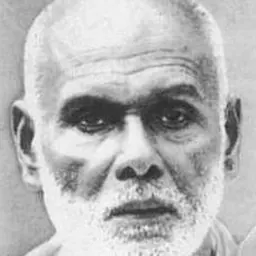
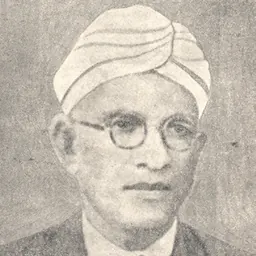

Related people
Same field, nearest in time





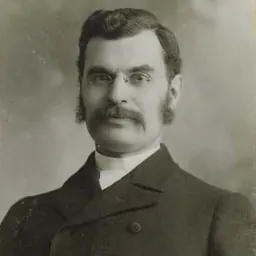
Contemporaries
People whose lives overlapped Kumaran Asan's

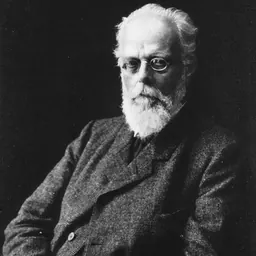

Frequently asked questions
Who was Kumaran Asan?
Indian writer (1873–1924)
When was Kumaran Asan born?
Kumaran Asan was born on 12 April 1873 in Chirayinkeezhu taluk, Thiruvananthapuram.
When did Kumaran Asan die?
Kumaran Asan died on 16 January 1924 in Pallana, Kerala.
What was Kumaran Asan's occupation?
Kumaran Asan was a writer and poet.
What nationality was Kumaran Asan?
Kumaran Asan was Indian.
Sources & further reading
Cite this page
APA: Biography.guide. (2026). Kumaran Asan. https://biography.guide/kumaran-asan/
MLA: "Kumaran Asan." Biography.guide, https://biography.guide/kumaran-asan/.
Chicago: "Kumaran Asan." Biography.guide. https://biography.guide/kumaran-asan/.
Data last updated: 2026-09-20 · Spot an error? Report a correction.
Page generated 2026-09-27 05:33 UTC