
About Krishna Raja Wadiyar IV
Lived 1884 – 1940 (aged 56). Krishna Raja Wadiyar IV was an author.
Krishnaraja Wadiyar IV (4 June 1884 – 3 August 1940) was the twenty-fourth Maharaja of Mysore, reigning from 1902 until his death in 1940.
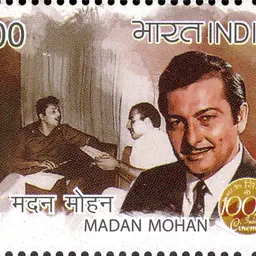
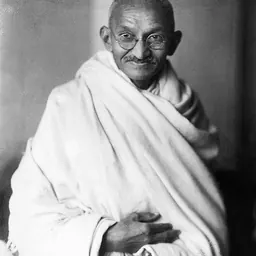
Krishnaraja Wadiyar IV is popularly deemed a rajarshi, or 'saintly king', a moniker with which Mahatma Gandhi revered the king in 1925 for his administrative reforms and achievements. He was a philosopher king, seen by Paul Brunton as living the ideal expressed in Plato's Republic. Herbert Samuel compared him to Emperor Ashoka. Acknowledging the maharaja's noble and efficient kingship, John Sankey declared in 1930 at the first Round Table Conference in London, "Mysore is the best administered state in the world". He is often regarded as the "father of modern Mysore" and his reign the "golden age of Mysore". Madan Mohan Malaviya described the maharaja as "dharmic" (virtuous in conduct). John Gunther, the American author, heaped praise on the king. In an obituary, The Times called him "a ruling prince second to none in esteem and affection inspired by both his impressive administration and his attractive personality".
At the time of his death, Krishnaraja Wadiyar IV was one of the world's wealthiest men, with a personal fortune estimated in 1940 to be worth US$400 million, equivalent to $7 billion in 2018 prices.
Early years
The maharaja had his early education and training at Lokaranjan Palace in Mysore under the direction of P. Raghavendra Rao. In addition to Western studies, he was instructed in Kannada and Sanskrit. He was taught horse-riding and Indian and Western classical music. His early administrative training was imparted by Sir Stuart Fraser of the Bombay Civil Service. The study of the principles of jurisprudence and methods of revenue administration was supplemented by extensive tours of the state during which he gained immense knowledge of the nature of the country which he was later to govern.
Reign
Accession Shortly after the death of his father Maharaja Chamarajendra Wadiyar X on 28 December 1894, Krishnaraja Wodeyar IV, still a boy of eleven, ascended the throne on 1 February 1895. His mother Maharani Kemparajammanni Devi ruled as queen regent until Krishnaraja Wodeyar IV took over on 8 February 1902. The yuvaraja was invested as the Maharaja of Mysore, with full ruling powers, by George Curzon, the Governor-General of India, on 8 August 1902 at a ceremony at Jaganmohana Palace.
Government
Mysore became the first Indian state to have a representative assembly, Mysore Representative Assembly, a democratic forum in 1881. During the maharaja's reign, the assembly was enlarged and became bicameral in 1907 with the creation of the Mysore Legislative Council, a house of elders which introduced much new legislation for the state.During the maharaja's reign, the Kingdom of Mysore witnessed development in a range of fields. Mysore became the first Indian state to generate hydroelectric power in Asia, and Bangalore was the first Asian city to have street lights, first lit on 5 August 1905. Princes from other sections of India were sent to Mysore for administrative training.
Reforms The maharaja worked towards alleviating poverty and improving rural reconstruction, public health, industry and economic regeneration, education and the fine arts. He abolished child marriage (for girls below the age 8), gave special importance for girls' education, and offered scholarship for widowed women.
At a time when support for domestic products was pivotal for India's self-reliance and eventual independence from British India, the maharaja encouraged spinning at scale, for which Gandhi greatly praised him.
Education and arts Krishnaraja Wodeyar IV in 1911Krishnaraja Wodeyar IV set up numerous educational infrastructures and institutions. Krishnaraja Wadiyar was the first chancellor of Banaras Hindu University (whose co-founder he also was) and the University of Mysore (whose founder he was). The latter was the first university chartered by an Indian province. The Indian Institute of Science at Bangalore, which was initiated during his mother's tenure as regent, functionally started during his reign in 1911 with a gift of 371 acres (1.5 km2) of land and a donation of funds.
The maharaja was a patron of Indian music, both Carnatic and Hindustani, and Western classical music. He was an accomplished musician and, like his predecessors, patronised fine arts. The maharaja was a connoisseur of Carnatic and Hindustani music himself. He played eight musical instruments: flute, violin, saxophone, piano, mridangam, nadaswara, sitar, and veena. Members of the Agra Gharana, including Nattan Khan and Ustad Vilayat Hussain Khan, were guests of the maharajah at Mysore, as were Abdul Karim Khan and Gauhar Jan. Barkatullah Khan was a palace musician from 1919 until his death in 1940.
Asthana Vidwan Kadagathur Seshacharya has written various works and is famous for his contributions towards Sanskrit and Kannada literature. The maharaja also composed many poems in Kannada himself.
Contributions
Personal life
Krishnaraja Wadiyar IV was wedded on 6 June 1900 at Jaganmohan Palace to Maharani Pratapa Kumari Devi of Kathiawar, the youngest daughter of Rana Bane Singh of Vana, Kathiawar (present-day Gujarat State). The wedding — the first marriage alliance between the Mysore royal family and a Rajput house of northern India — was held in a large hall specially built for the occasion in the garden fronting the Jaganmohan Palace, then the family's residence while the new Mysore Palace was still under construction following the 1897 fire. A formal photograph of the Navagali (Fifth Day) ceremony, held during the wedding festivities, shows the young couple seated beneath a canopy in the durbar hall with the British Resident, Col. Robertson, Dewan K. Seshadri Iyer, and senior Mysore nobility in attendance; the photograph is preserved in the British Library's Curzon Collection, part of the "Souvenir of Mysore Album" presented to Viceroy Lord Curzon. Following the ceremonies, the couple were taken through the city in a grand procession on 14 June, contemporary accounts comparing its scale to the annual Dasara procession. The couple had no children. He died of heart attack on 3 August 1940. His nephew Jayachamaraja Wadiyar — son of his brother Kanteerava Narasimharaja Wadiyar — succeeded him as Maharaja.
Krishnaraja Wadiyar IV's mother, the former Regent Maharani Kempananjammanni Devi (centre), with her sons Krishnaraja Wadiyar IV (left) and Kanteerava Narasimharaja Wadiyar (right), and her grandson Jayachamarajendra Wadiyar (seated), who would succeed his uncle as Maharaja in 1940. Circa 1925.
Honours
King George VI Coronation Medal, 1937 King George V Silver Jubilee Medal, 1935 Knight Grand Cross of the Order of the British Empire (GBE), 1917 Bailiff Grand Cross of the Order of St John (GCStJ), 1911 Delhi Durbar Gold Medal, 1911 Knight Grand Commander of the Most Exalted Order of the Star of India (GCSI), 1907 Delhi Durbar Gold Medal, 1903
Honorary doctorates
Honorary Doctorate, University of Mysore, (posthumously in 2011) Honorary Doctorate, Banaras Hindu University (at its 21st convocation held on 28 December 1937)
Memorials
K.R.S. Dam, Mysore; K.R. Circle, Mysore; K.R. Nagara, Mysore K.R. Market, Bangalore; K.R. Pura, Bengaluru K.R. Pete, Mandya
Don’t just read it —
keep it.
Full-length biographies made to live with: read them, listen on the way to work, watch them tonight.
- E-book
- Audio
- Video
Instant download · yours to keep · every purchase keeps this site free
Important facts
Family & relationships
People in Krishna Raja Wadiyar IV's life
Named in this biography and alive at the same time


Related people
Same field, nearest in time




Contemporaries
People whose lives overlapped Krishna Raja Wadiyar IV's


Frequently asked questions
Who was Krishna Raja Wadiyar IV?
King of Mysore (1884–1940)
When was Krishna Raja Wadiyar IV born?
Krishna Raja Wadiyar IV was born on 4 June 1884 in Mysore.
When did Krishna Raja Wadiyar IV die?
Krishna Raja Wadiyar IV died on 3 August 1940 in Bengaluru Palace.
What was Krishna Raja Wadiyar IV's occupation?
Krishna Raja Wadiyar IV was an author.
What nationality was Krishna Raja Wadiyar IV?
Krishna Raja Wadiyar IV's recorded nationality: Kingdom of Mysore.
Sources & further reading
· Wikipedia: Krishna Raja Wadiyar IV
· DBpedia: Krishna Raja Wadiyar IV
Cite this page
APA: Biography.guide. (2026). Krishna Raja Wadiyar IV. https://biography.guide/krishna-raja-wadiyar-iv/
MLA: "Krishna Raja Wadiyar IV." Biography.guide, https://biography.guide/krishna-raja-wadiyar-iv/.
Chicago: "Krishna Raja Wadiyar IV." Biography.guide. https://biography.guide/krishna-raja-wadiyar-iv/.
Data last updated: 2026-09-20 · Spot an error? Report a correction.
Page generated 2026-09-27 05:22 UTC