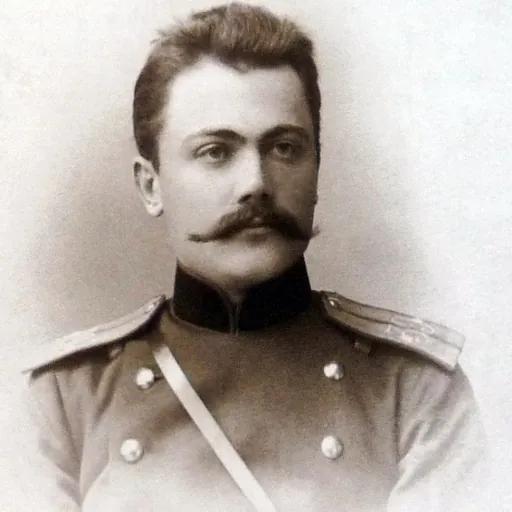
About Kote Abkhazi
Lived 1867 – 1923 (aged 55). Kote Abkhazi was a Russian politician, military personnel, commander and public figure, known for Democratic Republic of Georgia, General-major and Russian Empire.
Prince Konstantine (Kote) Abkhazi (November 17, 1867 – May 20, 1923), was a Georgian military officer, politician and public figure. During the Imperial Russian rule, he was a General-major of Artillery in the tsar's army and in the national army of the Democratic Republic of Georgia (1918), and a recognized leader of the liberal nobility of Georgia. After the Soviet Occupation of Georgia, he emerged as one of the leaders of an underground anti-Soviet, national-liberation movement. One of the founders of the Tbilisi State University in 1918 and Chairman of the Georgian National-Democratic Party in 1921–1923. In 1923, he was arrested and executed by the Soviet security police (so-called "Cheka"). In 2023, he was posthumously awarded the title and Order of National Hero of Georgia.
Early life and career Konstantine (Kote) Abkhazi was born in the village of Kardenakhi, Kakheti (Eastern Georgia), to a wealthy aristocratic family, the son of the General-major of the tsarist Russian army, Prince Nikoloz (Niko) Abkhazi and Princess Nino née Chavchavadze, the sister of an outstanding Georgian writer and public figure Ilia Chavchavadze.
Abkhazi graduated from the Tbilisi Cadet Corps and the St. Petersburg Military Academy and joined the Russian army in 1890. Later, he was actively involved in Georgia's public life and sponsored several social and economic projects, including the construction of the Kakhetian railway between 1906 and 1913. In 1913, he was elected the marshal of nobility of the Tiflis Governorate, but he was called to an active army service with the outbreak of World War I in 1914. Being promoted to major general in 1916, he commanded an artillery brigade from 1914 to 1916. In 1916, he was elected to the State Duma of the Russian Empire for Tiflis.
Revolution Returning to Georgia, he was reelected the marshal and helped found the National Democratic Party of Georgia in 1917. Under his leadership, Georgian nobility declared its property national. Abkhazi was involved in the establishment of Tbilisi State University in February 1918 and in the proclamation of independence of the Democratic Republic of Georgia in May 1918. In 1917–1919 he was a Member of the National Council of Georgia. He became a Chairman of the National-Democratic Party in 1921. Early in 1921, Georgia was invaded and occupied by Soviet Russia's Red Army, forcing the Georgian government to flee the country. Abkhazi stayed in Georgia, however, and joined the underground movement Committee for Independence of Georgia where he headed its Military Center. He guided the organization of guerrilla groups in Pshavi-Khevsureti, and Kakheti (1921–23). However, in March 1923, Abkhazi and 14 other members of the Military Center (Alexander Andronikashvili, Varden Tsulukidze, Colonel Giorgi Khimshiashvili, Rostom Muskhelishvili, Mikheil Zandukeli, Simon Bagration, Parnaoz Karalashvili, Iason Kereselidze, Ivane Kutateladze, Simon Chiabrishvili, Alexandre Machavariani, Elizbar Gulisashvili, Levan Klimiashvili and Dimitri Chrdileli) were arrested by the GPU, and were shot for anti-Soviet activities on May 20, 1923. He is quoted to have said prior to the execution:
Abkhazi's son, Nicholas (1900–1987) and his Shanghai-born spouse Peggy Pemberton Carter (died 1994) moved to Canada and, beginning from 1946, built a well-known "Abkhazi Garden" at Vancouver Island, Victoria, British Columbia.
Don’t just read it —
keep it.
Full-length biographies made to live with: read them, listen on the way to work, watch them tonight.
- E-book
- Audio
- Video
Instant download · yours to keep · every purchase keeps this site free
Important facts
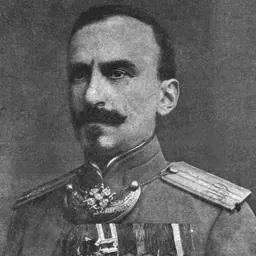
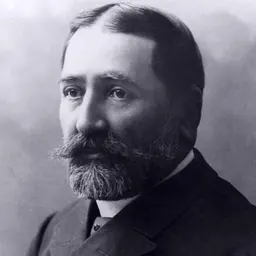
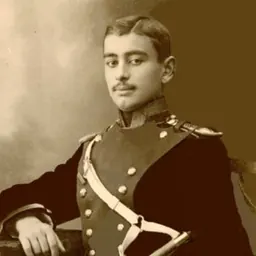
People in Kote Abkhazi's life
Named in this biography and alive at the same time



Related people
Same field, nearest in time





Contemporaries
People whose lives overlapped Kote Abkhazi's



Frequently asked questions
Who was Kote Abkhazi?
Military officer, politician (1867-1923)
When was Kote Abkhazi born?
Kote Abkhazi was born on 25 September 1867 in Kardanakhi.
When did Kote Abkhazi die?
Kote Abkhazi died on 20 May 1923 in Tbilisi.
What was Kote Abkhazi's occupation?
Kote Abkhazi was a politician, military personnel, commander and public figure.
What was Kote Abkhazi known for?
Kote Abkhazi was known for Democratic Republic of Georgia, General-major and Russian Empire.
What nationality was Kote Abkhazi?
Kote Abkhazi was Russian.
Sources & further reading
Cite this page
APA: Biography.guide. (2026). Kote Abkhazi. https://biography.guide/kote-abkhazi/
MLA: "Kote Abkhazi." Biography.guide, https://biography.guide/kote-abkhazi/.
Chicago: "Kote Abkhazi." Biography.guide. https://biography.guide/kote-abkhazi/.
Data last updated: 2026-09-22 · Spot an error? Report a correction.
Portrait: Wikimedia Commons · author & licence
Page generated 2026-09-27 05:03 UTC