
About Kōsuke Koyama
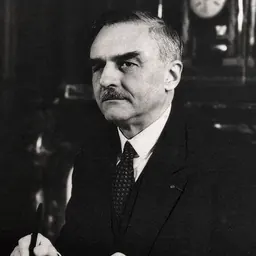
Lived 1929 – 2009 (aged 79). Kōsuke Koyama was a New Zealand theologian.
was a Japanese Protestant Christian theologian.
Biography Koyama was born in Tokyo in 1929, of Christian parents. He later moved to New Jersey in the United States, where he completed his B.D. at Drew Theological Seminary and his Ph.D. at Princeton Theological Seminary, the latter on the interpretation of the Psalms of Martin Luther in 1959.
After teaching at a theological seminary in Thailand, he was the executive director of Association of Theological Schools in Southeast Asia with his office in Singapore from 1968 to 1974, and the editor of Southeast Asia Journal of Theology, and the dean of Southeast Asia Graduate School of Theology. After that he worked as senior lecturer in religious studies at the University of Otago in Dunedin in New Zealand, from 1974 to 1979. He later worked at the Union Theological Seminary in New York City, where he stayed until his retirement in 1996 as John D. Rockefeller Jr. Professor Emeritus of World Christianity. To his close friends and family, he was known as "Ko". Along with Kazoh Kitamori, he is considered one of the leading Japanese theologians of the twentieth century.
Koyama died at a hospital in Springfield, Massachusetts, of pneumonia complicated by oesophagal cancer, on March 25, 2009. His wife Lois died April 13, 2011. He is survived two sons, a daughter, and five grandchildren.
Water Buffalo Theology is probably Koyama's best-known work. The book was partly inspired by Koyama's work as a missionary in Northern Thailand. His works of Mount Sinai and Mount Fuji and Water Buffalo Theology are, in part, an examination of Christian theology within the context of Thai Buddhist society, growing out of Koyama's missionary experience in Thailand. Koyama was an editor of the South East Asia Journal of Theology, for which he himself wrote a considerable number of articles. Koyama published at least thirteen books, including "On Christian Life" (currently available only in Japanese) and over one hundred scholarly articles. Koyama's work has been described as helping to bridge the boundaries between East and West, between Christianity and Buddhist thought, between the rich and the poor. It has been pointed out that he has no overarching system in this theology, which shows commitment to serving a "broken Christ trying to heal a broken world". He was named as an important figure for the development of a world Christianity.
His last work was Theology and Violence: Towards A Theology of Nonviolent Love, published in Japanese in 2009 by Kyobunkwan, a publishing firm in Tokyo.
Works Water Buffalo Theology (1974) Pilgrim or Tourist (1974) Fifty Meditations (1975) No Handle on the Cross: An Asian Meditation on the Crucified Mind. London: SCM Press, 1976. Three Mile an Hour God (1980) Mount Fuji and Mount Sinai (1985)
Don’t just read it —
keep it.
Full-length biographies made to live with: read them, listen on the way to work, watch them tonight.
- E-book
- Audio
- Video
Instant download · yours to keep · every purchase keeps this site free
Important facts
People in Kōsuke Koyama's life
Named in this biography and alive at the same time




Related people
Same field, nearest in time


Contemporaries
People whose lives overlapped Kōsuke Koyama's

Frequently asked questions
Who was Kōsuke Koyama?
Japanese theologian (1929-2009)
When was Kōsuke Koyama born?
Kōsuke Koyama was born on 10 December 1929 in Tokyo.
When did Kōsuke Koyama die?
Kōsuke Koyama died on 25 March 2009 in Springfield.
What was Kōsuke Koyama's occupation?
Kōsuke Koyama was a theologian.
What nationality was Kōsuke Koyama?
Kōsuke Koyama was New Zealand.
Sources & further reading
Cite this page
APA: Biography.guide. (2026). Kōsuke Koyama. https://biography.guide/kosuke-koyama/
MLA: "Kōsuke Koyama." Biography.guide, https://biography.guide/kosuke-koyama/.
Chicago: "Kōsuke Koyama." Biography.guide. https://biography.guide/kosuke-koyama/.
Data last updated: 2026-09-20 · Spot an error? Report a correction.
Page generated 2026-09-27 05:11 UTC