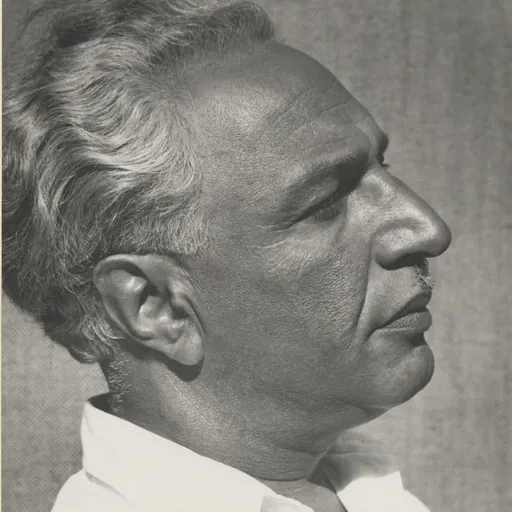
About Kostan Zarean
Lived 1885 – 1969 (aged 84). Kostan Zarean was a Russian poet, novelist, painter, writer and journalist.
Kostan or Gostan Zarian (, sometimes anglicized to Constant; February 8, 1885 – December 11, 1969) was an Armenian writer who produced short lyric poems, long narrative poems of an epic cast, manifestos, essays, travel impressions, criticism, and fiction. The genre in which he excelled, however, was the diary form with long autobiographical divagations, reminiscences and impressions of people and places, interspersed with literary, philosophical and historical meditations and polemics.
Early years
Kostandin Yeghiazarian was born in 1885 in Shamakhi (modern-day Azerbaijan). Through his mother, he was first cousins with the author Alexander Shirvanzade and the actor Hovhannes Abelian. His father, Christopher Yeghiazarov, was a prosperous general in the Russian Army, "a strong man, profoundly Christian and Armenian," who spent most of his life fighting in the mountains of the Caucasus. He died when Zarian was four years old, which prompted his family to move to Baku. He was then separated from his mother and placed with a Russian family, who enrolled him in a Russian gymnasium.
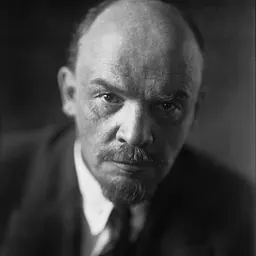
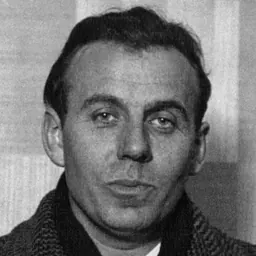
After attending the Russian Gymnasium of Baku, in 1895, when he was ten, he was sent to the College of Saint Germain in Asnières, near Paris. He continued his studies in Belgium, and, after obtaining a doctorate in literature and philosophy from the Free University (Université libre) of Brussels, he spent about a year writing and publishing verse in both French and Russian, delivering lectures on Russian literature and drama, and living a more or less bohemian life among writers and artists. Zarian became involved in the Russian Social Democratic Party, where he became personally acquainted with Vladimir Lenin. After 1909, he was a political exile in Europe, as the tsarist government had reportedly banned his return to the Caucasus because of his revolutionary activities, for which he spent a year and a half in a German jail (1907–08). He published a few poems in Russian in the revolutionary magazine Raduga and contributed to Belgian publications with prose, poems and critical essays in French. Speaking of this period in his life, Zarian wrote: "We used to have cheap food with Lenin in a small restaurant in Geneva, and today, a syphilitic boozer with his feet on a chair and hand on revolver is telling me: 'You counter-revolutionary fanatic nationalist Armenian intellectuals are in no position to understand Lenin.'" In addition to Lenin, Zarian also met and befriended such poets, artists, and political thinkers as Guillaume Apollinaire, Pablo Picasso, Georgi Plekhanov, Giuseppe Ungaretti, Louis-Ferdinand Céline, Paul Éluard, Fernand Léger, as well as the Belgian poet and literary critic Emile Verhaeren. It was Verhaeren who advised him to study his own mother tongue and write in the language of his ancestors if he wanted to reveal his true self. Heeding his advice, Zarian studied Classical Armenian and Modern Armenian with the Mekhitarists on the island of San Lazzaro degli Armeni in Venice (1910–1912), where he also published Three Songs (1915), a book of poems in Italian (originally written in Armenian), one of which, titled La Primavera (Spring), was set to music by Ottorino Respighi and first performed in 1923.
Zarian then moved to Constantinople, which was then the most important cultural center of the Armenian diaspora, though he often travelled between Venice and Constantinople. In 1910 he tried to found a magazine "Les volontés folles" with Hrand Nazariantz and Kegham Parseghian, that was centered on bringing avant-garde literature into the Armenian language, especially strains of Symbolism and Futurism. When leaving Constantinople on the ship S.S. Montenegro in 1912, he met his future wife Takuhi (Rachel) Shahnazarian and married her in Venice on December 4, 1912, before returning to Constantinople with her two months later. In 1914, together with Daniel Varoujan, Hagop Oshagan, Kegham Parseghian, and , he founded the literary periodical Mehian, which means pagan temple in Armenian. This constellation of young firebrands became known as the Mehian writers, and like their contemporaries in Europe—the French surrealists, Italian futurists, and German expressionists—they defied the establishment, fighting against ossified traditions and preparing the way for the new. "In distant cities people argued and fought around our ideas," wrote Zarian, "ignorant school principals had banned our periodical. Well-known scholars looked upon us with suspicion. They hated us but did not dare to say anything openly. We were close to victory..." The tone of the publications in Mehian was politically, aesthetically and religiously radical, with a strong influence from German philology—with Zarian specifically advocating a racialized spiritual worldview that was present in many of his early works of fiction but which later on in his career changed to a purely spiritual weltanschauung centered on the struggle within Armenians between the "Ararat Man" and "Urartu Man."
A year later, the Young Turk government decided to exterminate the entire Armenian population of Turkey. The Armenian genocide that followed claimed 1–1.5 million victims, among them 200 of the most prominent Armenian poets and authors, including two of the Mehian writers, Varoujan and Parseghian. Zarian was able to escape to Bulgaria before the closing of the borders in November 1914, and then to Italy, establishing himself in Rome and later in Florence.
In 1919, as a special correspondent to an Italian newspaper, he was sent to the Middle East and Armenia. He returned to Constantinople in late 1921 and there, together with Vahan Tekeyan, Hagop Oshagan, Schahan Berberian, and Kegham Kavafian, he founded another literary periodical, Partsravank (Monastery-on-a-Hill), in 1922. He also published a second book of poems, The Crown of Days (Istanbul, 1922).
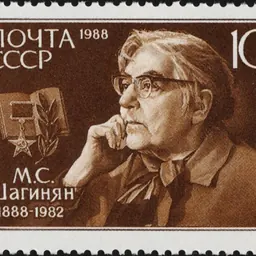
Following the establishment of Soviet rule in Armenia, Zarian moved there and taught comparative literature at the Yerevan State University from 1922 to 1924. Thoroughly disappointed with the Soviet state, in 1924 he again went abroad where he conducted a nomadic existence, living in Paris (where he founded the short-lived French-language periodical La tour de Babel), Rome, Florence, the Greek island of Corfu, the Italian island of Ischia, and New York City. On August 31, 1934, he married his second wife, the American artist . In New York he taught the history of Armenian culture at Columbia University and edited the English-language periodical The Armenian Quarterly (1946) which lasted only two issues, but was the first Armenian studies journal in the United States and published the work of such scholars as Sirarpie Der Nersessian, Henri Grégoire, Giuliano Bonfante, and writers such as Marietta Shaginyan. From 1952 to 1954 he taught history of art at the American University of Beirut (Lebanon). Following an interlude in Vienna and Rapallo, he taught at Berkeley.
Friendship with Lawrence Durrell
The British author Lawrence Durrell and Zarian were friends for many years, exchanging letters between 1937 and 1951 (only twenty-five written by Durrell still exist) in which Durrell addressed Zarian as "Dear Master" and "Chère Maître," and spending time together in Greece and Italy (1937–54), Corfu (1937), Ischia (1950) and Cyprus (1954). They shared a fascination with classical Greek culture and the felt need for an existential reconnection to it via Hellenic culture and geography, self-realization through physical health and spiritual integration. In 1952, Durrell wrote an essay entitled Constant Zarian: Triple Exile in the magazine The Poetry Review in which he wrote that:
It was no conscious choice that made Zarian a classical man—it was the development of a natural style of mind, founded in bitter experience and in a tenacious belief that if man was to be saved from destruction he stood in need of major artists of a new type—responsible men. His own task was no longer to reject, to criticize, to whine—but in the deepest sense of the word, to submerge in the swift currents of history and to give their impulse direction and form. "To endure and contribute"—that was the new motto: and he had never deviated by a hairsbreadth from it in his attitude to his work and his people. He was now a triple exile: exiled by both Czarist and Bolshevik; and doubly exiled from the current of European thought by his choice of language.
In a 1950 poem, Durrell describes Zarian in Ischia:
We came originally here to see A character from Prospero called C. (It stands for Constant) Zarian, Then wild and roguish literary man Who with his painter wife lives on this island, A life romantic as one could in...Thailand. Together we tasted every wine, Most of the girls (I mean the Muses Nine) And some small favours accident affords To such poor chaps as we—as deal in words
You get here by super motor-launch Crowded with chattering girls from Naples O Such animation such colossal brio It makes one feel much younger just to see, At least so Zarian says. (He's sixty-three) He scales a mountain like a wild chamois Despite a certain—bulk—avoirdupois And swears Per Baccho loud as any peasant: Together we've enjoyed a very pleasant Month of mad cookery and writing talk, Such food, such wine—a wonder we can walk.
At the foundation of Zarian's thought lies the conviction that reality is fundamentally spiritual rather than material. While acknowledging the power and utility of modern science, he insists that scientific knowledge remains partial, provisional, and quantitative. Science describes mechanisms but cannot grasp the essence of existence, the meaning of human destiny, or the inner life of the soul. When scientific thinking is absolutized and applied beyond its proper domain, it becomes dehumanizing, reducing the human being to a mechanical object subject to economic, political, or technological forces. In such a worldview, the individual is left exposed, stripped of inner orientation, battered by blind and uncontrollable energies. Zarian does not reject science itself; rather, he rejects scientism—the belief that science alone can explain and govern all dimensions of life.
Zarian portrays voki as the inner core of cultural vitality. It is the sustaining power behind language, tradition, and myth—a force that preserves meaning even in the face of historical trauma, displacement, or cultural fragmentation. Through metaphors of climbing arduous mountains or navigating harsh landscapes, Zarian emphasizes that voki requires effort, endurance, and conscious cultivation. It is both a personal and collective responsibility, reflecting the active engagement of a people with their own spiritual and cultural life. This makes voki not merely an abstract concept but a living principle that guides moral, creative, and existential action.
Zarian's emphasis on creative strength, inner sovereignty, and heroic affirmation further reveals Nietzschean influence. His heroes—whether mythic ancestors, epic figures, or poetic voices—are not moral exemplars in a Christian sense, nor ideological agents in a political one. They are bearers of inner fire, embodiments of force shaped by destiny and land. This conception resonates with Nietzsche's vision of the creator who affirms life tragically, without recourse to transcendental consolation. Yet Zarian departs from Nietzsche in a crucial way: whereas Nietzsche seeks the individual Übermensch, Zarian locates heroic becoming within the collective soul of a people, transmitted through myth rather than personal will alone.
In 2025, the National Library of Armenia hosted a major exhibition dedicated to his 140th birth anniversary, displaying more than fifty books by him in Armenian and foreign languages, photographs, archival documents, and the writer's original birth certificate. The opening was accompanied by public lectures by leading scholars, demonstrating sustained institutional interest in his work and ideas. This institutional attention builds on earlier efforts to preserve and study Zarian's legacy: in 2019, his personal archives were donated to the Mashtots Matenadaran, Armenia's chief repository of manuscripts and rare books. The collection includes his published and unpublished writings, letters, and notes in multiple languages, and is being preserved to support future scholarship and publication.
Outside of Armenia, Zarian's impact is felt in the diasporan literary world. As early as the mid-20th century, he was known internationally through his poetry written in French and Italian, including his early poem “The Sorrow of the Earth and the Sorrow of the Heaven for Singing Three Songs,” which brought him attention in European literary circles. He lived and wrote in cultural capitals across Europe and the United States, and his works were published and reprinted in Armenian communities abroad before he became widely known in Armenia itself.
Zarian's work continues to be studied and discussed in relation to Armenian identity and history. His writings are referenced in academic research, archival collections, and public discussions.
Works
Poetry
Gardens of Light (early 1910s)
One of Zarian's early poetry collections, written during his formative literary years in Europe. The poems reflect Symbolist influences and explore themes of spiritual searching, beauty, and the inner life of the individual.
The City and the Soul (1910s)
This collection reflects on the tensions between modern urban life and spiritual existence. Zarian contrasts the alienation of modern society with the search for deeper cultural and philosophical meaning.
Three Songs (1916)
An early poetic work written during Zarian's formative literary period. The poems reflect Symbolist influences and explore themes of spiritual searching, artistic expression, and personal reflection.
Crown of Days (1922)
A poetry collection reflecting Zarian's interest in philosophical and lyrical exploration. The work focuses on the passage of time, memory, and the emotional experience of modern life.
Travel prose and reflective works
The Traveler and His Road (1926–1928)
A philosophical travel narrative combining memoir and cultural observation. Through the journey of a traveler encountering different landscapes and societies, Zarian reflects on identity, civilization, and the search for meaning.
West (1928–1929)
A reflective prose work examining Western civilization and its intellectual traditions. Zarian explores cultural differences between East and West and reflects on the place of Armenian culture within a broader global context.
Cities (1930)
A collection of essays and impressions inspired by the cities Zarian visited during his travels. The work combines cultural observation with philosophical reflections on urban life and civilization.
Fiction
The Bride of Tetrachoma (1930)
A literary work drawing on historical and cultural themes. The narrative reflects Zarian's interest in the relationship between local tradition, myth, and human experience.
Bancoop and the Bones of the Mammoth (1931–1934)
A novel that combines social commentary with elements of allegory. The work explores human ambition, cultural change, and the tensions between modernity and tradition.
The Ship on the Mountain (1943)
Considered Zarian's best-known novel, the work follows Armenians returning to Armenia after living abroad. The protagonist Ara Heryan undergoes a spiritual transformation as he reconnects with the land and people. The novel addresses themes of exile, identity, and cultural renewal.
The Island and a Man (1955)
A later work exploring philosophical themes of solitude, identity, and the relationship between the individual and society. The narrative reflects Zarian's mature reflections on human existence and cultural belonging.
Cultural and philosophical prose
Countries and Gods (1935–1938)
A major philosophical and travel work in which Zarian reflects on civilizations, mythology, and cultural identity. The book explores how different societies express their worldview through religion, art, and historical memory.
Language and Blood
A collection of essays addressing language, literature, and national identity. Zarian argues that language carries the historical memory of a people and that literary creation plays a central role in preserving and renewing cultural traditions.
Letters and Essays
A collection of Zarian's reflections on literature, philosophy, and culture. These writings discuss the role of the intellectual and the responsibilities of writers within society.
The Spirit of the Armenian People
In these essays Zarian explores the historical character of the Armenian people and the cultural forces that shaped them. Drawing on mythology, religion, and literature, he examines how national identity emerges from shared spiritual traditions.
Memoir and Autobiographical Writing
Memories of My Life
In his autobiographical writings Zarian reflects on his intellectual journey through Europe and the Middle East. The memoir recounts encounters with cultural figures, philosophical movements, and political upheavals while revealing how these experiences shaped his understanding of Armenian identity.
Selected bibliography
Զարեան, Կոստան (Zarean, Kostan). Երեք երգ (Yerek yerg, Three Songs). Constantinople: 1916.
Զարեան, Կոստան. Օրերու պսակը (Oreru psagë, Crown of Days). Constantinople: 1922.
Զարեան, Կոստան. Անցորդը եւ իր ճամբան (Antsordë yev ir čamban, The Traveler and His Road). Paris: 1926–1928.
Զարեան, Կոստան. Արեւմուտք (Arevmutk, West). Paris: 1928–1929.
Զարեան, Կոստան. Քաղաքներ (Kaghakner, Cities). Paris: 1930.
Զարեան, Կոստան. Տետրակոմայի հարսնացուն (Tetrakomayi harsnatsun, The Bride of Tetrachoma). Boston: Hairenik Press, 1930.
Զարեան, Կոստան. Բանկոոպը եւ մամոնտի ոսկորները (Bankoobë yev mamonti voskornere, Bancoop and the Bones of the Mammoth). Boston (serialized in Hairenik): 1931–1934.
Զարեան, Կոստան. Երկիրներ եւ աստուածներ (Yerkirner yev astvatsner, Countries and Gods). Boston (serialized in Hairenik): 1935–1938.
Զարեան, Կոստան. Նաւը լերան վրայ (Navë leran vray, The Ship on the Mountain). Boston: Hairenik Publishing House, 1943.
Զարեան, Կոստան. Կղզին եւ մի մարդ (Gghzin yev mi mard, The Island and a Man). Boston / diaspora publication: 1955.
Don’t just read it —
keep it.
Full-length biographies made to live with: read them, listen on the way to work, watch them tonight.
- E-book
- Audio
- Video
Instant download · yours to keep · every purchase keeps this site free
Important facts
People in Kostan Zarean's life
Named in this biography and alive at the same time


Related people
Same field, nearest in time

Contemporaries
People whose lives overlapped Kostan Zarean's

Frequently asked questions
Who was Kostan Zarean?
Armenian writer (1885-1969)
When was Kostan Zarean born?
Kostan Zarean was born on 8 February 1885 in Shamakhi.
When did Kostan Zarean die?
Kostan Zarean died on 1 December 1969 in Yerevan.
What was Kostan Zarean's occupation?
Kostan Zarean was a poet, novelist, painter, writer and journalist.
What nationality was Kostan Zarean?
Kostan Zarean was Russian.
Sources & further reading
Cite this page
APA: Biography.guide. (2026). Kostan Zarean. https://biography.guide/kostan-zarean/
MLA: "Kostan Zarean." Biography.guide, https://biography.guide/kostan-zarean/.
Chicago: "Kostan Zarean." Biography.guide. https://biography.guide/kostan-zarean/.
Data last updated: 2026-09-22 · Spot an error? Report a correction.
Portrait: Wikimedia Commons · author & licence
Page generated 2026-09-27 05:04 UTC