
About Kornél Havasi
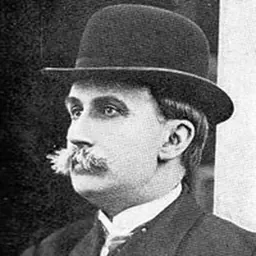
Lived 1892 – 1945 (aged 53). Kornél Havasi was a Hungarian chess player.
Kornél Havasi (10 January 1892 – 15 January 1945) was a Jewish-Hungarian chess master.
He won at Budapest 1911; took 9th at Temesvár 1912 (HUN-ch, Gyula Breyer won); tied for 4-5th at Budapest 1917 (Breyer won); took 4th at Budapest 1918 (Zoltán von Balla and Richard Réti won); tied for 9-11th at Kaschau (Košice) 1918 (Réti won); tied for 1st-2nd with Szávay at Budapest 1920; took 6th at Gyula 1921 (Borislav Kostić won).
Havasi was Hungarian Champion, winning at Budapest 1922. He took 3rd at Budapest 1923; tied for 6-7th at Gyula 1923 (Gruber won); took 10th at Györ 1924 (HUN-ch, Géza Nagy won); tied for 6-10th at Debrecen 1925 (Maróczy Jubiläumturnier, Hans Kmoch won); tied for 3rd-4th at Budapest 1926 (Endre Steiner won); tied for 12-14th at Budapest 1926 (1st FIDE Tournament, Ernst Grünfeld and Mario Monticelli won); tied for 2nd-4th at Budapest 1928 (HUN-ch, Árpád Vajda won); tied for 7-8th at Budapest 1928 (José Raúl Capablanca won), and won at Mezökövesd 1929 (Quadrangular).
He tied for 4-5th at Budapest 1931 (HUN-ch, Lajos Steiner won); took 4th at Sopron 1934 (Rudolf Spielmann won); tied for 5-6th at Budapest 1934 (Maróczy Jubilee, Erich Eliskases won); tied for 12-14th at Budapest (Ujpest) 1934 (Andor Lilienthal won); tied for 5-6th at Tatatovaros 1935 (László Szabó won); tied for 5-7th at Budapest 1936 (HUN-ch, L. Steiner and Mieczysław Najdorf won); tied for 3rd-4th at Milan 1938 (Eliskases and Monticelli won), and tied for 4-6th at Budapest 1939 (Dori Memorial, Balla and Szabó won).
Havasi played for Hungary in Chess Olympiads: In 1924, at 1st unofficial Chess Olympiad in Paris (+6 –5 =0) In 1927, at fourth board in 1st Chess Olympiad in London (+4 –1 =3) In 1928, at fourth board in 2nd Chess Olympiad in The Hague (+6 –1 =9) In 1930, at fourth board in 3rd Chess Olympiad in Hamburg (+10 –0 =4) In 1931, at fourth board in 4th Chess Olympiad in Prague (+7 –4 =3) In 1933, at fourth board in 5th Chess Olympiad in Folkestone (+5 –1 =6) In 1935, at third board 6th Chess Olympiad in Warsaw (+5 –0 =6) In 1936, at fourth board in 3rd unofficial Chess Olympiad in Munich (+4 –0 =12) In 1937, at fourth board in 7th Chess Olympiad in Stockholm (+6 –4 =5). He won six team medals (three gold in 1927, 1928, 1936, and three silver in 1924, 1930, 1937) and one individual silver medal in 1935.
He published a book A soproni jubiláris sakkverseny, 1934 (Budapest 1935).
During The Holocaust, Kornél Havasi was killed by the Nazis at 1945 in Bruck an der Leitha (Austria). He had to work there as a forced labourer until his death.
Don’t just read it —
keep it.
Full-length biographies made to live with: read them, listen on the way to work, watch them tonight.
- E-book
- Audio
- Video
Instant download · yours to keep · every purchase keeps this site free
Important facts
People in Kornél Havasi's life
Named in this biography and alive at the same time



Related people
Same field, nearest in time
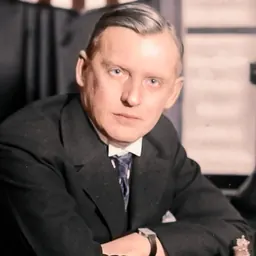
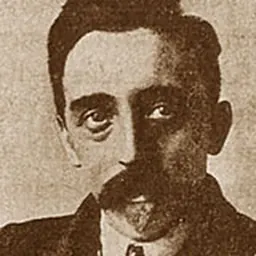
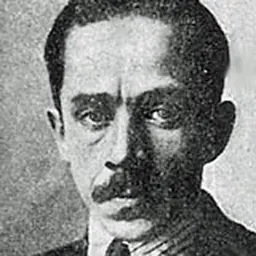
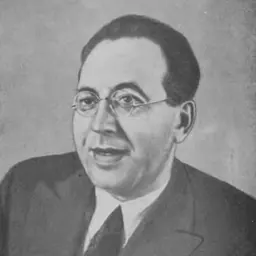
Contemporaries
People whose lives overlapped Kornél Havasi's


Frequently asked questions
Who was Kornél Havasi?
Hungarian chess player (1892-1945)
When was Kornél Havasi born?
Kornél Havasi was born on 10 January 1892 in Budapest.
When did Kornél Havasi die?
Kornél Havasi died on 15 January 1945 in Bruck an der Leitha.
What was Kornél Havasi's occupation?
Kornél Havasi was a chess player.
What nationality was Kornél Havasi?
Kornél Havasi was Hungarian.
Sources & further reading
Cite this page
APA: Biography.guide. (2026). Kornél Havasi. https://biography.guide/kornel-havasi/
MLA: "Kornél Havasi." Biography.guide, https://biography.guide/kornel-havasi/.
Chicago: "Kornél Havasi." Biography.guide. https://biography.guide/kornel-havasi/.
Data last updated: 2026-09-20 · Spot an error? Report a correction.
Page generated 2026-09-27 05:07 UTC