
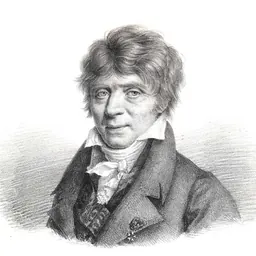
About Konstantinos Kanaris
Lived 1793 – 1877 (aged 83–84). Konstantinos Kanaris was a Greek politician, sailor, military personnel and admiral.
Konstantinos Kanaris (, ; 2 September 1877), also anglicised as Constantine Kanaris or Canaris, was a Greek statesman, an admiral, and a hero of the Greek War of Independence (1821–1829).
Despite not having been a member of the revolutionary organization Filiki Eteria, his fleet engaged in several successful battles and operations against the Ottoman Navy from 1821 to 1824, most famously burning the Ottoman flagship off Chios in 1822, in retaliation for the Chios massacre; this action elevated him to the status of national hero. Despite the destruction of his home island Psara in 1824, and the ambitious, but failed Raid on Alexandria in 1825, he remained a prominent ally of Ioannis Kapodistrias (in office as Governor of Greece from 1828 to 1831) until the latter's assassination in 1831, which led to his retirement.
After the 3 September 1843 Revolution, Kanaris returned to public life as a prominent member of the powerful Russian Party and became the Kingdom of Greece's second prime minister in 1844, presiding over the fall of his party in government. During King Otto's constitutional reign (1843 to 1862), Kanaris returned as prime minister in 1848, and became minister of the navy in 1854, after the outbreak of the Crimean War in 1853. He played a prominent role in Otto's deposition in 1862, and under King George I became prime minister twice in 1864, resigning both times to retire in Athens. He returned to the premiership to lead a grand coalition government in 1877 before dying 99 days later of a heart attack, becoming the second prime minister to die in office. His most significant actions as head of government were the ratification of the country's first two constitutions, in 1844 and 1864.
He remains a celebrated figure among Greeks and is recognised as the maritime leader of the Greek revolutionaries during the War of Independence.
Biography Early life Konstantinos Kanaris was born and grew up on the island of Psara, close to the island of Chios, in the Aegean. The exact year of his birth is unknown. Official records of the Hellenic Navy indicate 1795, however, modern Greek historians consider 1790 or 1793 to be more probable.
The burning of the Turkish flagship by Kanaris. Painting by Nikiforos Lytras, 1873.
At Chios, on the moonless night of 6–7 June 1822, forces under his command destroyed the flagship of Nasuhzade Ali Pasha, Kapudan Pasha (Grand Admiral) of the Ottoman fleet, in revenge for the Chios massacre. The admiral was holding a Bayram celebration, allowing Kanaris and his men to position their fire ship without being noticed. When the flagship's powder store caught fire, all men aboard were instantly killed. The Turkish casualties comprised men, both naval officers and common sailors, as well as Nasuhzade Ali Pasha himself.
After the destruction of Psara. Painting by Nikolaos Gyzis, 1898.
The Ottoman fleet captured Psara on 21 June 1824. A part of the population, including Kanaris, managed to flee the island, but those who didn't were either sold into slavery or slaughtered. After the destruction of his home island, he continued to lead attacks against Turkish forces. In August 1824, he engaged in naval combats in the Dodecanese.
After the end of the War and the independence of Greece, Kanaris became an officer of the new Hellenic Navy, reaching the rank of admiral, and a prominent politician.
Political career Konstantinos Kanaris was one of the few with the personal confidence of Ioannis Kapodistrias, the first Head of State of independent Greece. After the assassination of Kapodistrias on 9 October 1831, he retired to the island of Syros.
During the reign of King Otto I, Kanaris served as Minister in various governments and then as Prime Minister in the provisional government (16 February30 March 1844). He served a second term (15 October 184812 December 1849), and as Navy Minister in the 1854 cabinet of Alexandros Mavrokordatos.
Monument to Konstantinos Kanaris in Kypseli, Athens. Sculpture by Lazaros Fytalis.
In 1862, he was among the rare War of Independence veterans who took part in the bloodless insurrection that deposed the increasingly unpopular King Otto I and led to the election of Prince William of Denmark as King George I of Greece. During his reign, Kanaris served as a Prime Minister for a third term (6 March16 April 1864), fourth term (26 July 186426 February 1865), and fifth and last term (7 June2 September 1877).
Kanaris, a gunboat commissioned in 1835 Kanaris, a torpedo boat tender commissioned in 1880 , a Hunt-class destroyer commissioned in 1942 , a commissioned in 1972 , an commissioned in 2002
Te Korowhakaunu / Kanáris Sound, a section of Taiari / Chalky Inlet in New Zealand's Fiordland National Park, was named after Konstantinos Kanaris by French navigator and explorer Jules de Blosseville (1802–1833).
Family In 1817, Konstantinos Kanaris married Despoina Maniatis, from a historical family of Psara.
They had seven children:
Nikolaos Kanaris (1818–1848), killed during a military expedition in Beirut Themistoklis Kanaris (1819–1851), killed during a military expedition in Egypt Thrasyvoulos Kanaris (1820–1898), admiral Miltiadis Kanaris (1822–1901), admiral, member of the Greek Parliament for many years, Naval Minister three times in 1864, 1871, and 1878 Lykourgos Kanaris (1826–1865), naval officer and lawyer Maria Kanaris (1828–1847), married A. Balabano Aristeidis Kanaris (1831–1863), officer killed in the uprising of 1863
Wilhelm Canaris, a German Admiral, speculated that he might be a descendant of Konstantinos Kanaris. An official genealogical family history that was researched in 1938 showed however, that he was of Italian descent and not related to the Kanaris family from Greece.
Honours Greek honours
Foreign honours
Don’t just read it —
keep it.
Full-length biographies made to live with: read them, listen on the way to work, watch them tonight.
- E-book
- Audio
- Video
Instant download · yours to keep · every purchase keeps this site free
Important facts
People in Konstantinos Kanaris's life
Named in this biography and alive at the same time


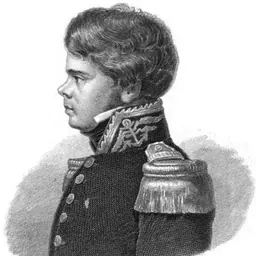
Related people
Same field, nearest in time

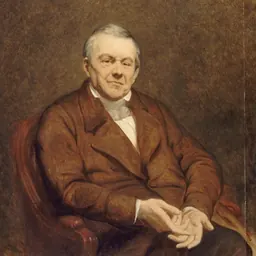
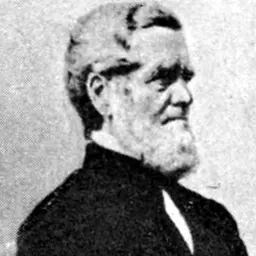

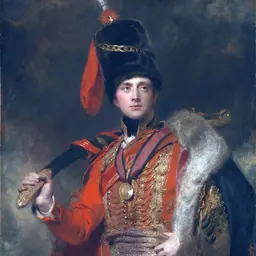

Contemporaries
People whose lives overlapped Konstantinos Kanaris's




Frequently asked questions
Who was Konstantinos Kanaris?
Greek admiral and politician
When was Konstantinos Kanaris born?
Konstantinos Kanaris was born in 1793 in Psara.
When did Konstantinos Kanaris die?
Konstantinos Kanaris died on 2 September 1877 in Athens.
What was Konstantinos Kanaris's occupation?
Konstantinos Kanaris was a politician, sailor, military personnel and admiral.
What nationality was Konstantinos Kanaris?
Konstantinos Kanaris was Greek.
Sources & further reading
· Wikipedia: Konstantinos Kanaris
· DBpedia: Konstantinos Kanaris
Cite this page
APA: Biography.guide. (2026). Konstantinos Kanaris. https://biography.guide/konstantinos-kanaris/
MLA: "Konstantinos Kanaris." Biography.guide, https://biography.guide/konstantinos-kanaris/.
Chicago: "Konstantinos Kanaris." Biography.guide. https://biography.guide/konstantinos-kanaris/.
Data last updated: 2026-09-20 · Spot an error? Report a correction.
Page generated 2026-09-27 05:34 UTC