
About Kole Rašić
Lived 1839 – 1898 (aged 58–59). Kole Rašić was a politician and revolutionary.
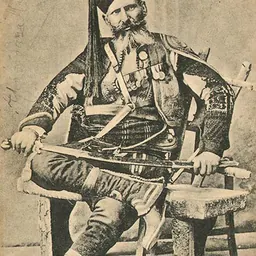
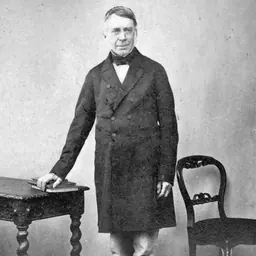
Nikola Rašić (; ca. 1839 – August 6, 1898), known as Kole Rašić (Коле Рашић) was a Serb revolutionary and guerilla fighter, who led a cheta of 300 men between Niš and Leskovac in Ottoman areas during the Serbian-Turkish Wars (1876–1878). He later became a politician in liberated Niš. He was a merchant by profession, who on his trip to Russia met with Miloš Obrenović and decided to stay in Niš to prepare a future liberation with the help of the Serbian Army. Rašić was one of the founders and organizers of the Niš Committee, established in 1874, with the goal of liberating the Niš Sanjak. His unit joined general Mikhail Chernyayev in 1876.
Life
Early Rašić was born in Niş (Niš), part of the Sanjak of Niš, Ottoman Empire (modern Serbia), in ca. 1839. He is said to have been lively by nature and combative. A merchant by profession, he had good connections in the Principality of Serbia and Niš Eyalet. In 1858 he entered Serbia, with the intent to go to Russia, however, the dynastical change made him change his mind. While at Negotin, he heard that Miloš Obrenović would arrive, so he waited for him, and then the two spoke. Rašić, as a respectable Niš citizen, was now sent secretly by the Obrenović government to instigate revolt in the Niš area and beyond against the Ottomans. The planned operation was not implemented in 1860. It proved a long process, and Kole Rašić sought, from then on, the liberation of Niš and then the other regions under Ottoman rule.
Revolutionary organization Niš Committee swearing Oath. Kole Rašić is seen kneeling before the priest. On February 24, 1874, the "Serbian Liberation Committee for the Sanjak of Niš", known simply as the Niš Committee, was founded and organized by Kole Rašić, Todor Milovanović, Dimitrije Đorđević, Milan Novičić, Tasko Tasa Uzunović, Đorđe Pop Manić, Mihajlo Božidarac, and Todor Stanković. They gathered at Božidarac's house, and Orthodox priest Petar Ikonomović swore Oath on the Christian cross and Gospel, reminiscent of the Orašac Assembly (1804). He had summoned the unit with the help of Miloš Milojević and the neighbouring villages which were still under Ottoman rule. His unit was active between Niš and Leskovac during the Serbo-Turkish War (1876–78).
Serbo-Turkish War (1876–78)
The unit's task was to clear the way for the Serbian Army's further penetration into the south. In the First Serbo-Turkish War, Kole Rašić, alongside Todor Stanković, and other notable leaders of the Niš Committee, as well as other people like Miloš Milojević and Vladimir-Vlajko Stojanović and others, helped the Serbian Army.
On December 9, 1877, a combined unit of Serbian soldiers and volunteers liberated the villages of Kočane, Pukovac and the bridge on Morava near Čečina, which had great strategical importance, as thus Niš was cut towards the south. Leskovac entered relations with Kole, after which it was decided that his unit enter the town. His unit and the army vanguard were the first to enter Leskovac, on December 11, 1877, During the fight for the liberation of Niš, alongside the Royal Army, some 6,000 volunteers and rebels from the liberated Ottoman areas participated. The 6,000 men were led by Kole Rašić.
After the war, for his work, he was titled vojvoda. After the war, the Serbian military government sent armament and aid to rebels in Kosovo and Macedonia. Christian rebel bands were formed all over the region. Many of those bands, privately organized and aided by the government, were established in Serbia and crossed into Ottoman territory. In that way, Micko Krstić formed a rebel band in 1879 in Niš, with the help of Rašić and the military government in Vranje.
Political work
After the war, he enter the political life of liberated Niš. As the representative of the Liberal Party, he won the first elections for the National Assembly of the town of Niš and became the state representative of Niš. He won again on the third assembly election (September 7, 1883), however after the annulment of the election results, Progressive Party representative Jovan Mitić won instead.
He was awarded the highest grade of the Takovo Cross — knight (vitez).
Legacy
The present Palace of Law in Niš was built in 1909/10 as the court of the county (srez), on the place of the house of Kole Rašić. Vojvoda Živojin Mišić viewed him as a famed hero. Today, a primary school in Niš and two streets, in Niš and Leskovac, are named after him. He is present on the Monument to the Liberators of Niš with priest Ikonomović swearing oath.
Don’t just read it —
keep it.
Full-length biographies made to live with: read them, listen on the way to work, watch them tonight.
- E-book
- Audio
- Video
Instant download · yours to keep · every purchase keeps this site free
Important facts
People in Kole Rašić's life
Named in this biography and alive at the same time



Related people
Same field, nearest in time




Contemporaries
People whose lives overlapped Kole Rašić's



Frequently asked questions
Who was Kole Rašić?
Serb revolutionary
When was Kole Rašić born?
Kole Rašić was born in 1839 in Niš.
When did Kole Rašić die?
Kole Rašić died on 6 August 1898.
What was Kole Rašić's occupation?
Kole Rašić was a politician and revolutionary.
Sources & further reading
Cite this page
APA: Biography.guide. (2026). Kole Rašić. https://biography.guide/kole-rasic/
MLA: "Kole Rašić." Biography.guide, https://biography.guide/kole-rasic/.
Chicago: "Kole Rašić." Biography.guide. https://biography.guide/kole-rasic/.
Data last updated: 2026-09-25 · Spot an error? Report a correction.
Page generated 2026-09-27 05:13 UTC