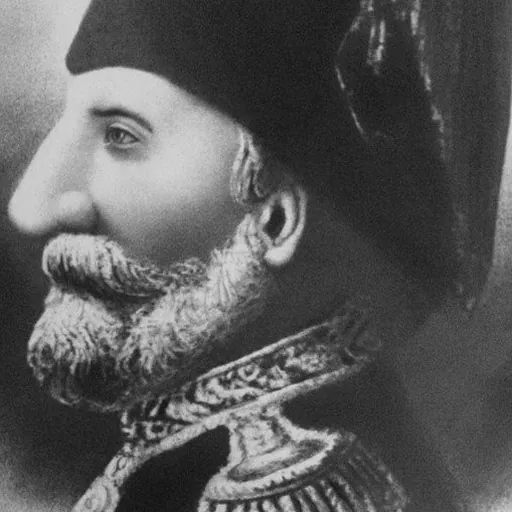
About Koca Hüsrev Mehmed Paşa
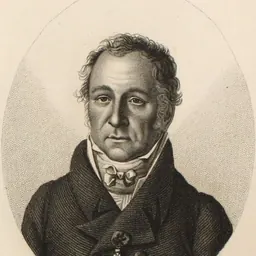
Lived 1769 – 1855 (aged 85–86). Koca Hüsrev Mehmed Paşa was a Turkish politician.
Koca Hüsrev Mehmed Pasha (also known as Koca Hüsrev Pasha; sometimes known in Western sources as just Husrev Pasha or Khosrew Pasha; 1756–1855) was an Ottoman admiral, reformer and statesman, who was Kapudan Pasha ("Grand Admiral") of the Ottoman Navy. He reached the position of Grand Vizier rather late in his career, between 2 July 1839 and 8 June 1840 during the reign of Abdulmejid I. However, during the 1820s, he occupied key administrative roles in the fight against regional warlords, the reformation of the army, and the reformation of Turkish attire. He was one of the main statesmen who predicted a war with the Russian Empire, which would eventually be the case with the outbreak of the Crimean War.
In Egypt He was probably born around 1756, and it is reported that he was of Abaza descent. He was a protégé of Küçük Hüseyin Pasha, a reformer who became Kapudan Pasha in 1792. (as which he features in Ivo Andrić's novel Travnička hronika), before being reappointed as governor of Salonica in 1808.
Hüsrev Pasha held the rank of Kapudan Pasha of the Ottoman Navy from 1811 to 1818. He was then appointed governor of the Eyalet of Trabzon twice, during which time he conducted for the Black Sea region of Turkey the struggle the central Ottoman state was waging against local feudal rulers (Derebeys).
On 19 January 1815, Hüsrev Pasha summoned Dr. Lorenzo Noccrola, the long-serving chief physician to the Seraglio, to attend him at the Arsenal, explaining that his own physician was absent. The next morning, Noccrola's body was found lying on a road close to the Arsenal. On examination, he was found to have been strangled.
Greek War of Independence During the Greek War of Independence, he was appointed Kapudan Pasha again at the end of 1822. In this role, he captured and destroyed the island of Psara in June 1824 and then moved against Samos, where he was joined by the Egyptian fleet. During the months of July and August, several skirmishes and constant maneuvers followed between the Ottoman and Greek fleets, culminating in the Battle of Gerontas, a Greek victory.
Moderniser of the army In 1826, Hüsrev Pasha played vital roles both in the Auspicious Incident (the annihilation of the Janissary Corps in 1826) and in the formation of the new "Mansure Army", modeled after those of the European Powers. Appointed as serasker (commander of the army) of the Mansure in May 1827, Hüsrev reformed and disciplined the corps. Himself ignorant of modern military methods, he assembled a staff of foreign experts and other personnel to assist him, the "Seraskeriye", which constituted the first staff in Ottoman history. Due to his early championing of military reform and virtual control over the new Ottoman army, Hüsrev was able to install many of his protégés in senior military positions. In total, Hüsrev's household produced more than 30 generals.
Adoption of children raised to become high-ranking officers Hüsrev Pasha adopted at early ages up to one hundred children, sometimes including slaves bought at market, who, after an attentive education, later became his protégés and rose to important positions in the state structure, the most notable of these being Ibrahim Edhem Pasha, a child from Chios bought in an İzmir slave market in 1822 after the Chios massacre. Levy mentions that in the 27,000-strong initial Mansure Army of 1827, the direct ancestor to today's Turkish Army, the officer corps included a core group of 70–80 of Hüsrev Pasha's "children".
Adoption of the fez to replace the turban Hüsrev Pasha was also instrumental for the near-abandonment of the turban and the adoption of the fez as a universal headgear for Muslim men of the Ottoman Empire (excluding the religious classes) under Sultan Mahmud II. He had seen the fez as worn occasionally by Tunisians and Algerians during a Mediterranean journey and introduced it to the Ottoman capital, from which the custom spread to all Ottoman lands including the nominal dependency of Egypt. Dress and headgear often signified symbol-laden and politically charged statements in Turkish lands.
Don’t just read it —
keep it.
Full-length biographies made to live with: read them, listen on the way to work, watch them tonight.
- E-book
- Audio
- Video
Instant download · yours to keep · every purchase keeps this site free
Important facts
People in Koca Hüsrev Mehmed Paşa's life
Named in this biography and alive at the same time

Related people
Same field, nearest in time



Contemporaries
People whose lives overlapped Koca Hüsrev Mehmed Paşa's




Frequently asked questions
Who was Koca Hüsrev Mehmed Paşa?
Ottoman Grand Vizier (1769-1855)
When was Koca Hüsrev Mehmed Paşa born?
Koca Hüsrev Mehmed Paşa was born in 1769.
When did Koca Hüsrev Mehmed Paşa die?
Koca Hüsrev Mehmed Paşa died in 1855 in Istanbul.
What was Koca Hüsrev Mehmed Paşa's occupation?
Koca Hüsrev Mehmed Paşa was a politician.
What nationality was Koca Hüsrev Mehmed Paşa?
Koca Hüsrev Mehmed Paşa was Turkish.
Sources & further reading
· Wikipedia: Koca Hüsrev Mehmed Paşa
· DBpedia: Koca Hüsrev Mehmed Pasha
Cite this page
APA: Biography.guide. (2026). Koca Hüsrev Mehmed Paşa. https://biography.guide/koca-husrev-mehmed-pasa/
MLA: "Koca Hüsrev Mehmed Paşa." Biography.guide, https://biography.guide/koca-husrev-mehmed-pasa/.
Chicago: "Koca Hüsrev Mehmed Paşa." Biography.guide. https://biography.guide/koca-husrev-mehmed-pasa/.
Data last updated: 2026-09-21 · Spot an error? Report a correction.
Portrait: Wikimedia Commons · author & licence
Page generated 2026-09-27 05:01 UTC