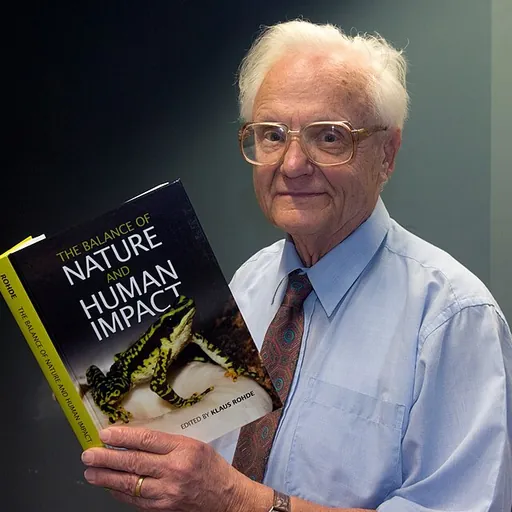
About Klaus Rohde
Born 1932. Klaus Rohde is a German biologist and university teacher, known for Latitudinal gradients in species diversity, Parasitism and Ultrastructure.
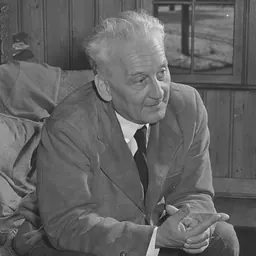
Klaus Rohde (born 30 March 1932) is a German biologist and parasitologist at the University of New England (UNE), Australia. He is known particularly for his work on marine parasitology, evolutionary ecology, zoogeography, phylogeny, and ultrastructure of lower invertebrates.
Early life and education Klaus Rohde was born in Brandenburg an der Havel, Germany, on 30 March 1932. He attended the Saldria Gymnasium and Nikolai-Schule in Brandenburg, earning his Abitur in 1949. Rohde went on to study at the Teachers Training College in Brandenburg, receiving, in 1950, a Teacher's Diploma in Russian language. From 1950 to 1951, he studied Slavic languages at the University of Potsdam. Near the end of 1951 he moved from East to West Germany, enrolling at the University of Münster, studying botany, zoology, physics and physiological chemistry. Rohde undertook research for his PhD in 1954, under the supervision of Berhard Rensch, a notable German zoologist; his thesis was on the behaviour and physiology of Paramecium. In 1957 he was awarded his PhD, magna cum laude. Life cycles of Aspidogastrea and Amphilinidea.
Rohde was the first who supplied quantitative evidence for the enormous species diversity of marine parasites in tropical (coral reef) waters, and for differences in latitudinal gradients between endo- and ectoparasites. His hypothesis of effective evolutionary time was an important stimulus for the development of the metabolic theory of ecology. His work on the phylogeny of Platyhelminthes provided evidence that the Neodermata (major groups of parasitic Platyhelminthes) have split early off the other flatworm groups. His demonstration of the great number and variety of sensory receptors and of the great complexity of nervous systems in some parasitic flatworms is convincing evidence that sacculinization (reduction in complexity) of parasites is not a general phenomenon. Rohde's work on the ecology of marine parasites has shown that most parasites live in largely non-saturated niche space, i.e., that most niches are vacant; proceeding from these findings, he concluded that equilibrium conditions in animal communities are the exception rather than the rule (discussed in detail in his book Nonequilibrium Ecology).
After retirement he continues to publish scientific papers and books. He has cooperated with Dietrich Stauffer, a theoretical physicist, in using mathematical models to investigate latitudinal gradients in species diversity and niche width. He is running two blogs with articles and posts on science, politics and philosophy
Honors Clarke Medal of the Royal Society of New South Wales (1996, Zoology). Inaugural Award for Excellence in Science of the Vice-Chancellor, University of New England (UNE), Australia (1996). Fellow of various scientific societies and institutes including the Australian Society for Parasitology.
Personal life Rohde lived and worked in Münster/Westfalen (Germany), Brackwede/Bielefeld (Germany), Bochum (Germany), Kuala Lumpur (Malaysia), Khartoum (Sudan), Heron Island (Great Barrier Reef) and Brisbane (Australia). He now lives in Armidale (Australia).
Don’t just read it —
keep it.
Full-length biographies made to live with: read them, listen on the way to work, watch them tonight.
- E-book
- Audio
- Video
Instant download · yours to keep · every purchase keeps this site free
Important facts
People in Klaus Rohde's life
Named in this biography and alive at the same time


Related people
Same field, nearest in time
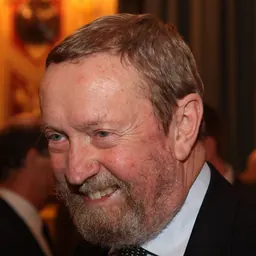
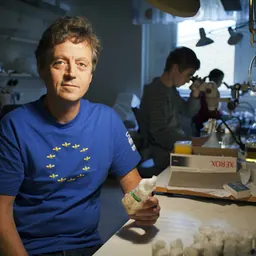
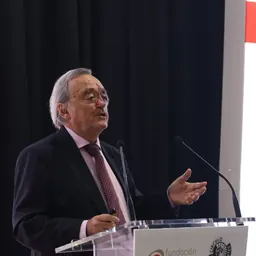
Contemporaries
People whose lives overlapped Klaus Rohde's

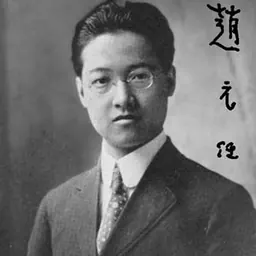


Frequently asked questions
Who is Klaus Rohde?
German biologist
When was Klaus Rohde born?
Klaus Rohde was born on 30 March 1932 in Brandenburg an der Havel.
What is Klaus Rohde's occupation?
Klaus Rohde is a biologist and university teacher.
What is Klaus Rohde known for?
Klaus Rohde is known for Latitudinal gradients in species diversity, Parasitism and Ultrastructure.
What nationality is Klaus Rohde?
Klaus Rohde is German.
Sources & further reading
Cite this page
APA: Biography.guide. (2026). Klaus Rohde. https://biography.guide/klaus-rohde/
MLA: "Klaus Rohde." Biography.guide, https://biography.guide/klaus-rohde/.
Chicago: "Klaus Rohde." Biography.guide. https://biography.guide/klaus-rohde/.
Data last updated: 2026-09-23 · Spot an error? Report a correction.
Portrait: Wikimedia Commons · author & licence
Page generated 2026-09-27 05:06 UTC