
Kiyoshi Kuromiya
Japanese American author and civil rights activist
About Kiyoshi Kuromiya
Lived 1943 – 2000 (aged 57). Kiyoshi Kuromiya was an American lGBTQ rights activist, hIV/AIDS activist, civil rights advocate and social justice.
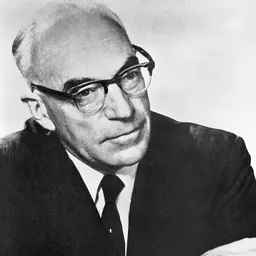
Kiyoshi Kuromiya (, May 9, 1943 – May 10, 2000) was a Japanese-American author and civil rights, anti-war, gay liberation, and HIV/AIDS activist. Born in Wyoming at the World War II-era Japanese American internment camp known as Heart Mountain, Kuromiya became an aide to Martin Luther King Jr. and a prominent opponent of the Vietnam War during the 1960s.
One of the founders of the Gay Liberation Front in Philadelphia, Kuromiya also founded the Critical Path Project and its newsletter. He was also the editor of ACT UP's Standard of Care, the first medical treatment and cultural competency guidelines produced for people living with HIV by people living with HIV/AIDS.
Family and early life
Kiyoshi Kuromiya was born on May 9, 1943, in Wyoming at the Heart Mountain Internment Camp, Both Kuromiya's parents were born in California and after 15 years of living in Monrovia and a year between Arizona and Nevada in 1961, Kuromiya decided to leave the West Coast to go to college in Philadelphia to study at the University of Pennsylvania. Kuromiya labels his own motivation to move to Philadelphia in 1961 as due solely to the name "City of Brotherly Love," and Kuromiya's activism truly began in the 1960s when he became involved in civil rights organizing. Kuromiya, who went by Steve instead of Kiyoshi at the time, the early '50s, mentioned in an interview with Tommi Mecca in 1983 that he did not know any of the terminology due to a lack of literature—he had never heard the word gay and didn't know what a homosexual was. As a result, Kuromiya utilized the Monrovia Public Library in order to learn more about the identity that he knew "was very important to him."
Kuromiya was a third-generation Japanese American and grew up primarily attending white schools in the Los Angeles suburbs, he says in an interview with Marc Stein in 1997. Kuromiya mentions in his interview with Stein how his being arrested made him feel like a sort of criminal without knowing it, and left him with a feeling of shame that forced him to be secretive about his sex life—even early on.
Student activism Kuromiya started attending college at the University of Pennsylvania in September 1961 as one of six Benjamin Franklin National Scholars; he was a part of a large scholarship that covered almost all of the associated costs of attending. Kiyoshi decided to study architecture, feeling it was a field that encompassed a variety of humanistic fields and was inspired by Louis Kahn who too attended Penn and was a professor of architecture at the School of Design.
In 1965, Kuromiya and other activists took over Independence Hall in Philadelphia, Pennsylvania, calling it the Freedom Hotel in support of people injured at Pettus Bridge in Selma during the civil rights march from Selma to Montgomery in Alabama. A week later, on March 13, 1965, after flying down South, Kuromiya was assaulted by the police along with Dr. King, Rev. Fred Shuttlesworth, and James Forman while helping a group of Black high school students register to vote at the state capitol building in Montgomery, Alabama. On the day of the protest Kuromiya handed out leaflets that said "Congratulations, you've saved the life of an innocent dog. How about the hundreds of thousands of Vietnamese that have been burned alive?"
In addition to deceptively luring thousands of people to the Penn library, Kuromiya was very involved in the antiwar movement throughout the early years of his activist career. On October 20 and 21, 1967, Kuromiya joined a large demonstration organized by Abbie Hoffman that attempted to levitate the Pentagon building by joining hands around it in a performance art protest. The GLF in Philadelphia had a significant proportion of African-Americans, Latinos, and Asians—though they were only a small group of about a dozen in 1969. Kuromiya even received support for the gay liberation struggle when he represented the GLF as an openly gay delegate to the 1970 Black Panther Party Convention at Temple University.
AIDS advocacy Kuromiya began working earnestly on the AIDS movement once the AIDS epidemic began in America in the early 1980s. Kiyoshi was most involved with ACT UP (the AIDS Coalition to Unleash Power)— of which he founded the Philadelphia chapter. After being diagnosed with AIDS himself in 1989, Kuromiya only intensified his advocacy work. Kiyoshi approached his work with the motto "Information is power" and educated himself on the AIDS issues to the point he was invited to participate in National Institutes of Health alternative therapy panels. From there, the site became host to the Critical Path AIDS Project—through which Kuromiya operated a 24-hour hotline for anyone who sought his help and provided free internet to hundreds of people with HIV in Philadelphia.
Impact litigation In the late 1990s, Kuromiya was a part of several successful impact litigation cases. In 1999 Kuromiya was also involved in the class-action suit, Kuromiya vs. The United States of America, in which he presented his case for the legalization of marijuana for medical use for people with AIDS. Kuromiya also ran a marijuana buyer's club as a medical marijuana activist and served a few dozen clients with AIDS in the Philadelphia-area with free marijuana. Most prominently Kuromiya assisted the scientist with Critical Path, an influential 1981 book about technology's potential to improve the world. Kuromiya was also a nationally ranked Scrabble player.
Kuromiya died of complications from cancer on May 10, 2000, a day after his 57th birthday, though his death was initially reported as due to complications from AIDS.
On May 9, 2023, his 80th birthday (as an ancestor) was celebrated in Philadelphia, Pennsylvania, and Monrovia, California.
Brief timeline 1962: CORE restaurant sit-ins, Route 40, Aberdeen, Maryland 1963: Martin Luther King, Jr. speech, 8/28, Lincoln Memorial, and later to meet King at Willard Hotel, Washington, DC 1965: Injured at State Capitol Building, Montgomery, Alabama, leading black high school students in voter registration march, 3/13 1965: First homosexual rights demonstration ever - Independence Hall, Philadelphia, 7/4 1967: "Armies of Night" march on Pentagon, Arlington, VA 1968: Martin Luther King, Jr. funeral, Atlanta - cared for Martin Jr. and Dexter week of funeral at King house in Vine City 1968: Lincoln Park and Conrad Hilton, Chicago, Democratic National Convention riots at Grant Park 1969: Spoke at Black Panther Party's Revolutionary People's Constitutional Convention, Temple University, Philadelphia 1970: "Rebirth of Dionysian Spirit," National Gay Liberation Conference, Austin, TX 1972: First Rainbow Family Gathering, Granby, CO 1974–1977: Survived metastatic lung cancer 1978–1983: Traveled worldwide with Buckminster Fuller, collaborated on his last six books, published last book posthumously in 1992 (Fuller died in 1983); Philadelphia, California 1988: First employee of We the People with AIDS and charter member of ACT-UP, Philadelphia 1992: ACT-UP members injured at demo at Bellevue Stratford Hotel, numerous ACT-UP arrests around the country 1996: Sat on FDA panel that recommended approval of first potent protease inhibitors 1997: Critical Path AIDS Project - Supreme Court overturns Communications Decency Act on internet censorship - lead litigant 1999: Kuromiya vs. United States of America - class action suit on medical use of marijuana.
Don’t just read it —
keep it.
Full-length biographies made to live with: read them, listen on the way to work, watch them tonight.
- E-book
- Audio
- Video
Instant download · yours to keep · every purchase keeps this site free
Important facts
People in Kiyoshi Kuromiya's life
Named in this biography and alive at the same time





Related people
Same field, nearest in time
Contemporaries
People whose lives overlapped Kiyoshi Kuromiya's



Frequently asked questions
Who was Kiyoshi Kuromiya?
Japanese American author and civil rights activist (1943–2000)
When was Kiyoshi Kuromiya born?
Kiyoshi Kuromiya was born on 9 May 1943 in Heart Mountain Relocation Center.
When did Kiyoshi Kuromiya die?
Kiyoshi Kuromiya died on 10 May 2000 in Philadelphia.
What was Kiyoshi Kuromiya's occupation?
Kiyoshi Kuromiya was a lGBTQ rights activist, hIV/AIDS activist, civil rights advocate and social justice.
What nationality was Kiyoshi Kuromiya?
Kiyoshi Kuromiya was American.
Sources & further reading
Cite this page
APA: Biography.guide. (2026). Kiyoshi Kuromiya. https://biography.guide/kiyoshi-kuromiya/
MLA: "Kiyoshi Kuromiya." Biography.guide, https://biography.guide/kiyoshi-kuromiya/.
Chicago: "Kiyoshi Kuromiya." Biography.guide. https://biography.guide/kiyoshi-kuromiya/.
Data last updated: 2026-09-22 · Spot an error? Report a correction.
Page generated 2026-09-27 05:14 UTC