
About Kiyoko Murata
Born 1945. Kiyoko Murata is a Japanese writer, essayist and novelist.
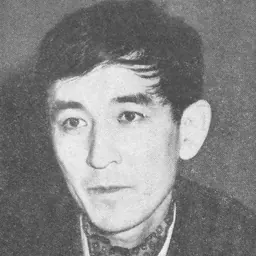
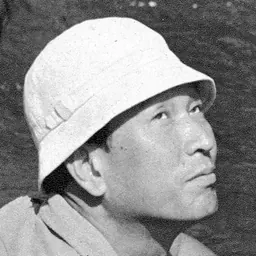
is a Japanese writer. She has won the Akutagawa Prize, the Noma Literary Prize, and the Yomiuri Prize, among other literary prizes. The Government of Japan has awarded her the Medal with Purple Ribbon and Order of the Rising Sun, and she has been appointed to the Japan Art Academy. Her work has been adapted for film by Akira Kurosawa and Hideo Onchi.
Early life and education Murata was born in 1945 in Yahata, Fukuoka. After graduating from junior high school she worked a variety of jobs, including delivering newspapers, welding, working as a waitress in a coffee shop, and taking tickets at a movie theater. She married her husband, an engineer, in 1967, and began writing while raising her children.
Career In 1976 Murata received her first award for fiction when her story "Suichū no koe" ("Voice under Water"), about a woman attempting to help protect children after the loss of her own child, won the Kyushu Art Festival Literary Prize. After writing for several years and publishing her own private literary periodical, Murata was nominated for the Akutagawa Prize in the first half of 1986 for her story "Netsuai" ("Ardent Love"), a story about two boys engaged in a dangerous motorcycle race. The prize committee expressed concern about its initial publication in a minor journal, and she did not win. Murata was again nominated for the Akutagawa Prize in the second half of 1986 for her story "Meiyū" ("Allied Friends"), but again did not win. Bungeishunjū then published "Nabe no naka" as the title story of Murata's first short story collection, which also included "Suichū no koe", "Netsuai", and "Meiyū". An English translation of "Nabe no naka", translated by Kyoko Iriye Selden, was published in a 2015 collection of fiction by Japanese women writers. the story , which won the 29th Kawabata Yasunari Literature Prize; and the 1998 novel , which won a 49th MEXT Arts Award in the literature category. Kokyō no wagaya won the 63rd Noma Literary Prize.
Murata's 2013 novel , a story about a teenage girl who is sold into prostitution by her parents and then helps organize a prostitute labor strike, won the 65th Yomiuri Prize in the fiction category. After winning the Yomiuri Prize, Murata again received national honors for her artistic contributions to Japanese culture, receiving the Order of the Rising Sun, Gold Rays with Rosette, in 2016,
Recognition 1976: 7th Kyushu Art Festival Literary Prize 1987: 97th Akutagawa Prize (1987上) 1990: 29th Women's Literature Prize 1998: 25th Kawabata Yasunari Literature Prize 1999: 49th MEXT Arts Award 2007: Medal with Purple Ribbon 2010: 63rd Noma Literary Prize 2014: 65th Yomiuri Prize (FY2013) 2016: Order of the Rising Sun 2017: Japan Art Academy 2019: Tanizaki Prize
Film and other adaptations
Rhapsody in August, 1991 Warabi no kō, 2003
Don’t just read it —
keep it.
Full-length biographies made to live with: read them, listen on the way to work, watch them tonight.
- E-book
- Audio
- Video
Instant download · yours to keep · every purchase keeps this site free
Important facts
People in Kiyoko Murata's life
Named in this biography and alive at the same time

Related people
Same field, nearest in time


Contemporaries
People whose lives overlapped Kiyoko Murata's


Frequently asked questions
Who is Kiyoko Murata?
Japanese writer, essayist and novelist
When was Kiyoko Murata born?
Kiyoko Murata was born on 12 April 1945 in Kitakyūshū.
What is Kiyoko Murata's occupation?
Kiyoko Murata is a writer, essayist and novelist.
What nationality is Kiyoko Murata?
Kiyoko Murata is Japanese.
Sources & further reading
Cite this page
APA: Biography.guide. (2026). Kiyoko Murata. https://biography.guide/kiyoko-murata/
MLA: "Kiyoko Murata." Biography.guide, https://biography.guide/kiyoko-murata/.
Chicago: "Kiyoko Murata." Biography.guide. https://biography.guide/kiyoko-murata/.
Data last updated: 2026-09-20 · Spot an error? Report a correction.
Page generated 2026-09-27 05:26 UTC