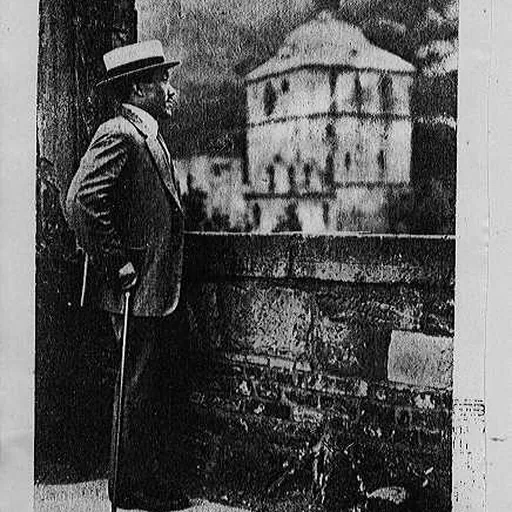
About Kita Reikichi
Lived 1885 – 1961 (aged 76). Kita Reikichi was a Japanese politician and critic.
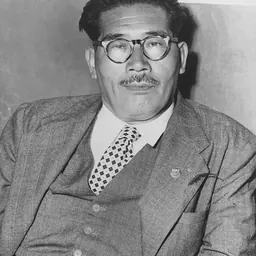
Reikichi Kita (北 昤吉, Kita Reikichi, 21 July 1885 – 5 August 1961) was a Japanese philosopher, educator, political commentator, and politician. He served eight terms in the House of Representatives and was a founder of Tama Art University. He also served as Policy Research Council Chairman of the Japan Liberal Party. He was the younger brother of Ikki Kita, one of the main ideologues of the February 26 Incident.
Early life and education Born in Minato Town (now part of Sado City), Niigata Prefecture, Kita was the second son of Keitaro Kita, the first mayor of Ryotsu Town and a sake and fertilizer merchant.
He entered Waseda University’s Faculty of Political Economy but soon transferred to the Department of Philosophy. He graduated in 1908.
Political career Kita was elected to the House of Representatives in the February 1936 general election as an independent from Niigata 1st district, shortly before the February 26 Incident. He later joined the Constitutional Democratic Party.
In 1939, Kita participated in a Japanese parliamentary delegation to the Inter-Parliamentary Union conference in Oslo, Norway (August 1939), traveling through the United States and Europe from June to October together with fellow Representative Inejirō Asanuma. The two left Tokyo Station by train on 30 June 1939; during the voyage Asanuma held frequent discussions with Kita and read extensively from the works of Kita's elder brother Ikki Kita.
After Japan’s defeat in World War II, he played an important role in founding the Japan Liberal Party. After being subject to the postwar purge and later released, he continued his political career with the Japan Democratic Party and then the Liberal Democratic Party. He served as Chairman of the House of Representatives Disciplinary Committee in 1955 and as Policy Research Council Chairman of the Liberal Party.
His wife, Matsue (also called Yoshiko, born 1890), was the daughter of Niigata Prefectural Assembly member Honma Ichimatsu. The couple had five daughters. His elder brother was the nationalist thinker Ikki Kita.
Family and relatives
Wife: Matsue (born 1890, also known as Yoshiko. Daughter of Honma Ichimatsu, a Niigata prefectural assembly member; niece of Reikichi's mother Riku) Eldest daughter: Michi (born 1912, Fukushima Prefecture; wife of Imaizumi Tadashi) Second daughter: Sachi (born 1915; wife of Shimizu Tarō) Third daughter (born 1918) Fourth daughter (born 1926) Fifth daughter
Father: Keitarō Kita (1853–1903) — First mayor of Ryōtsu Town. Born as the eldest son of Roku (daughter of a wealthy brewing family in Ryōtsu) and her husband Rokutarō. Keitarō was known for seeing fireballs and ghosts; according to Reikichi, this strong spiritual sensitivity was inherited by his elder brother, Ikki Kita. He was involved in the Freedom and People's Rights Movement. During his time as mayor in 1890 he was caught up in the Aikawa Riot (a Rice riot), and in 1900 his family business failed (according to Reikichi, due to a relative's debt guarantee issue), leading to its closure. After Keitarō's death, his maternal uncle Honma Ichimatsu acted as a surrogate father and provided financial support for the education of Ikki and Reikichi. Mother: Riku (1856–1939) — From Niibo Village. Maiden name Honma. In Sado there was an old custom that childbirth took place at the mother's family home, with the mother returning to her husband's home on the 33rd day; thus Reikichi and his siblings were born at their mother's family home. Niibo Village was known as a devout area as the location of the Nichiren sect's Konpon-ji (Sado) temple. Reikichi's wife Matsue (Yoshiko)'s biological father was Riku's younger brother. A distant relative (husband of the daughter of Riku's niece) is Tamba Tetsurō. Elder brother: Ikki Kita (political thinker) — Executed in connection with the February 26 Incident.
Major works (selected) Time and Free Will: Introduction to Philosophy (1914) From Philosophy to Politics (1918) Light from the East (1918) Philosophical Pilgrimage (1926) Showa Restoration (1927) Thought and Life (1937) Philosophy of War (1943)
He translated works by Henri Bergson, Harald Høffding, and others, and wrote extensively on philosophy, politics, and international affairs.
Don’t just read it —
keep it.
Full-length biographies made to live with: read them, listen on the way to work, watch them tonight.
- E-book
- Audio
- Video
Instant download · yours to keep · every purchase keeps this site free
Important facts
People in Kita Reikichi's life
Named in this biography and alive at the same time
Related people
Same field, nearest in time





Contemporaries
People whose lives overlapped Kita Reikichi's



Frequently asked questions
Who was Kita Reikichi?
Japanese philosopher and politician
When was Kita Reikichi born?
Kita Reikichi was born on 21 July 1885.
When did Kita Reikichi die?
Kita Reikichi died on 5 August 1961.
What was Kita Reikichi's occupation?
Kita Reikichi was a politician and critic.
What nationality was Kita Reikichi?
Kita Reikichi was Japanese.
Sources & further reading
Cite this page
APA: Biography.guide. (2026). Kita Reikichi. https://biography.guide/kita-reikichi/
MLA: "Kita Reikichi." Biography.guide, https://biography.guide/kita-reikichi/.
Chicago: "Kita Reikichi." Biography.guide. https://biography.guide/kita-reikichi/.
Data last updated: 2026-09-23 · Spot an error? Report a correction.
Portrait: Wikimedia Commons · author & licence
Page generated 2026-09-27 05:06 UTC