
About Kingsley Martin
Lived 1897 – 1969 (aged 71–72). Kingsley Martin was a British paramedic, journalist, editor and writer.
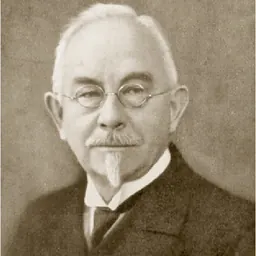
Basil Kingsley Martin (28 July 1897 – 16 February 1969), usually known as Kingsley Martin, was a British journalist who edited the left-leaning political magazine the New Statesman from 1930 to 1960.
Early life
Martin was the son of (David) Basil Martin (1858–1940), a Congregationalist minister, and his wife, Alice Charlotte Turberville, daughter of Thomas Charles Turberville of Islington, born on 28 July 1897 in Ingestre Street, Hereford; Irene Barclay was his elder sister. His father had been minister at the Eign Brook Chapel since 1893; located on Eign Street, Hereford, it subsequently became the Eignbrook United Reformed Church. Martin was a principled socialist and pacifist, and was unpopular in the city. Martin did not move directly to London. He was first sent on a sea voyage to South Africa, for his health. He stayed with his maternal uncle Frank Turberville on a farm near Grahamstown, now Makhanda, Eastern Cape, returning to his family in January 1914.
Conscientious objector Martin then went to Mill Hill School, under its head John Mclure. He entered the Sixth Form: in the "classical sixth" he pursued a traditional course of Latin and Greek. At the outbreak of World War I he was aged 17, and not in the best of health. He did not join the school's Officers' Training Corps (OTC); but his close friend Thomas Applebee, a year older, did, was conscripted, and was killed in 1916 a few days after arriving in France.
Post-war period In 1919, Martin attended a socialist summer school, where he gained an interest in guild socialism from G. D. H. Cole and his wife Margaret. That autumn he entered Magdalene College, Cambridge. He gained a double first in two parts of the Historical Tripos, and his college awarded him a bye-fellowship, which he used to visit Princeton University for a year.
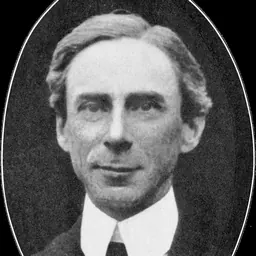
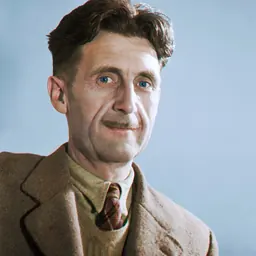
At this period, according to C. H. Rolph, Martin was strongly influenced by Goldsworthy Lowes Dickinson. In February 1922 he attended a socialist conference at Dunsford. Others there included Bertrand Russell, a domineering Beatrice Webb with Sidney Webb and Barbara Drake, Hugh Dalton, Eric Blair (before he became George Orwell), Harold Laski, Barbara Wootton and Eileen Power. He supported Dalton, who was Labour candidate in the March 1922 Cambridge by-election. In 1924, Martin was offered a teaching job at the London School of Economics, under Laski. He remained there for three years, and then took a position as a leader writer at the Manchester Guardian. He left in part because he had been clashing with William Beveridge, the director of the School. He remained at the New Statesman until 1960, when he retired.
Circulation and influence The circulation of the Statesman grew from 14,000 to 80,000 over the course of Martin's thirty years in the editor's chair. In 1934, it took over the Week-end Review owned by Samuel Courtauld, through the good offices of Gerald Barry, gaining about four thousand readers. The magazine became a significant influence on Labour Party politics on the left and further to the left.
Political line Martin wrote after the 1938 Anschluss: "Today if Mr. Chamberlain would come forward and tell us that his policy was really one not only of isolation but also of Little Englandism in which the Empire was to be given up because it could not be defended and in which military defence was to be abandoned because war would totally end civilization, we for our part would wholeheartedly support him." Martin later abandoned this position.
Martin and the Statesman were criticised for pursuing an erratic response to the regime of Joseph Stalin in the Soviet Union. Martin's friend John Maynard Keynes complained that in regard to Stalin's Russia, Martin was "a little too full perhaps of goodwill. When a doubt arises it is swallowed down if possible." Martin wrote a hostile account of Leon Trotsky, "Trotsky in Mexico" for the New Statesman, and did not allow the magazine to review Trotsky's anti-Stalinist book The Revolution Betrayed.
Martin became disillusioned with the Soviet Union after the Hitler–Stalin Pact, which he denounced; in response the Communist Party Daily Worker ran an editorial attacking Martin. He supported the policy of demanding an unconditional surrender from Nazi Germany After attending the Soviet-sponsored World Congress of Intellectuals for Peace in Wrocław, Poland, in 1948, Martin wrote a hostile account of it, entitled "Hyenas and other Reptiles". In 1964, Martin joined the Who Killed Kennedy? Committee set up by Bertrand Russell.
Dispute with Orwell
Martin's editorship resulted in what D. J. Taylor called a "titanic feud" with contributor George Orwell. Returning to the UK after fighting in the Spanish Civil War, Orwell contacted Martin and offered to give him an account of the conflict; however, Martin rejected Orwell's first article, "Eyewitness in Spain", on the grounds it could undermine the Spanish Republicans.
Mortimer later wrote to Orwell to apologise for the rejection of his articles on Spain, stating: "There is no premium here on Stalinist orthodoxy."
Works The Triumph of Lord Palmerston: A Study of Public Opinion in England Before the Crimean War (1924; revised 1963) The British Public and the General Strike (1926) French Liberal Thought in the Eighteenth Century: A Study of Political Ideas from Bayle to Condorcet (1929; revised 1954) Low's Russian Sketchbook (1932), illustrator David Low The Magic of Monarchy (1937) put forward arguments for British Republicanism. It was later described by Brian Pearce as an "excellent account". Propaganda's Harvest (1941) Truth and the Public (1945), Conway Memorial Lecture The Press the Public Wants (1947) Harold Laski, 1893-1950: A Biographical Memoir (1953) New Statesman Profiles (1957), editor The Vital Letters of Russell, Krushchev, Dulles (1958), editor Critic's London Diary: From the "New Statesman" 1931-1956 (1960) The Crown And The Establishment (1962) argued again for republicanism. It caused controversy, with Gerald Nabarro condemning Martin's views on the monarchy as "scurrilous". Father Figures: A First Volume of Autobiography 1897-1931 (1966), autobiography vol. 1. In a review, Margaret Cole described Martin as a "wonderfully good editor". Martin then became romantically involved with the activist Dorothy Woodman. They remained together for the rest of his life, although they never married. They worked together in pressure groups such as the Union of Democratic Control and the Campaign for Nuclear Disarmament. After his death, the editor of Humanist News wrote that "Kingsley Martin was through and through a Humanist and a life-long champion of Humanist causes. As a speaker, a contributor to Objections to Humanism and to The Humanist Outlook, he showed his constant readiness to serve and promote humanism."
Don’t just read it —
keep it.
Full-length biographies made to live with: read them, listen on the way to work, watch them tonight.
- E-book
- Audio
- Video
Instant download · yours to keep · every purchase keeps this site free
Important facts
People in Kingsley Martin's life
Named in this biography and alive at the same time



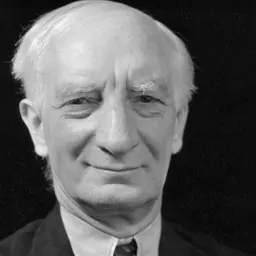
Related people
Same field, nearest in time
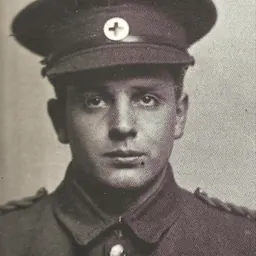




Contemporaries
People whose lives overlapped Kingsley Martin's
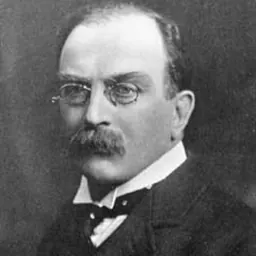

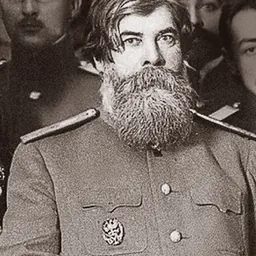

Frequently asked questions
Who was Kingsley Martin?
British journalist
When was Kingsley Martin born?
Kingsley Martin was born in 1897 in London.
When did Kingsley Martin die?
Kingsley Martin died in 1969 in Cairo.
What was Kingsley Martin's occupation?
Kingsley Martin was a paramedic, journalist, editor and writer.
What nationality was Kingsley Martin?
Kingsley Martin was British.
Sources & further reading
Cite this page
APA: Biography.guide. (2026). Kingsley Martin. https://biography.guide/kingsley-martin/
MLA: "Kingsley Martin." Biography.guide, https://biography.guide/kingsley-martin/.
Chicago: "Kingsley Martin." Biography.guide. https://biography.guide/kingsley-martin/.
Data last updated: 2026-09-20 · Spot an error? Report a correction.
Page generated 2026-09-27 05:10 UTC