
About Gerald Gardiner, Baron Gardiner
Lived 1900 – 1990 (aged 89). Gerald Gardiner, Baron Gardiner was a British paramedic, politician and judge.
Gerald Austin Gardiner, Baron Gardiner, (30 May 1900 – 7 January 1990) was a British Labour politician, who served as Lord High Chancellor of Great Britain from 1964 to 1970. In that position he embarked on a programme of reform, most importantly setting up the Law Commission in 1965.
Early life and education Gardiner was born in Chelsea, London. and his mother was Alice von Ziegesar (died 31 January 1953 ), daughter of Count von Ziegesar and granddaughter of Dionysius Lardner. He attended Harrow School.
Pacifism Gerald Gardiner served in the Coldstream Guards in 1918 and was commissioned in 1919, but in the 1930s he joined the Peace Pledge Union. During World War II Gardiner volunteered to join the Friends' Ambulance Unit, as an alternative to military service, although he was actually just over conscription age, and served 1943 to 1945; as someone relatively mature, he was usefully able to lead a 55-strong team assisting refugees in the turmoil of North-West Europe in the last year of the war.
Legal career Gardiner was called to the Bar in 1925 and was made King's Counsel in 1948. More successfully, he was the Counsel for the Defence in R v Penguin Books Ltd, the trial for obscenity of the publishers of Lady Chatterley's Lover in 1960. He played an active role in various reform movements and held numerous professional positions. He was a member of the Committee on Supreme Court Practice and Procedure, 1947–53 chaired by Raymond Evershed, 1st Baron Evershed. He was a member of the Lord Chancellor's Law Reform Committee, 1952–63. He was a Master of the Bench of the Inner Temple in 1955, Chairman of the General Council of the Bar in 1958 and 1959. He was a member of the International Commission of Jurists in 1971. On the Labour Party's General Election victory in 1964, he was appointed Lord Chancellor and to the Privy Council of the United Kingdom in 1964 by Harold Wilson. In 1970, the Labour Party was defeated in the General Election and Lord Gardiner resigned as Lord Chancellor. In that role, he was responsible for the creation of the Ombudsman. He also did much to advance women's rights.
Security surveillance During debates on the British Telecommunications Bill in the House of Lords in 1981, various members raised concerns about telephone tapping, a matter of disquiet in the community and amongst these members. In his contribution, Lord Gardiner told of the difficulties he experienced as Lord Chancellor (1964–1970) in being able to conduct strictly private discussions with the then Attorney-General. Lord Gardiner said he believed his telephone calls were intercepted by a British intelligence organisation. He also alluded to a need to take a ride around the park in his chauffeur-driven car with the Attorney-General to ensure security of their conversations – rather than having 'security' listen in
Post-Lord Chancellorship
Northern Ireland Interrogation methods Minority Report Lord Gardiner published the Minority Report in March 1972 as part of the Parker Report (Report of the Committee of Privy Counsellors appointed to consider authorised procedures for the interrogation of persons suspected of terrorism), which considered the interrogation procedures used against suspects of terrorism in Northern Ireland, with particular reference to allegations of torture during internment in 1971 (See Sensory deprivation, Use of torture since 1948#United Kingdom, Five techniques). Lord Gardiner was appointed a Member of the Order of the Companions of Honour in the 1975 New Year's Honours.
Assassination attempt In June 1981 Gardiner survived an assassination attempt when a bomb containing 3 pounds of explosive was attached to his car by the IRA during a visit to Belfast. The device was later found near the junction of University Road and Elmwood Avenue, Belfast, and defused by the British Army. The IRA released a statement saying: "We meant to kill Gardiner, the political architect of the criminalization policy and the H-blocks. The device fell off the car and failed to explode."
Open University He was Chancellor of the Open University from 1973 to 1978.
Personal life In 1925, Gardiner married Lesly Trounson; they had one daughter, and were married until his wife's death in 1966.
Gardiner died at his home in Mill Hill, London, on 7 January 1990, at the age of 89. motto = In Deo Confidecti Age (Trust in God, Act Rightly) supporters = Dexter a pegasus Argent sinister a dragon Gules.
Legacy Gardiner's archives are held by two institutions, the Churchill Archive Centre in Cambridge and the British Library. The latter collection chiefly concerns the abolition of capital punishment in Great Britain.
Publications Capital Punishment as a Deterrent: and the alternative, London, Victor Gollancz (1956). Law Reform Now (Edited with Andrew Martin), London, Victor Gollancz (1963). Justice (INTERNATIONAL COMMISSION OF JURISTS) Living it down. The problem of old convictions. The report of a Committee set up by Justice, The Howard League for Penal Reform, The National Association for the Care and Resettlement of Offenders. Chairman of Committee, the Rt. Hon. Lord Gardiner. London: Stevens & Sons, 1972. UK Government, Northern Ireland Office. Report of a Committee to consider, in the context of civil liberties and human rights, measures to deal with terrorism in Northern Ireland, etc. (1975) (Parliamentary papers. Cmnd. 5847) , Chair: Lord Gardiner.
Don’t just read it —
keep it.
Full-length biographies made to live with: read them, listen on the way to work, watch them tonight.
- E-book
- Audio
- Video
Instant download · yours to keep · every purchase keeps this site free
Important facts
People in Gerald Gardiner, Baron Gardiner's life
Named in this biography and alive at the same time


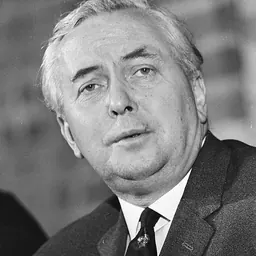



Related people
Same field, nearest in time

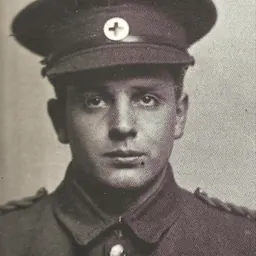



Contemporaries
People whose lives overlapped Gerald Gardiner, Baron Gardiner's
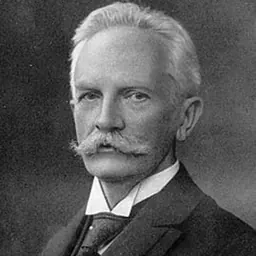



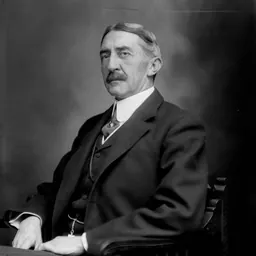

Frequently asked questions
Who was Gerald Gardiner, Baron Gardiner?
British peer (1900–1990)
When was Gerald Gardiner, Baron Gardiner born?
Gerald Gardiner, Baron Gardiner was born on 30 May 1900 in London.
When did Gerald Gardiner, Baron Gardiner die?
Gerald Gardiner, Baron Gardiner died on 7 January 1990 in London.
What was Gerald Gardiner, Baron Gardiner's occupation?
Gerald Gardiner, Baron Gardiner was a paramedic, politician and judge.
What nationality was Gerald Gardiner, Baron Gardiner?
Gerald Gardiner, Baron Gardiner was British.
Sources & further reading
· Wikipedia: Gerald Gardiner, Baron Gardiner
· DBpedia: Gerald Gardiner, Baron Gardiner
Cite this page
APA: Biography.guide. (2026). Gerald Gardiner, Baron Gardiner. https://biography.guide/gerald-gardiner-baron-gardiner/
MLA: "Gerald Gardiner, Baron Gardiner." Biography.guide, https://biography.guide/gerald-gardiner-baron-gardiner/.
Chicago: "Gerald Gardiner, Baron Gardiner." Biography.guide. https://biography.guide/gerald-gardiner-baron-gardiner/.
Data last updated: 2026-09-20 · Spot an error? Report a correction.
Page generated 2026-09-27 05:17 UTC