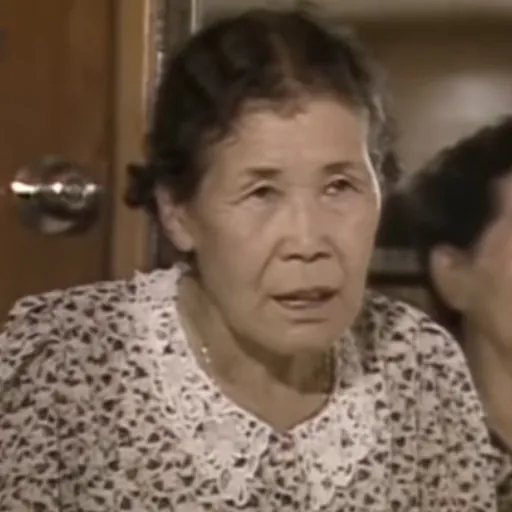
About Kim Hak-sun
Lived 1924 – 1997 (aged 73). Kim Hak-sun was a South Korean human rights defender.
Kim Hak-sun (October 20, 1924 – December 16, 1997 ) was a Korean human rights activist who campaigned against sex slavery and wartime sexual violence. Kim was one of the victims who had been forced into sexual slavery by the Japanese Imperial Army between the early 1930s up until the end of the Pacific War. She is the first woman in Korea to come forward publicly and testify her experience as a comfort woman for the Japanese military. Her testimony was made on 14 August 1991. In December 1991, she filed a class-action lawsuit against the Japanese government for the damages inflicted during the war. She was the first of what would become hundreds of women from Korea, China, Taiwan, the Philippines, Indonesia, and the Netherlands who came forward to tell their stories of their enslavement to the Imperial Japanese military. She was inspired to finally take her story public after 40 years of silence by the growth of the women's rights movement in South Korea. and her husband had tried to rape her before helping her escape.
After the escape Shortly after the liberation of Korea in 1945, Hak-sun and her family returned to Korea. She lived in a refugee camp in Seoul for three months, where her daughter died from cholera. Some time after 1953, her husband died due to wounds incurred when the roof of a building he had been working in collapsed on top of him. In 1990, the Japanese government announced that Japan was not responsible for the issue of military's comfort women, denying the fact that they forcibly took advantage of young women from numerous countries as sex slaves and the existence of comfort stations. However, in the late 1980s, Korea had become a more democratic state and difficult topics like rape were more openly discussed.
Kim was 67 years old when she made the first testimony in 1991. She was coercively taken to Japanese military's comfort station which was located in China at the age of 17 by a Japanese military officer. "I tried to escape, but I was caught soon and raped in tears. I was seventeen then." When she resisted, the officer responded by kicking her and threatening her by saying that she would be killed if she did not obey him. She was then brutally raped. Together with other 4 young Korean women, she had to be a "hygienic tool used by Japanese soldiers to satisfy their sexual desire." Kim and other victims raised their voices to refuse to get the money and demanded Japan atone and legally compensate them. Also, 191 Korean congressmen issued a public statement requiring Japan to admit that sex slavery had been an inhumane war crime, initiate the duty to punish the criminal, and provide legal restitution, and repeal the Asian Women's Fund which blurred the nature of the problem.
Kim rejected the money. She felt distraught and even regretted making the testimony. "I did not come out with my shameful past because of money. What I strongly demand is restitution, not some money for consolation. I live in an apartment provided by the government, and I receive 250 thousand won of support fund monthly. I do not need money." She was dedicated to sacrifice herself for the comfort women. She claimed to record the fact that Japan had not apologized and compensated on history books.
Last interview In 1997, Kim delivered her steadfast opinion about the issue of comfort women during the interview. She was infuriated thinking about the inhumane environment she was forced to be situated in. In the comfort station, she saw many fellow women killed by Japanese soldiers, and she had to live in fear. She had managed to escape the comfort station alive, but many other victims were murdered. After returning to Korea, she had lived her whole life grieving. Although she was victimized and traumatized, the feeling of disgrace was what first overwhelmed her because she could not live a normal life like others did. Rather than being supported, the victims of Japanese sex slavery were scorned and viewed as vulgar, even in their own countries. She could not do anything but spend her days and nights mourning for her ruined youth. She expressed her enragement at Japan's private fund. "What do we get consoled for? That is not right. Uski Geiko, one of the leaders of women's organizations said they would give us about 2 million yen. This is not fair. Japan must atone. My wish is simple: to hear Japan saying sorry. That is what I desperately want."
Book The story of Kim's life as a Korean comfort woman was published in the book The Korean Comfort Women Who Were Coercively Dragged Away for the Military, published in Korea in 1993. The book was edited by the Korean Council for Women Drafted for Military Sexual Slavery by Japan, and includes the stories of 18 other women who were also forced to be comfort women. Her chapter of the book was translated into English and published in the book True Stories of the Korean Comfort Women.
In 1995, she appeared in a stage play entitled Disappeared in Twilight about the life of comfort women.
Don’t just read it —
keep it.
Full-length biographies made to live with: read them, listen on the way to work, watch them tonight.
- E-book
- Audio
- Video
Instant download · yours to keep · every purchase keeps this site free
Important facts
Related people
Same field, nearest in time






Contemporaries
People whose lives overlapped Kim Hak-sun's




Frequently asked questions
Who was Kim Hak-sun?
South Korean activist
When was Kim Hak-sun born?
Kim Hak-sun was born on 20 October 1924 in Jilin.
When did Kim Hak-sun die?
Kim Hak-sun died on 16 December 1997.
What was Kim Hak-sun's occupation?
Kim Hak-sun was a human rights defender.
What nationality was Kim Hak-sun?
Kim Hak-sun was South Korean.
Sources & further reading
Cite this page
APA: Biography.guide. (2026). Kim Hak-sun. https://biography.guide/kim-hak-sun-human-rights-defender/
MLA: "Kim Hak-sun." Biography.guide, https://biography.guide/kim-hak-sun-human-rights-defender/.
Chicago: "Kim Hak-sun." Biography.guide. https://biography.guide/kim-hak-sun-human-rights-defender/.
Data last updated: 2026-09-23 · Spot an error? Report a correction.
Portrait: Wikimedia Commons · author & licence
Page generated 2026-09-27 05:05 UTC