
Kieran Kennedy
Irish neo-Keynesian applied economist
About Kieran Kennedy
Lived 1935 – 2013 (aged 77–78).
Kieran A. Kennedy, MRIA (14 July 1935 – 6 February 2013) was an Irish neo-Keynesian applied economist, economic historian and Director of the Economic and Social Research Institute (ESRI) from 1971 to 1996. A civil servant, lecturer and researcher, he worked with Fianna Fáil Taoiseach Charles Haughey to formulate his economic strategy The Way Forward and directed his and subsequent administrations from the 1980s until Kennedy's retirement.
Biography Kennedy was born on 14 July 1935 in Newbridge, County Kildare. He was the fourth of five sons born to Patrick Kennedy and Margaret Kennedy . His father was a garda and was frequently transferred; consequently, Kennedy lived apart from his family on a farm with his grandmother in eastern Galway. He then re-joined his family in Limerick, where he was 'excellently' taught by the Congregation of Christian Brothers.
A devoted Marian, ecumenist and Catholic, Kennedy joined the Legion of Mary sometime before 1958 and spent one week each year evangelising among lapsed Catholic Irish in England. In 1966, he married University College Dublin lecturer, future ESRI economist and fellow Legion member Finola Flanagan, after being introduced through Duff. Finola authored the so-called "seminal sociological study on the Irish family" for the ESRI in 1989, as well as Duff's 2008 entry in the Dictionary of Irish Biography which Kieran helped research.
After marrying, the Kennedys lived at Sydney Palace Avenue in Sandymount, Dublin and had three sons and three daughters: Kieran, Ruth, Michael, Susan, Lucy, Frank.
Kennedy was a teetotaller but smoked a pipe; he also walked, fished and watched sport on television, although he had apparently never owned one before 1987.
Kennedy died aged 77 on 6 February 2013 in Clonskeagh Hospital, County Dublin after a long illness and was buried at Shanganagh Cemetery.
Education and career Although having qualified for both a state and corporation scholarship to university in 1953, he could accept neither and instead entered the civil service as an executive officer first in the Office of the Comptroller and Auditor General (1954), then the Department of Industry and Commerce (1955). After graduating in 1963, he was awarded a teaching scholarship at Harvard University and received a PhD in economics under the tutelage of 1971 Nobel laureate Simon Kuznets in 1968.
Kennedy completed his doctoral thesis, Productivity and Industrial Growth. The Irish Experience, whilst assistant principal officer in economic policy at the Department of Finance and part-time lecturer at UCD; it would be his first book published in 1971 and variously commended as among the first academic studies of Ireland's twentieth-century economy, and his careful consideration of statistics. Therein, he argues the Salter correlation—the positive association of labour productivity growth and output growth—is owed to dynamic external economies. Under Kennedy, the Institute began publishing annual five-year forecasts alongside its short-term forecasts beginning 1986. He also facilitated the creation of an independent survey unit to augment official statistics. In 1979, an ESRI survey to which Kennedy had given "unwavering support" found 20.7% of Republic of Irish surveyed supported actions of the Irish Republican Army taken in relation to Northern Ireland to some degree. Political and internal backlash prompted Kennedy to both defend the methodology and publish two additional studies in 1980 that confirmed and criticised the original survey. Other parties withdrew support and Haughey was defeated in the November election to a Fine Gael-Labour coalition; with his successor, Garret FitzGerald, Kennedy had only "an imperfect sympathy", whilst reportedly holding Haughey's intellect in great esteem.
Haughey was returned as Taoiseach in the 1987 general election, extending Fine Gael's budget cuts that Labour had rejected and using The Way Forward as a blueprint for economic recovery. The ESRI had its funding slashed, and he reneged on the accusation commissioned research would compromise the ESRI's independence; by 1995, most of its revenue derived from research commissioned or sponsored largely for state or European Union bodies, rather than a state grant or the American Ford Foundation, and increased its total full-time researchers from 25 to 40. He retired as director of the ESRI in October 1996 but continued for some years as a part-time researcher; his last publication with the institute, Reflections on the Process of Irish Economic Growth, was read before the Statistical and Social Inquiry Society of Ireland 26 April 2001.
Kennedy produced over seventy papers in his lifetime on economics and religion, and wrote, co-wrote or edited fourteen books focussing on unemployment, manufacturing and economic history, including The Irish Economy, co-authored with current Fine Gael TD Richard Bruton. He was involved with the early work of the Historical National Accounts Group for Ireland, founded 1994, that collects statistics from between the Great Famine and World War I, and delivered a Thomas Davis lecture for RTÉ on industrial development since the Famine.
Politics and views
Kennedy was a statist and soft interventionist who recognised the constraints associated with Ireland's small, open economy and parties that benefit from a burgeoning private sector. He prioritised lowering unemployment, which he saw as a national failure, over particularly inflation or the deficit, possibly due to his charity work with the Legion of Mary.
Kennedy attacked the Industrial Development Authority for attracting capital intensive industries from abroad that he accused of embellishing growth figures and leaving the country reliant on a multinational sector that created few jobs. Instead, he argued for the State supporting domestic industries that produced raw materials, and attacked successive governments for accumulating foreign debt in the 1970s. Some of his suggestions were implemented in the 1980s, but most were either diluted or cut entirely by unsympathetic civil servants.
While taking night classes at UCD, Kennedy befriended professor and Independent Seanad member George O'Brien, who wrote comforting letters for when he was recuperating from tuberculosis.
Don’t just read it —
keep it.
Full-length biographies made to live with: read them, listen on the way to work, watch them tonight.
- E-book
- Audio
- Video
Instant download · yours to keep · every purchase keeps this site free
Important facts
People in Kieran Kennedy's life
Named in this biography and alive at the same time

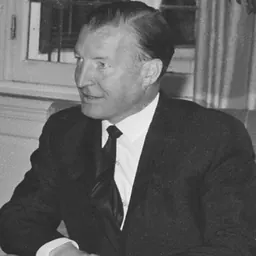





Contemporaries
People whose lives overlapped Kieran Kennedy's


Frequently asked questions
Who was Kieran Kennedy?
Irish neo-Keynesian applied economist (1935–2013)
When was Kieran Kennedy born?
Kieran Kennedy was born in 1935.
When did Kieran Kennedy die?
Kieran Kennedy died in 2013.
Sources & further reading
· DBpedia: Kieran Kennedy (economist)
Cite this page
APA: Biography.guide. (2026). Kieran Kennedy. https://biography.guide/kieran-kennedy-1935/
MLA: "Kieran Kennedy." Biography.guide, https://biography.guide/kieran-kennedy-1935/.
Chicago: "Kieran Kennedy." Biography.guide. https://biography.guide/kieran-kennedy-1935/.
Data last updated: 2026-09-20 · Spot an error? Report a correction.
Page generated 2026-09-27 05:17 UTC