
About Garret FitzGerald
Lived 1926 – 2011 (aged 85). Garret FitzGerald was an Irish economist, politician, diplomat and barrister.
Early life Garret FitzGerald was born in Ballsbridge, Dublin, in 1926, son of Desmond FitzGerald and Mabel McConnell. His mother was involved in politics; it was through her that his father also became political. He had three elder brothers, Desmond (1911–1987), Pierce (1914–1986), and Fergus (1920–1983). His father was born and raised in London and was the Minister for External Affairs at the time of his son's birth.
Although a senior figure on the pro-treaty side of Ireland's political divide, FitzGerald senior had remained friendly with anti-Treaty republicans, such as Belfast man Seán MacEntee, a minister in Éamon de Valera's government and father-in-law of Conor Cruise O'Brien. The families of Patrick McGilligan and Ernest Blythe were also frequent visitors to the FitzGerald household. FitzGerald's mother, the former Mabel Washington McConnell, was a nationalist and republican of Ulster Protestant descent. However, later in life she converted to Catholicism. Her son would later describe his political objective as the creation of a pluralist Ireland where the northern Protestants of his mother's family tradition and the southern Catholics of his father's could feel equally at home.
FitzGerald was educated at the Jesuit Belvedere College and University College Dublin (UCD), from which he graduated with a Bachelor of Arts honours degree in history, French and Spanish in 1946, later returning to complete a PhD in economics which he obtained in 1968; his doctoral thesis was published the following year, titled Planning in Ireland. He was deeply interested in the politics of the Spanish Civil War and World War II. A bright student who counted among his contemporaries in UCD his future political rival, Charles Haughey, who also knew Joan O'Farrell (1923–1999), a Liverpool-born fellow student, whom FitzGerald married in 1947. Their children were John, Mary, and Mark.
Following his university education, in 1947, he started working with Aer Lingus, the state airline of Ireland, and became an authority on the strategic economic planning of transport. During this time, he wrote many newspaper articles, was the Irish correspondent for British magazine The Economist,
FitzGerald qualified as a barrister, from the King's Inns of Ireland, and spoke French fluently.
Early political life FitzGerald was eager to enter politics. Despite his pro-Treaty roots, several members of Fianna Fáil, including Charles Haughey and Michael Yeats, suggested that he should join that party. Ultimately, FitzGerald made his entry into party politics under the banner of Fine Gael, of which his father had been a founding member. He attached himself to the party's liberal wing, which rallied around the Just Society programme written by Declan Costello. FitzGerald was elected to Seanad Éireann for the Industrial and Commercial Panel in 1965 and soon built up his political profile. FitzGerald was elected to Dáil Éireann at the 1969 general election, for the Dublin South-East constituency, the same year he obtained his PhD for a thesis later published under the title "Planning in Ireland". He became an important figure almost immediately in the parliamentary party, and his liberal ideas were seen as a counterweight to the conservative leader, Liam Cosgrave. The difference in political outlook and FitzGerald's ambitions for the Fine Gael leadership resulted in profound tensions between the two men. In his leadership address to the 1972 Fine Gael Ardfheis in Cork, Cosgrave referred to the "mongrel foxes" who should be rooted out of the party, a reference seen by many as an attack on FitzGerald's efforts to unseat him as leader.
FitzGerald was an opponent of the US bombing of North Vietnam.
Minister for Foreign Affairs (1973–1977)
After the 1973 general election, Fine Gael entered office in a coalition government with the Labour Party, with Liam Cosgrave as Taoiseach. FitzGerald hoped
FitzGerald's policy towards church-state relations, however, brought him into a confrontation with the Roman Catholic church, whose "special position" in the Republic had been enshrined in the constitution until the Referendum of December 1972. FitzGerald, in 1973, met the Cardinal Secretary of State, Agostino Casaroli, and proposed to modify the Republic's Constitution further to remove laws with overtly Catholic foundations, such as the bans on divorce and contraception, as well as to relax the public stigmas in Northern Ireland towards mixed religious marriages and integrated education. Casaroli initially seemed receptive, and the government formally submitted the proposal to the Vatican. FitzGerald's vision caused great consternation among the church's hierarchy, however, and in 1977, Pope Paul VI personally met with FitzGerald to tell him that "Ireland was a Catholic country – perhaps the only one left – and it should stay that way. Laws should not be changed in any way that would make the country less Catholic."
Leadership of Fine Gael In 1977, the National Coalition of Fine Gael and Labour suffered a disastrous electoral defeat in the general election. Liam Cosgrave resigned as party leader, and FitzGerald was chosen by acclamation to succeed him. In his new role as Leader of the Opposition and party leader, he set about modernising and revitalising Fine Gael. He immediately appointed a General-Secretary to oversee all of this, a tactic copied from Fianna Fáil. Under FitzGerald, Fine Gael experienced a rapid rise in support and popularity. After the November 1982 election, it held only five seats fewer than Fianna Fáil (the parties' closest-ever margin until 2011; at times Fianna Fáil was far larger, on one occasion well over twice as large), with Fine Gael in the Oireachtas (i.e. including the Seanad) larger than Fianna Fáil, which had been the dominant force in Irish politics for 40 years.
Taoiseach (1981–1982)
By the time of the 1981 general election, Fine Gael had a party machine that could compete with Fianna Fáil. The party won 65 seats and formed a minority coalition government with the Labour Party and the support of several Independent TDs. FitzGerald was appointed as Taoiseach on 30 June 1981. FitzGerald excluded Richie Ryan, Richard Burke and Tom O'Donnell, former Fine Gael stalwarts, from the cabinet.
Two fundamental problems faced FitzGerald during his first period: Northern Ireland and the worsening economic situation. A protest march in support of the H-Block hunger strikers in July 1981 was harshly dealt with by FitzGerald. On one occasion where he met with relatives of the hunger strikers, he refused to meet the family of Bobby Sands, an MP for Fermanagh and South Tyrone and O/C of the Provisional IRA hunger strikers, and the first to die on this strike, along with the sister of Raymond McCreesh, who had died on 21 May. During the meeting, two of Thomas McElwee's sisters, Mary and Nora, broke down and left. Mary McElwee told the media outside that "he's doing nothing, he's asking for suggestions". FitzGerald then ordered Gardaí to remove the families from the meeting. FitzGerald's response was, in the words of Eamonn Sweeney, to "lay all the blame for the hunger strikers on the republican movement and to suggest an immediate unilateral end to their military campaign".
The economic crisis was also much worse than FitzGerald had feared. Fine Gael had to scrap its plans for tax cuts in the run-up to the election, and a draconian mid-year budget was introduced almost immediately. The July budget seemed exceptionally austere for a government dependent on Independent TDs support. The second budget introduced by John Bruton led to the government's defeat in the Dáil on the evening of 27 January 1982.
In light of this loss of supply, FitzGerald went to Áras an Uachtaráin to request a dissolution of the Dáil from the president, Patrick Hillery. The president may refuse to grant a dissolution when it was advised by a Taoiseach who has "ceased to retain the support of a majority in Dáil Éireann". When FitzGerald got there, he was informed that senior opposition figures (and some Independent TDs), including the Opposition leader (and former Taoiseach) Charles Haughey, Brian Lenihan and Sylvester Barrett, had made a series of telephone calls demanding that Hillery refuse the dissolution. Had Hillery done so, it would have forced FitzGerald's resignation as Taoiseach and enabled the Dáil to nominate someone else for the post—presumably Haughey. Hillery is said to have angrily rejected such pressure, regarding it as gross misconduct. He granted FitzGerald the dissolution.
At the February 1982 general election, Fine Gael lost only two seats but was out of office. However, the November 1982 general election (the third election within eighteen months) resulted in FitzGerald being returned as Taoiseach for a second time, heading a Fine Gael–Labour coalition with a working majority.
Taoiseach (1982–1987)
Deep economic recession dominated FitzGerald's second term as well as his first. Pursuing "fiscal rectitude" to reduce a high national debt required a firmer control of public spending than Labour found easy to accept. The harmonious relationship the Taoiseach developed with his Tánaiste, Dick Spring, successfully avoided a collapse of the coalition for more than four years, despite tensions between other Ministers, and enabled the government to survive. Fine Gael wanted to revive the economy by controlling public spending and imposing cutbacks to reduce the public budget deficit.
The measures proposed by FitzGerald's Minister for Finance, Alan Dukes, were utterly unacceptable to the Labour Party, which was under enormous pressure from its support base to maintain public services. The two parties in government found themselves in a stalemate position. They stopped the financial crisis from worsening but could not take the decisive action that would generate economic growth. With negligible economic growth and large-scale unemployment, the FitzGerald government was deeply unpopular with the public.
When FitzGerald attended a Bilderberg meeting in 1985, his rival Haughey suggested it had links with NATO, thus contravening Ireland's official position of neutrality.
Constitutional reform As Taoiseach for a second time, FitzGerald advocated a liberalisation of Irish society to create what he called the non-sectarian nation of "Tone and Davis". The Eighth Amendment of the Constitution, which "[acknowledged] the right to life of the unborn", was approved in a referendum against the recommendation of FitzGerald. A proposal to allow divorce was defeated in a 1986 referendum; however, the law on contraception was liberalised under the Health (Family Planning) (Amendment) Act 1985. and was bitterly opposed by Unionists in Northern Ireland, whose MPs all resigned their seats in the British Parliament in protest. New elections were required to be held in Northern Ireland, in which the unionists lost the seat of Newry and Armagh to Seamus Mallon of the SDLP. During this period, on 15 March 1984, he was also invited to address a joint session of the United States Congress, the fourth Irish leader to do so.
His government had also passed the Extradition Act 1987, which ended the long-standing defence against extradition of suspects who could plead that an act of violence in Northern Ireland or Britain was a political offence.
While the agreement was repudiated and condemned by Unionists, it was said to become the basis for developing trust and joint action between the governments, which in time would ultimately bring about the Downing Street Declaration of 1993 and the subsequent republican and loyalist cease-fires. the parliamentary party elected Alan Dukes in his place. His autobiography appeared in 1991, immediately becoming a best-seller. He retired completely from politics at the 1992 general election. His wife, Joan, predeceased him in 1999 after a long illness.
After that, FitzGerald wrote a weekly column every Saturday in The Irish Times and lectured widely at home and abroad on public affairs. He came out of retirement to campaign for a "yes" vote in the second Irish referendum on the EU's Treaty of Nice, held in 2002. He held the post of Chancellor of the National University of Ireland from 1997 to 2009. In March 2000, FitzGerald was on the board of directors of Election.com when it conducted the world's first public election ever held over the Internet, Arizona's Democratic primary; in that primary, voter turnout increased more than 500% over the 1996 primary.
FitzGerald took a leading part in the campaign for a second referendum on the EU's Treaty of Lisbon in 2009. He argued for Ireland to continue with European integration. FitzGerald had been scathing of the record of the Fianna Fáil–led government since 1997 on the economy and the national finances. In his Irish Times column, he was a frequent critic of the loss of competitiveness and the inflation caused by the tax cuts and excessive public spending increases of the Celtic Tiger era. In 2009, FitzGerald received a new ministerial car, the first and only one to be purchased by the state since an economic recession hit Ireland in 2008. In 2010, FitzGerald appeared on RTÉ's "Top 40 Irishmen" list.
He was vice-president of the Railway Preservation Society of Ireland for his last 20 years.
Finances In early 1999, it emerged that some six years earlier, Allied Irish Banks (AIB) and Ansbacher Banks wrote off debts of almost IR£200,000 owed by FitzGerald, following the collapse of the aircraft leasing company, Guinness Peat Aviation (GPA), in which he was a shareholder. The chairman of AIB at the time, Peter Sutherland, was also a former director of GPA and had served as Attorney General under FitzGerald, prior to FitzGerald appointing him as Ireland's member of the European Commission. The Moriarty Tribunal investigated this matter, They found evidence that he had worked to compromise his indebtedness with AIB and no evidence of any wrongdoing.
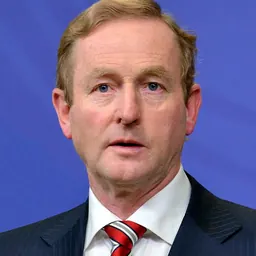
Illness and death On 5 May 2011, it was reported that FitzGerald was seriously ill in a Dublin hospital. Newly elected Fine Gael Taoiseach Enda Kenny sent his regards and called him an "institution"; on 6 May he was put on a ventilator. On 19 May, after suffering from pneumonia, he died at the Mater Private Hospital in Dublin, at the age of 85.
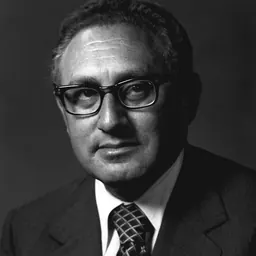
In a statement, Irish president Mary McAleese hailed FitzGerald as "a man steeped in the history of the State who constantly strove to make Ireland a better place for all its people". Taoiseach Enda Kenny paid homage to "a truly remarkable man who made a truly remarkable contribution to Ireland". Henry Kissinger, the former US secretary of state who served as an opposite number to FitzGerald in the 1970s, recalled "an intelligent and amusing man who was dedicated to his country".
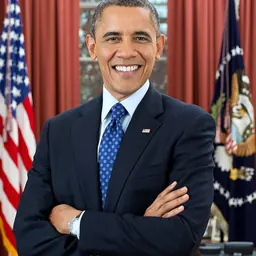
His death occurred on the third day of Queen Elizabeth II's state visit to the Republic of Ireland, an event designed to mark the completion of the Northern Ireland peace process that had been "built on the foundations" of FitzGerald's Hillsborough Agreement with Margaret Thatcher in 1985. In a personal message, the Queen offered her sympathies and said she was "saddened" to learn of FitzGerald's death. British prime minister David Cameron, who was also in Ireland, paid tribute to FitzGerald's "huge contribution to the peace process bringing reconciliation for all that had happened in the past". On his visit to Dublin, US president Barack Obama offered condolences on FitzGerald's death; he spoke of "someone who believed in the power of education; someone who believed in the potential of youth; most of all, someone who believed in the potential of peace and who lived to see that peace realised".
FitzGerald was buried at Shanganagh Cemetery.
Remembrance In February 2012, Young Fine Gael (YFG) announced that its annual summer school would be renamed the Garret FitzGerald YFG Summer School.
Governments led FitzGerald led the following governments: 17th government of Ireland (22nd Dáil; June 1981 – March 1982) 19th government of Ireland (24th Dáil; December 1982 – March 1987)
Honorary doctorates 1985: Saint Mary's University 1986: Keele University 1987: Boston College 1987: Oxford University 1991: National University of Ireland 1999: Trinity College Dublin 2003: Ulster University 2011: Open University
Don’t just read it —
keep it.
Full-length biographies made to live with: read them, listen on the way to work, watch them tonight.
- E-book
- Audio
- Video
Instant download · yours to keep · every purchase keeps this site free
Important facts
Family & relationships
People in Garret FitzGerald's life
Named in this biography and alive at the same time




Related people
Same field, nearest in time


Contemporaries
People whose lives overlapped Garret FitzGerald's


Frequently asked questions
Who was Garret FitzGerald?
Irish politician and prime minister (1926–2011)
When was Garret FitzGerald born?
Garret FitzGerald was born on 9 February 1926 in Ballsbridge.
When did Garret FitzGerald die?
Garret FitzGerald died on 19 May 2011 in Phibsborough.
What was Garret FitzGerald's occupation?
Garret FitzGerald was an economist, politician, diplomat and barrister.
What nationality was Garret FitzGerald?
Garret FitzGerald was Irish.
Sources & further reading
· Wikipedia: Garret FitzGerald
Cite this page
APA: Biography.guide. (2026). Garret FitzGerald. https://biography.guide/garret-fitzgerald-economist/
MLA: "Garret FitzGerald." Biography.guide, https://biography.guide/garret-fitzgerald-economist/.
Chicago: "Garret FitzGerald." Biography.guide. https://biography.guide/garret-fitzgerald-economist/.
Data last updated: 2026-09-20 · Spot an error? Report a correction.
Page generated 2026-09-27 05:31 UTC