
Khwaja Ahmad Abbas
Film director, screenwriter, novelist, and journalist
About Khwaja Ahmad Abbas
Lived 1914 – 1987 (aged 72). Khwaja Ahmad Abbas was an Indian film director, screenwriter, journalist, columnist, autobiographer and writer.
Khwaja Ahmad Abbas (7 June 1914 – 1 June 1987) was an Indian film director, screenwriter, novelist, and journalist in Urdu, Hindi and English.
He won four National Film Awards in India. Internationally, his films won the (Golden Palm Grand Prize) at Cannes Film Festival (out of three nominations) and the Crystal Globe at Karlovy Vary International Film Festival. As a director and screenwriter, he is considered one of the pioneers of Indian parallel or neo-realistic cinema. and opened up the overseas market for Indian films in the Soviet Union. Pardesi (1957) was nominated for the . Shehar Aur Sapna (1963) won the National Film Award for Best Feature Film, while Saat Hindustani (1969) and Do Boond Pani (1972) both won the National Film Awards for Best Feature Film on National Integration.
As a screenwriter, he wrote a number of neo-realistic films, such as (which he also directed),
His column 'Last Page' was one of the longest-running newspaper columns in the history of Indian journalism. It began in 1935, in The Bombay Chronicle, and moved to the Blitz after the Chronicle'''s closure, where it continued until his death in 1987.
Biography
Family background Abbas belonged to the Ansari family of Panipat, tracing its roots back to Abu Ayyub al-Ansari, a close companion of the Islamic prophet Muhammad, and among the famed personalities that it produced we find: the 12th century Sufi saint Abdullah Ansari of Herat in Afghanistan; his maternal great-grandfather Altaf Hussain Hali, a student of Mirza Ghalib and himself an Urdu poet of repute; his paternal grandfather Khwaja Ghulam Abbas, one of the chief rebels of the 1857 Rebellion movement, and the first martyr of Panipat to be blown from the mouth of a cannon; his father Ghulam-us-Sibtain, among the first graduates from Aligarh Muslim University, who was a tutor of a prince and a businessman who modernised the preparation of Unani medicines; Abbas's mother, Masroora Khatoon, was the daughter of Khwaja Sajjad Husain, an educator keen on female education, having established the first school for girls in Panipat.
Early life and education Abbas was born in Panipat, undivided Punjab. He attended Hali Muslim High School, which was established by his maternal grandfather, Hali.
He gained a Bachelor of Arts degree in English literature in 1933 and a Bachelor of Laws degree in 1935 from Aligarh Muslim University.
Illness and death Abbas suffered from a heart attack in the 60s, followed by another more serious heart attack, a paralytic stroke as well a on set accident injuring his legs, but he kept working till his death at the age of 72 on 1 June 1987.
Career
Journalism After leaving university, K.A Abbas began his career as a journalist at the National Call, a New Delhi-based newspaper. Later while studying law in 1934, started Aligarh Opinion.
He joined The Bombay Chronicle in 1935 as a political correspondent and later, became a film critic for the newspaper.
He entered films as a part-time publicist for Bombay Talkies in 1936, a production house owned by Himanshu Rai and Devika Rani, to whom he sold his first screenplay Naya Sansar (1941).
While at The Bombay Chronicle (1935–1947), he started a weekly column called 'Last Page', which he continued when he joined the Blitz magazine. A collection of these columns was later published as two books. He continued to write for The Blitz and Mirror until his last days.
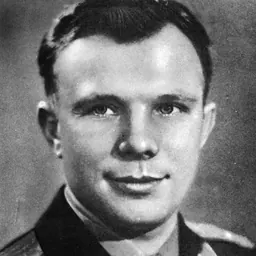
Abbas interviewed several renowned personalities in literary and non-literary fields, including the Russian Prime Minister Khrushchov, American President Roosevelt, Charlie Chaplin, Mao-Tse-Tung and Yuri Gagarin.
Cinema Meanwhile, he had started writing scripts for other directors, for Chetan Anand and for V. Shantaram.
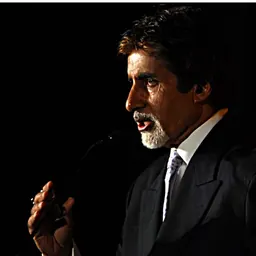
In 1945, he made his directorial debut with a film based on the Bengal famine of 1943, (Children of the Earth), for the Indian People's Theatre Association (IPTA). In 1951, he founded his own production company called Naya Sansar, which consistently produced films that were socially relevant including, Anhonee, Munna, Rahi (1953), based on a Mulk Raj Anand story, was on the plight of workers on tea plantations, the National Film Award winner, Shehar Aur Sapna (1964) and Saat Hindustani (1969), which won the Nargis Dutt Award for Best Feature Film on National Integration and is also remembered as Bollywood icon Amitabh Bachchan's debut film. He wrote the story and screenplay for the controversial themed film in 1974 Call Girl directed by Vijay Kapoor, starring Vikram and Zaheera.
He went on to write scripts for Jagte Raho and prominent Raj Kapoor films including Awaara, Shri 420, Mera Naam Joker, Bobby and Henna.
Literature Abbas wrote 74 books in English, Hindi and Urdu and was considered the leading light of the Urdu short story. His best known fictional work remains 'Inquilab', which made him a household name in Indian literature. Like Inquilab, many of his works were translated into many Indian and foreign languages, like Russian, German, Italian, French and Arabic.
His autobiography, I Am not an Island: An Experiment in Autobiography, was published in 1977 and again in 2010.
Censorship case In 1968, Abbas made a documentary film called Char Shaher Ek Kahani (A Tale of Four Cities). The film depicted the contrast between the luxurious life of the rich in the four cities of Calcutta, Bombay, Madras and Delhi and that of the squalor and poverty of the poor. He approached the Central Board of Film Certification to obtain a 'U' (Unrestricted Public Exhibition) certificate. Abbas was, however, informed by the regional office of the Board that the film was not eligible to be granted a 'U' certificate, but was suitable for exhibition only for adults. His appeal to the revising committee of the Central Board of Film Certification led to the decision of the censors being upheld.
Khwaja Ahmad Abbas further appealed to the Central Government but the government decided to grant the film a 'U' certificate provided certain scenes were cut. Following this, Abbas approached the Supreme Court of India by filing a writ petition under Article 19(1) of the Indian Constitution. He claimed that his fundamental right of free speech and expression was denied by the Central Government's refusal to grant the film a 'U' certificate.
However the Supreme Court of India upheld the constitutional validity of pre-censorship on films.
Awards and honours Films 1942: BFJA Awards: Best Screenplay: Naya Sansar (1941) 1946: Wrote screenplay for , which became the only Indian film to win the (Golden Palm) at the Cannes Film Festival. 1951: Wrote screenplay for Awaara, which was nominated for the at the Cannes Film Festival. 1956: Wrote screenplay for Jagte Raho, which won the Crystal Globe Grand Prix at the Karlovy Vary International Film Festival in 1957, and the Certificate of Merit at the fourth National Film Awards. 1958 Cannes Film Festival: Pardesi nominated for (Golden Palm) 1960: All India Certificate of Merit for the Second Best Children's Film – Idd Mubarak 1964: National Film Award for Best Feature Film: Shehar Aur Sapna 1964: Maharashtra State Award: Fakira 1965: International Film Festival Awards at Santa Barbara, USA: Hamara Ghar 1966: Jury Member: 16th Berlin International Film Festival 1970: Nargis Dutt Award for Best Feature Film on National Integration at National Film Awards: Saat Hindustani 1972: Nargis Dutt Award for Best Feature Film on National Integration at National Film Awards: Do Boond Pani 1980: Gold Award for direction: The NaxalitesLiterary Haryana State Robe of Honour for literary achievements in 1969, the Ghalib Award for his contribution to Urdu prose literature in 1983
Vorosky Literary Award of the Soviet Union in 1984, Urdu Akademi Delhi Special Award 1984, Maharashtra State Urdu Akademi Award in 1985 and the Soviet Award for his contribution to the cause of Indo-Soviet Friendship in 1985.
Filmography
Naya Sansar (1941) – Screenplay, Story (1946) – Screenwriter, director, producer (1946) – Screenwriter, Story (1946) – Screenwriter (1947) – Director Awara (1951) – Screenwriter, Dialogue Anhonee (1952) – Screenwriter, Dialogue, Story, director, producer Rahi 1953 – Director Munna (1954) – Screenwriter, director, producer Shree 420 (1955) – Screenwriter, Dialogue, Story Jagte Raho (1956) – Screenwriter Pardesi (1957)– Screenwriter, director Char Dil Char Rahen (1959) – Screenwriter, Dialogue, director Eid Mubarak (1960) Documentary / Short – Director Gir Game Sanctuary (1961) Documentary – Director Flight to Assam (1961) – Director Gyara Hazar Ladkian (1962) – Director Teen Gharaney (1963) – Director Shehar Aur Sapna (1964) – Director, screenwriter Hamara Ghar (1964) – Director Tomorrow Shall Be Better (1965) Documentary – Director Aasman Mahal (1965) – Director Bambai Raat Ki Bahon Mein (1967) – Writer, director, producer Dharti Ki Pukaar (1967) Short Film – Director Chaar Shaher Ek Kahani (1968) Documentary – Director Saat Hindustani (1969) – Director, producer Mera Naam Joker (1970) – Screenwriter, Story Do Boond Pani (1971) – Director Bharat Darshan (1972) Documentary - Director Luv Kush (1972) Short film - Director Bobby (1973) – Screenwriter, Story Kal Ki Baat (1973) Short Film – Director Call Girl (1973) - Story and Screenplay Achanak (1973) – Screenwriter Juhu (1973) (TV) – Director Faslah (1974) – Director, producer Papa Miya of Aligarh (1975) Documentary – Director Phir Bolo Aaye Sant Kabir (1976) Documentary – Director Dr. Iqbal (1978) – Documentary – Director The Naxalites (1980) – Screenwriter, director Hindustan Hamara (1983) Documentary / Short – Director Love in Goa (1983) – Screenwriter Nanga Fakir (1984) (TV) – Director Ek Aadmi (1988) – Director Akanksha (1989) (TV) – Dialogue, Screenplay Henna (1991) – Story
Books He wrote 74 books in English, Urdu and Hindi, including: Outside India: The Adventures of a Roving Reporter, Hali Pub. House, Delhi, 1939. An Indian looks at America (The Rampart library of good reading), 1943. An Indian looks at America, Thacker, Bombay, 1943. Tomorrow is ours! A novel of the India of Today; Bombay, Popular Book Depot, 1943. "Let India fight for freedom", Bombay, Sound magazine (Publication dept.), 1943. Defeat for death: A story without names, Padmaja Publications 1944. "...and One Did Not Come Back!", Sound magazine, 1944 A report to Gandhiji: A survey of Indian and world events during the 21 months of Gandhiji's incarceration, 1944 Invitation to Immortality: a one-act play, Bombay: Padma Pub., 1944. Not all Lies. Delhi: Rajkamal Pub., 1945. Blood and stones and other stories. Bombay: Hind Kitabs, 1947 Rice and other stories, Kutub, 1947 Kashmir fights for freedom, 1948 I Write as I Feel, Hind Kitabs, Bombay, 1948 Cages of freedom and other stories, Bombay, Hind Kitabs Ltd., 1952. China can make it: Eye-witness account of the amazing industrial progress in new China, 1952. In the Image of Mao Tse-Tung, Peoples Publishing House, 1953 INQILAB. First Great Novel of the Indian Revolution, Jaico Publishing House, 1958 Face To Face with Khrushchov, Rajpal & Sons, 1960 Till We Reach the Stars. The Story of Yuri Gagarin, Asia Pub. House, 1961 The Black sun and Other stories, Jaico Publishing House, 1963. Raat ki bahon mein, Hindi, Radhakr̥ishṇa Prakashan, 1965. Indira Gandhi; return of the red rose, Hind Pocket Books, New Delhi, 1966. Divided heart, Paradise Publications, 1968 When Night Falls, 1968. Chabili, Hindi, Allahabad, Mitra Prakashan, 1968. The most beautiful woman in the world, Paradise Publications, 1968 Salma aur Samundar, Urdu/Hindi, New Delhi, Komala Pocket Books, 1969. Mera Naam Joker, 1970 Maria, Delhi, Hind Pocket Books, 1971. Teen Pahiye, Urdu/Hindi, Delhi, Rajpal & Sons, 1971. Bobby, Urdu/Hindi, 1973 Boy meets Girl, Sterling Publishers, 1973 That Woman: Her Seven Years in Power; New Delhi, Indian Book Co., 1973 Jawaharlal Nehru: Portrait of an integrated Indian; New Delhi, NCERT, 1974. Fasilah, Urud/Hindi, Hind Pocket Books, Delhi, 1974 Distant dream, New Delhi, Sterling Pub., 1975. The walls of glass: A novel, 1977 Barrister-at-law: A play about the early life of Mahatma Gandhi, New Delhi, Orient Paperbacks, 1977. Men and women: Specially selected long and short stories, 1977 Mad, mad, mad world of Indian films, 1977 I Am not an Island: An Experiment in Autobiography, New Delhi, 1977. Four Friends, Arnold-Heinemann, New Delhi, 1977. 20 March 1977: a day like any other day, Vikas Publishing House, New Delhi, 1978. Janata in a jam?, 1978. The Naxalites, Lok Publications, 1979. Bread, beauty, and revolution: being a chronological selection from the Last pages, 1947 to 1981, Marwah Publications, New Delhi, 1982. Nili Sari aur Doosri Kahaniyan̲, Urdu, Maktabah-e-Jamia, New Delhi, 1982. The gun and other stories, Arnold-Heinemann, New Delhi, 1985. The Thirteenth Victim, Amar Prakashan, 1986. The World Is My Village: A Novel With An Index, Ajanta, 1984. Bombay My Bombay: A Love Story of the City, Ajanta Publications/Ajanta Books International, 1987. Indira Gandhi: The Last Post; Bombay, Ramdas G. Bhatkal, 1989 Defeat for death: a story without names. Baroda: Padmaja Pub., 1994 How Films Are Made, National Book Trust, 1999, Soney Chandi ke Butt, Urdu, Alhamra, 2001, For detailed listing :
Don’t just read it —
keep it.
Full-length biographies made to live with: read them, listen on the way to work, watch them tonight.
- E-book
- Audio
- Video
Instant download · yours to keep · every purchase keeps this site free
Important facts
People in Khwaja Ahmad Abbas's life
Named in this biography and alive at the same time



Related people
Same field, nearest in time



Contemporaries
People whose lives overlapped Khwaja Ahmad Abbas's



Frequently asked questions
Who was Khwaja Ahmad Abbas?
film director, screenwriter, novelist, and journalist (1914–1987)
When was Khwaja Ahmad Abbas born?
Khwaja Ahmad Abbas was born on 7 June 1914 in Panipat.
When did Khwaja Ahmad Abbas die?
Khwaja Ahmad Abbas died on 1 June 1987 in Mumbai.
What was Khwaja Ahmad Abbas's occupation?
Khwaja Ahmad Abbas was a film director, screenwriter, journalist, columnist, autobiographer and writer.
What nationality was Khwaja Ahmad Abbas?
Khwaja Ahmad Abbas was Indian.
Sources & further reading
· Wikipedia: Khwaja Ahmad Abbas
Cite this page
APA: Biography.guide. (2026). Khwaja Ahmad Abbas. https://biography.guide/khwaja-ahmad-abbas/
MLA: "Khwaja Ahmad Abbas." Biography.guide, https://biography.guide/khwaja-ahmad-abbas/.
Chicago: "Khwaja Ahmad Abbas." Biography.guide. https://biography.guide/khwaja-ahmad-abbas/.
Data last updated: 2026-09-20 · Spot an error? Report a correction.
Page generated 2026-09-27 05:32 UTC