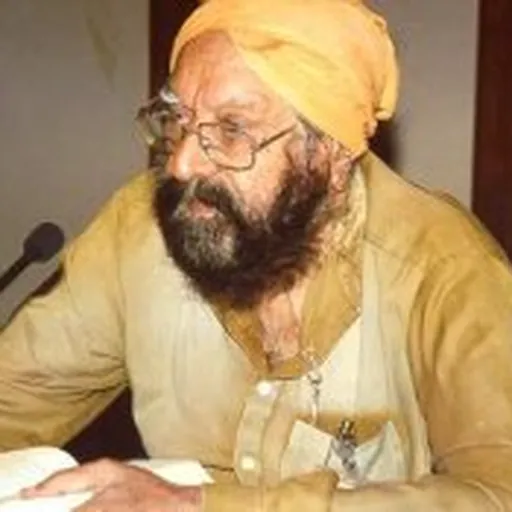
Khushwant Singh
Indian author, lawyer, diplomat, journalist and politician
About Khushwant Singh
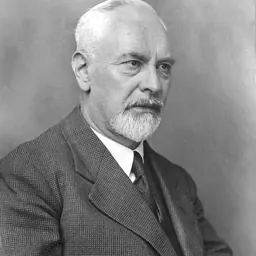
Lived 1915 – 2014 (aged 99). Khushwant Singh was an Indian writer, journalist, politician, poet lawyer, diplomat and lawyer.
Khushwant Singh FKC (born Khushal Singh, 2 February 1915 – 20 March 2014) was an Indian author, lawyer, diplomat, journalist and politician. His experience in the 1947 Partition of India inspired him to write Train to Pakistan in 1956 (made into film in 1998), which became his most well-known novel.
Born in Punjab, Khushwant Singh was educated in Modern School, New Delhi, St. Stephen's College, and graduated from Government College, Lahore. He studied at King's College London and was awarded an LL.B. from University of London. He was called to the bar at the London Inner Temple. After working as a lawyer in Lahore High Court for eight years, he joined the Indian Foreign Service upon the Independence of India from British Empire in 1947. He was appointed journalist in the All India Radio in 1951, and then moved to the Department of Mass Communications of UNESCO at Paris in 1956. These last two careers encouraged him to pursue a literary career. As a writer, he was best known for his trenchant secularism, humour, sarcasm and an abiding love of poetry. His comparisons of social and behavioural characteristics of Westerners and Indians are laced with acid wit. He served as the editor of several literary and news magazines, as well as two newspapers, through the 1970s and 1980s. Between 1980 and 1986 he served as Member of Parliament in Rajya Sabha, the upper house of the Parliament of India.
Khushwant Singh was awarded the Padma Bhushan in 1974; however, he returned the award in 1984 in protest against Operation Blue Star in which the Indian Army raided Amritsar. In 2007, he was awarded the Padma Vibhushan, the second-highest civilian award in India.
Early life Khushwant Singh was born in Hadali, Khushab District, Punjab (which now lies in Pakistan), in a Khatri Sikh family of the Khurana Clan. He was the younger son of Sir Sobha Singh and Veeran Bai. Births and deaths were not recorded in his time, and for him his father simply made up 2 February 1915 for his school enrollment at Modern School, New Delhi. But his grandmother Lakshmi Devi asserted that he was born in August, so he later set the date for himself as 15 August. His uncle Sardar Ujjal Singh (1895–1983) was previously Governor of Punjab and Tamil Nadu.
His birth name, given by his grandmother, was Khushal Singh (meaning "Prosperous Lion"). He was called by a pet name "Shalee". At school his name earned him ridicule as other boys would mock him with an expression, "Shalee Shoolee, Bagh dee Moolee" (meaning, "This shalee or shoolee is the radish of some garden.") He chose Khushwant so that it rhymes with his elder brother's name Bhagwant. He declared that his new name was "self-manufactured and meaningless". However, he later discovered that there was a Hindu physician with the same name, and the number subsequently increased.
He entered the Delhi Modern School in 1920 and studied there till 1930. There he met his future wife, Kanwal Malik, one year his junior. He pursued higher education at Government College, Lahore, in 1932, and got his BA in 1934 by a "third-class degree". Then he went to King's College London to study law, and was awarded an LL.B. from University of London in 1938. He was subsequently called to the bar at the London Inner Temple. From 1956 he turned to editorial services. He founded and edited Yojana, an Indian government journal in 1951–1953; The Illustrated Weekly of India, a newsweekly National Herald. He was also appointed as editor of Hindustan Times on Indira Gandhi's personal recommendation.
During his tenure, The Illustrated Weekly became India's pre-eminent newsweekly, with its circulation raising from 65,000 to 400,000. After working for nine years in the weekly, on 25 July 1978, a week before he was to retire, the management asked Singh to leave "with immediate effect". In 2016 Khushwant Singh enters Limca Book of Records as a tribute.
Politics Khushwant Singh meeting Dr. A.P.J. Abdul Kalam before receiving the Padma Vibhushan.From 1980 to 1986, Singh was a member of Rajya Sabha, the upper house of the Indian parliament. He was awarded the Padma Bhushan in 1974 for service to his country. In 1984, he returned the award in protest against the siege of the Golden Temple by the Indian Army. In 2007, the Indian government awarded Khushwant Singh the Padma Vibhushan.
Singh's faith in the Indian political system was shaken by the anti-Sikh riots that followed Indira Gandhi's assassination, in which major Congress politicians are alleged to be involved; but he remained resolutely positive on the promise of Indian democracy and worked via Citizens Justice Committee floated by H. S. Phoolka who is a senior advocate of Delhi High Court, and was a member of The Sikh Forum of Lt. Gen. Jagjit Singh Aurora.
Singh was a votary of greater diplomatic relations with Israel at a time when India did not want to displease Arab nations where thousands of Indians found employment. He visited Israel in the 1970s and was impressed by its progress.
Personal life
Khushwant Singh was married to Kanwal Malik. Malik was his childhood friend who had moved to London earlier. They met again when he studied law at King's College London, and soon got married. Muhammad Ali Jinnah also attended the formal service. They had a son, named Rahul Singh, and a daughter, named Mala. His wife predeceased him in 2001.
Religious belief
Singh was a self-proclaimed agnostic, as the title of his 2011 book Agnostic Khushwant: There is no God explicitly revealed. He was particularly against organised religion. He was evidently inclined towards atheism, as he said, "One can be a saintly person without believing in God and a detestable villain believing in him. In my personalised religion, There Is No God!" He also once said, "I don't believe in rebirth or in reincarnation, in the day of judgement or in heaven or hell. I accept the finality of death." His last book The Good, The Bad and The Ridiculous was published in October 2013, following which he retired from writing. The book was his continued critique of religion and especially its practice in India, including the critique of the clergy and priests. It earned a lot of acclaim in India. Khushwant Singh had once controversially claimed that Sikhism was a "warrior branch of Hinduism".
Singh had once remarked his admiration for a Hindu spiritual leader (guru) Kripalu Maharaj, saying that the guru's "gift of the gab" is "more forthright, logical, lucid" than other gurus, and that his teaching "makes more sense to a non-believer like me than others". When he learned of the death of the guru's wife in 2009, he sent a note of condolence, describing: "People like me do not believe in swarg (heaven), nark (hell), pichhla janam (previous birth) or agla janam (next birth). There is no proof whatsoever to back these speculations."
Death Singh died of natural causes on 20 March 2014 at his Delhi residence, at the age of 99. The President, Vice-President and Prime Minister of India all issued messages honouring Singh. He was cremated at Lodhi Crematorium in Delhi at 4 in the afternoon of the same day. He was born in Hadali, Khushab District in the Punjab Province of modern Pakistan, in 1915. According to his wishes, some of his ashes were brought and scattered in Hadali.
In 1943 he had already written his own obituary, included in his collection of short stories Posthumous. Under the headline "Sardar Khushwant Singh Dead", the text reads:
He also prepared an epitaph for himself, which runs:
He was cremated and his ashes are buried in Hadali school, where a plaque is placed bearing the inscription:
Honours and awards Rockefeller Grant, 1966 Padma Bhushan, Government of India (1974) (He returned the decoration in 1984 in protest against the Union government's siege of the Golden Temple, Amritsar) 'All-India Minorities Forum Annual Fellowship Award' by Uttar Pradesh Chief Minister Akhilesh Yadav (2012) Lifetime achievement award by Tata Literature Live! The Mumbai Litfest in 2013 The History of Sikhs, 1953 Train to Pakistan, (novel) 1956 Ranjit Singh: The Maharaja of the Punjab, 1963 The Sikhs, 1984 The Collected Stories of Khushwant Singh, Ravi Dayal Publisher, 1989 More Malicious Gossip, 1989 (collection of essays) Delhi: A Novel, (Novel) 1990 Not a Nice Man to Know: The Best of Khushwant Singh, 1993 The Company of Women, (novel) 1999 Big Book of Malice, 2000, (collection of essays) India: An Introduction, 2003 Truth, Love & a Little Malice: An Autobiography, 2002 With Malice towards One and All The End of India, 2003 Paradise and Other Stories, 2004 Death at My Doorstep, 2004 The Illustrated History of the Sikhs, 2006 Why I Supported the Emergency: Essays and Profiles, 2009 Gods and Godmen of India, 2012 Agnostic Khushwant: There is no God, 2012 The Freethinker's Prayer Book and Some Words to Live By, 2012 The Good, the Bad and the Ridiculous, 2013 (co-authored with Humra Qureshi) Punjab, Punjabis & Punjabiyat: Reflections on a Land and its People, 2018 (posthumously compiled by his daughter Mala Dayal)
Short story The Portrait of a Lady The Strain Success Mantra The Portrait of a Lady: Collected Stories (2013)
Don’t just read it —
keep it.
Full-length biographies made to live with: read them, listen on the way to work, watch them tonight.
- E-book
- Audio
- Video
Instant download · yours to keep · every purchase keeps this site free
Important facts
People in Khushwant Singh's life
Named in this biography and alive at the same time


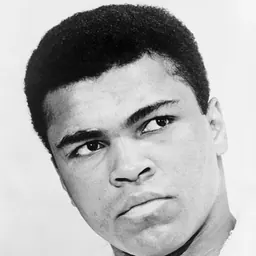
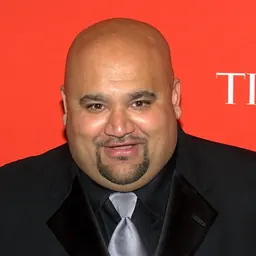
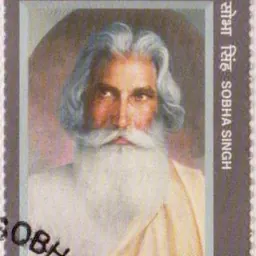
Related people
Same field, nearest in time



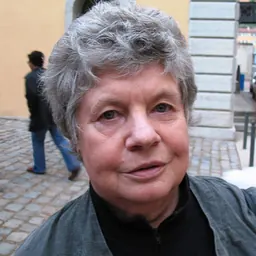
Contemporaries
People whose lives overlapped Khushwant Singh's




Frequently asked questions
Who was Khushwant Singh?
Indian author, lawyer, diplomat, journalist and politician (1914–2014)
When was Khushwant Singh born?
Khushwant Singh was born on 2 February 1915 in Hadali.
When did Khushwant Singh die?
Khushwant Singh died on 20 March 2014 in New Delhi, Delhi.
What was Khushwant Singh's occupation?
Khushwant Singh was a writer, journalist, politician, poet lawyer, diplomat and lawyer.
What nationality was Khushwant Singh?
Khushwant Singh was Indian.
Sources & further reading
Cite this page
APA: Biography.guide. (2026). Khushwant Singh. https://biography.guide/khushwant-singh/
MLA: "Khushwant Singh." Biography.guide, https://biography.guide/khushwant-singh/.
Chicago: "Khushwant Singh." Biography.guide. https://biography.guide/khushwant-singh/.
Data last updated: 2026-09-23 · Spot an error? Report a correction.
Portrait: Wikimedia Commons · author & licence
Page generated 2026-09-27 05:07 UTC