
About Khaled Asaad
Lived 1932 – 2015 (aged 83). Khaled Asaad was a Syrian archaeologist, professor, historian and curator, known for Antiquities and Palmyra.
Politics It is believed that he joined the Syrian Socialist Ba'ath Party around 1954.
Death
In May 2015, modern Palmyra and the adjacent ancient city came under the control of the Islamic State. Al-Asaad helped evacuate the city museum prior to the Islamic State's takeover,
The New York Times reported:
Al-Asaad's son told journalist Jeremy Bowen that he was killed for refusing to pledge allegiance to the Islamic State.
Following al-Asaad's death, the Islamic State hung a placard on his corpse listing his alleged "crimes": being an "apostate", representing Syria at "infidel conferences", serving as "the director of idolatry" in Palmyra, visiting "Heretic Iran", and communicating with "a brother in the Syrian security services".
In February 2021, Syrian state sources reported the discovery of al-Asaad's body in the countryside 10 km east of Palmyra. It was later ruled out and in April 2021 family Khaled family vowed to continue the search.
Along with al-Asaad, Qassem Abdullah Yehya, the deputy director of the DGAM Laboratories, also protected the Palmyra site, and was murdered by the Islamic State while on duty on 12 August 2015. He was thirty-seven years old.
Reactions The Chief of Syrian Antiquities, Maamoun Abdulkarim, condemned al-Asaad's death, calling him "a scholar who gave such memorable services to the place Palmyra and to history". He called al-Asaad's killers a "bad omen on Palmyra". UNESCO and its general director Irina Bokova condemned al-Asaad's murder, saying "They killed him because he would not betray his deep commitment to Palmyra. Here is where he dedicated his life." The United Kingdom and France released statements condemning the murder and destruction at Palmyra. Expressing hope that the killers would one day be brought to justice, India's Aligarh Historians Society said, "Civilized people, irrespective of country or religion, must unite in their support for all political and military measures designed to achieve this end, especially those being made by the governments of Syria and Iraq." Persian-American poet Kaveh Akbar published the poem "Palmyra" in response to al-Asaad's death. The poem's dedication reads "after Khaled al-Asaad".
Honours and medals Syrian honors Order of Civil Merit (2015) - Awarded posthumously
Foreign honors Poland – Order of Merit of the Republic of Poland (1998)
Italy – On 17 October 2015, the President of Italy inaugurated the rehabilitated in Pisa which was renamed after al-Asaad.
Film A 2019 film titled Dam al Nakhl (Blood of the Palm Trees) portrays al-Asaad's brave resistance against the Islamic State.
Selected publications 2nd edition 1990.
Asaad, Khaled; Yon, Jean-Baptiste (2001), Inscriptions de Palmyre. Promenades épigraphiques dans la ville antique de Palmyre (= Guides archéologiques de l'Institut Français d'Archéologie du Proche-Orient Bd. 3). Institut Français d'Archéologie du Proche-Orient, Beirut 2001. Asaad, Khaled; Schmidt-Colinet, Andreas (eds) (2013), Palmyras Reichtum durch weltweiten Handel. Archäologische Untersuchungen im Bereich der hellenistischen Stadt. 2 vols. Holzhausen, Vienna 2013;.
Don’t just read it —
keep it.
Full-length biographies made to live with: read them, listen on the way to work, watch them tonight.
- E-book
- Audio
- Video
Instant download · yours to keep · every purchase keeps this site free
Important facts
People in Khaled Asaad's life
Named in this biography and alive at the same time

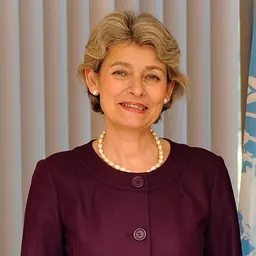

Related people
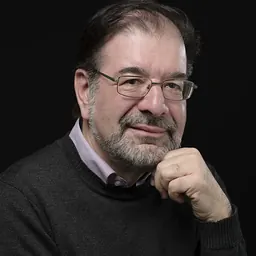
Same field, nearest in time
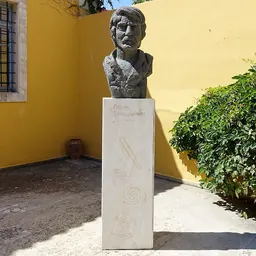


Contemporaries
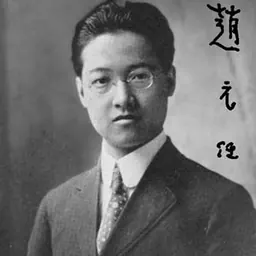
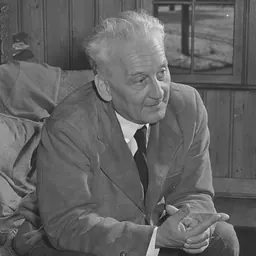
People whose lives overlapped Khaled Asaad's



Frequently asked questions
Who was Khaled Asaad?
Syrian archeologist
When was Khaled Asaad born?
Khaled Asaad was born on 1 January 1932 in Tadmur.
When did Khaled Asaad die?
Khaled Asaad died on 18 August 2015 in Palmyra.
What was Khaled Asaad's occupation?
Khaled Asaad was an archaeologist, professor, historian and curator.
What was Khaled Asaad known for?
Khaled Asaad was known for Antiquities and Palmyra.
What nationality was Khaled Asaad?
Khaled Asaad was Syrian.
Sources & further reading
Cite this page
APA: Biography.guide. (2026). Khaled Asaad. https://biography.guide/khaled-asaad/
MLA: "Khaled Asaad." Biography.guide, https://biography.guide/khaled-asaad/.
Chicago: "Khaled Asaad." Biography.guide. https://biography.guide/khaled-asaad/.
Data last updated: 2026-09-22 · Spot an error? Report a correction.
Page generated 2026-09-27 05:19 UTC