
Khafi Khan
A civil servant and historian of Mughal India
About Khafi Khan
Lived 1664 – 1732 (aged 67–68).
Muhammad Hashim (c. 1664–1732), better known by his title Khafi Khan, was an Indo-Persian historian of Mughal India. His career began about 1693–1694 as a clerk in Bombay. He served predominantly in Gujarat and the Deccan regions, including the final decade of Mughal emperor Aurangzeb.
Biography
Muhammad Hashim was given the title Khafi Khan (or Khwafi Khan) by emperor Muhammad Shah, because his ancestors came from Khaf (or Khwaf) in present-day Iran. The exact date and place of his birth are unknown, but he was most probably born in India. The Muntakhab-al Lubab states that he had completed 52 years since reaching "the age of discretion" when 74 years had passed after the death of Shah Jahan's minister Sa'd Allah (Hijri year 1066). Assuming the contemporary "age of discretion" as 14 years, this implies that Khafi Khan was born around 1664.
Khafi Khan's father Khwaja Mir was also a historian, and held a high position under the Mughal prince Murad. Khafi Khan probably started his career as a merchant or an official clerk, and visited Bombay in 1693–1694, where he had an interview with an English official.
Khafi Khan served Aurangzeb's successors, including the short-lived reigns of Bahadur Shah, Farrukhsiyar, and Muhammad Shah.
Khafi Khan's Muntakhab-al Lubab has been a much studied text in the modern era. It covers events up to the beginning of the 14th year of Muhmmad Shah's reign, that is, about 1731–1732.
In the first version of Khafi Khan's work (MSS 6573 and 6574 in British Library), the wholesale copying of patently fictitious material is most apparent. His last version – published by K.D. Ahmad in 1874 – removed most of the personal details of other authors whose work he embedded in his text, condensed what he had plagiarized, altered the opinions to the narrative he preferred, changed the version of the history of previous authors, then "substantially added to the narrative of the later years of Aurangzeb's reign", states Ali. Sharma states that he has stumbled into a manuscript in Rampur library that reads like Khafi Khan's book, but is written by Abu'l Fazl Ma'muri. In significant parts, states Sharma, Khafi Khan took Abu'l Fazl Ma'muri work, stripped the text therein of the actual author's name, embellished it with his own opinions and narrative and published it as his own work.
According to the historian Munis Faruqui, Khafi Khan is a much used source on Deccan during the Aurangzeb and post-Aurangzeb period. It is an important but questionable source, because Khafi Khan presents a one-sided Islamist view, one that portrayed "Hyderabad as an Islamic bastion in the Deccan". Khafi Khan is regarded as an important source of Mughal-era events and motives, such as the resignation of the Nizam from all the imperial commissions of the Mughal empire years after the death of Aurangzeb.
Translations Khafi Khan's Muntakhab-al Lubab has been translated into English by Syed Moinul Haq, as Khafi Khan's History of Alamgir (Karachi). It is available as a separate book, as well as articles in different volumes of the Journal of the Pakistan Historical Society.
Elliot and Dowson also published an English translation of Muntakhab-al Lubab in the 19th century. Jadunath Sarkar has compared Khafi Khan and Saqi Mustaid Khan versions in his five volume-publications on Mughal period and History of Aurangzib.
Usage Khafi Khan's text has been one of the favorite sources of historical information about Aurangzeb. Audrey Truschke, in her book Aurangzeb: The Life and Legacy of India's Most Controversial King, uses the Haq's translation as one of her sources. She calls Khafi Khan a "laudatory" historian for Aurangzeb. According to Truschke, Khafi Khan is one of the "so-called key historians" of Aurangzeb along with Saqi Mustaid Khan, who wrote Maasir-i Alamgiri. However, the reliability of both is questionable because Khafi Khan's 1731 version and Saqi Khan's 1711 version were written years after Aurangzeb's death in 1707. This gap of years means that they "relied extensively on memory and hearsay to reconstruct events" and this must have "allowed unintentional errors to creep into their chronicles", says Truschke.
Don’t just read it —
keep it.
Full-length biographies made to live with: read them, listen on the way to work, watch them tonight.
- E-book
- Audio
- Video
Instant download · yours to keep · every purchase keeps this site free
Important facts
People in Khafi Khan's life
Named in this biography and alive at the same time

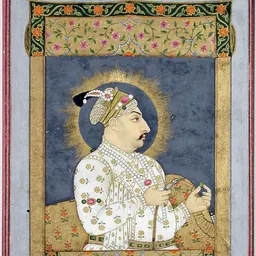
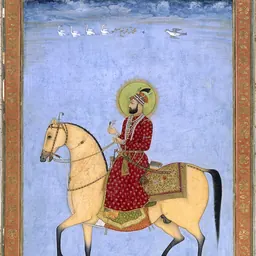

Contemporaries
People whose lives overlapped Khafi Khan's




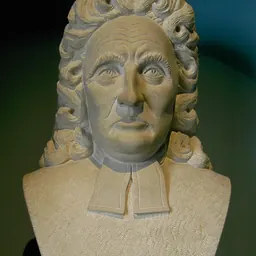

Frequently asked questions
Who was Khafi Khan?
a civil servant and historian of Mughal India
When was Khafi Khan born?
Khafi Khan was born in 1664.
When did Khafi Khan die?
Khafi Khan died in 1732.
Sources & further reading
Cite this page
APA: Biography.guide. (2026). Khafi Khan. https://biography.guide/khafi-khan/
MLA: "Khafi Khan." Biography.guide, https://biography.guide/khafi-khan/.
Chicago: "Khafi Khan." Biography.guide. https://biography.guide/khafi-khan/.
Data last updated: 2026-09-20 · Spot an error? Report a correction.
Page generated 2026-09-27 05:28 UTC