
About Khachatur Abovian
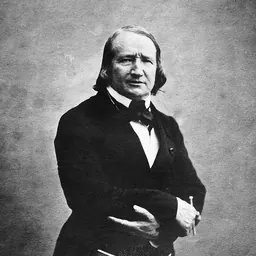
Lived 1805 – 1848 (aged 42–43). Khachatur Abovian was a Russian writer, novelist, teacher, poet, playwright and prose writer.
Khachatur Abovian (; disappeared ) was an Armenian polymath, educator, scientist, philosopher, writer, poet and an advocate of modernization. He mysteriously vanished in 1848 and was eventually presumed dead. Reputed as the father of modern Armenian literature, he is best remembered for his novel Wounds of Armenia. Written in 1841 and published posthumously in 1858, it was the first novel published in the Modern Armenian language, based on the Yerevan dialect instead of Classical Armenian. Abovian is regarded as one of the foremost figures not just in Armenian literature, but Armenian history at large. Abovian's influence on Western Armenian literature was not as strong as it was on Eastern Armenian, particularly in its formative years.
Early life and career
Abovian was born in 1809 in the village of Kanaker, then part of Qajar Iran, and now a district of Yerevan, Armenia. Abovian's family were descendants of the family in Gulistan, one of five Armenian families who ruled around the current-day region of Nagorno-Karabakh. The Abovian family held the position of (a hereditary lordship) in Kanaker; Abovian's uncle was the last of Kanaker. His aunt was the wife of Sahak Aghamalian, the last of Yerevan at the time of the Russian annexation in 1828. His social origins and descent imbued him at an early age with a sense of responsibility to his people. Griboyedov's weekly became the first paper to publish an article on Abovian.
Conquest of Ararat The turning point in Abovian's life was the arrival of Friedrich Parrot in Armenia in September 1829, a professor of physics from the Imperial University of Dorpat in Livonia (in present-day Tartu, Estonia). Parrot traveled to Armenia to climb Mount Ararat to conduct geological studies and required a local guide and a translator for the expedition. The Catholicos assigned Abovian to these tasks.
Abovian and Parrot crossed the Arax River into the district of Surmalu and headed to the Armenian village of Akhuri situated on the northern slope of Ararat above sea level. Following the advice of Harutiun Alamdarian of Tiflis, they set up base camp at the Monastery of St. Hakob some higher, at an elevation of . Abovian was one of the last travelers to visit Akhuri and the monastery before a disastrous earthquake completely buried both in May 1840. Abovian dug a hole in the ice and erected a wooden cross facing north. Abovian picked up a chunk of ice from the summit and carried it down with him in a bottle, considering the water holy. On 8 November, Parrot and Abovian climbed up Lesser Ararat. Years later, in 1845, the German mineralogist Otto Wilhelm Hermann von Abich climbed Ararat with Abovian. Abovian's third and last ascent of Ararat was with the Englishman Henry Danby Seymour in 1846. He entered the university directly without additional preparation and studied in the Faculty of Philosophy of the Philological-Historical Department from 3 September 1830 to 18 January 1836. The years in Dorpat (present-day Tartu, Estonia) were very fruitful for Abovian who studied social and natural sciences, European literature and philosophy, and mastered German, Russian, French and Latin. In addition, Abovian established numerous contacts with European intellectuals of the time. At the university he became friends with the sons of Nikolay Karamzin who studied with him. In 1834 Abovian visited his cousin Maria (daughter of Sahak Aghamalian) in Saint Petersburg, who then married to the Georgian prince Alexander. Prior to graduation, Abovian learned that his mother Takuhi had died. Abovian's efforts were thwarted as he faced a growing and hostile reaction from the Armenian clergy as well as Tsarist officials, largely stemming from his opposition to dogmatism and formalism in the school system. Abovian was appointed as the supervisor of the Tiflis uyezd school and married a German woman named Emilia Looze (died 1870) in 1839. He was dismissed from the school in 1843 and was transferred to the subdivisional uyezd school in Yerevan where he encountered apathy and antagonism from his colleagues and the clergy. In July Abovian also accompanied Wagner on the first recorded ascent of Mount Aragats in Armenia.
In August, Abovian escorted the German Baron August von Haxthausen around the province. They visited the Abovian family home in Kanaker and attended a service at the Blue Mosque. They also visited a Yazidi encampment where they met the chief Timur Aga and exchanged pleasantries with a rider from Count Paskevich's guard. He became a trusted friend of the Yazidi community in Armenia, and when the chief returned with lavish gifts from a banquet in Tiflis organised by the viceroy of the Caucasus Mikhail Semyonovich Vorontsov in 1844, he organised a tribal feast and Abovian was invited to attend.
Writings Abovian wrote novels, stories, descriptions, plays, scientific and artistic compositions, verses and fables. He was the first Armenian writer to compose literature for children.
Wounds of Armenia The historical novel Wounds of Armenia (written in 1841, first published in 1858) was the first Armenian secular novel dedicated to the fate of the Armenian people and its struggle for liberation in the period of Russo-Persian war of 1826–1828. The novel dealt with the suffering of Armenians under Persian occupation.
Abovian saw in strengthening of the friendship of Russian and Armenian peoples a guarantee of the national, political and cultural revival of his native lands. However, when Abovian wrote the novel he was already disillusioned with Tsarist policies in Armenia, particularly with the implementation of (Statute) in 1836 which greatly reduced the political power of the Armenian Catholicos and the abolishment of the Armenian Oblast in 1840. He wrote scientific and artistic non-fiction works such as the Discovery of America and Book of Stories. Kevork Bardakjian argues that, while there is much reason for the praise of Abovian, his veneration was carried to extremes, especially during the Soviet years, leaving many worthy contemporaries in the shadow of the chosen 'fathers' or 'masters.' Abovian's work had little influence on Western Armenian literature, particularly in its formative years. Bardakjian also suggests that the extent of the influence of Abovian's work, much of which was published decades after his death, is still open to debate. but that he merits recognition as the founder of modern Eastern Armenian literature for his novel Wounds of Armenia.
During the Soviet era, several schools, streets, boulevards and parks were named after the writer. The decision followed an earlier suggestion to rename the community made by Anastas Mikoyan during his 1954 visit to Armenia. As the village's population grew, Abovyan was formally accorded city status in 1963.
Portrait Abovian's portrait is one of the most exceptional exhibits of the Museum of Literature and Arts after Charents. It is an oil painting with a size of by . In 1938 Abovian's grandsons brought it to the museum. When Abovian's son Vardan returned to the Caucasus, he found the painting in a badly deteriorated condition. But by Vardan's request Armenian painter Gevorg Bashinjagyan restored the portrait. He cut worn-out edges, glued it to a hard paper and then filled the cracks with corresponding colours. The painter of the portrait was Ludwig von Maydell, from Dorpat University. He painted it in the fall of 1830, when Abovian was only 20 or 21 years old. This portrait is the only painting of Abovian made during his lifetime.
Statues
Two prominent statues of Abovian stand in Yerevan. The concept of the first statue dates back to 1908 when a number of Armenian intellectuals in Russian Armenia decided to commemorate the 60th anniversary of Abovian's disappearance and raise funds for a statue. These included Alexander Shirvanzade, Hovhannes Tumanyan and Gevorg Bashinjagyan. By 1910 they had collected enough funds to order the statue. It was designed by M. Grigoryan and sculpted by Andreas Ter-Manukyan in Paris between 1910 and 1913. The statue is high and made of bronze on a granite pedestal. As a result of a misunderstanding the statue was only delivered to Yerevan in 1925 and first erected on Abovian Street by the site of the Moscow Cinema in 1933 and then moved to the children's park on the banks of the Hrazdan River. In 1964, it found its permanent home by the Abovian house-museum in Kanaker. The second statue of Abovian in Yerevan was erected in Abovian square in 1950. The high bronze statue was designed by Gevorg Tamanian (son of Alexander Tamanian) and sculpted by Suren Stepanyan.
Film Between 1948 and 1984, five documentary films were produced in the Armenian SSR about the life and work of Abovian. In 2011, the documentary film Journey to Ararat on Parrot and Abovian's expedition to Mount Ararat was produced in Estonia by filmmaker Riho Västrik. It was screened at the Golden Apricot International Film Festival in Yerevan in 2013.
Don’t just read it —
keep it.
Full-length biographies made to live with: read them, listen on the way to work, watch them tonight.
- E-book
- Audio
- Video
Instant download · yours to keep · every purchase keeps this site free
Important facts
People in Khachatur Abovian's life
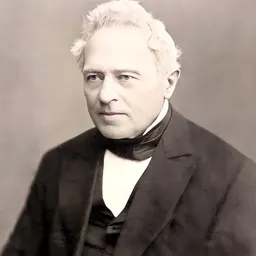
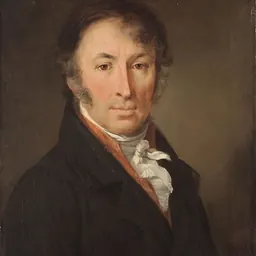
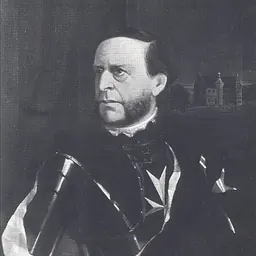
Named in this biography and alive at the same time


Related people
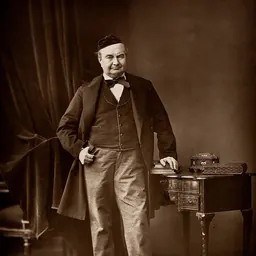
Same field, nearest in time



Contemporaries
People whose lives overlapped Khachatur Abovian's





Frequently asked questions
Who was Khachatur Abovian?
Armenian writer, activist, academic (1809-1848)
When was Khachatur Abovian born?
Khachatur Abovian was born in 1805 in Kanaker.
When did Khachatur Abovian die?
Khachatur Abovian died on 14 April 1848 in Yerevan.
What was Khachatur Abovian's occupation?
Khachatur Abovian was a writer, novelist, teacher, poet, playwright and prose writer.
What nationality was Khachatur Abovian?
Khachatur Abovian was Russian.
Sources & further reading
· Wikipedia: Khachatur Abovian
Cite this page
APA: Biography.guide. (2026). Khachatur Abovian. https://biography.guide/khachatur-abovian/
MLA: "Khachatur Abovian." Biography.guide, https://biography.guide/khachatur-abovian/.
Chicago: "Khachatur Abovian." Biography.guide. https://biography.guide/khachatur-abovian/.
Data last updated: 2026-09-20 · Spot an error? Report a correction.
Page generated 2026-09-27 05:20 UTC