
Kent Johnson
American poet, translator, critic, and anthologist
About Kent Johnson
Lived 1995 – 2022 (aged 26–27). Kent Johnson was an American translator, literary critic and journalist.
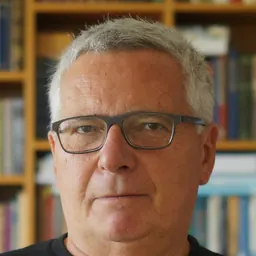
Kent Johnson (June 23, 1955 – October 25, 2022) was an American poet, translator, critic, and anthologist. His work, much of it meta-fictional and/or satirical in approach, has provoked controversy and debate within English-language poetry circles.
Life and career
Johnson lived most of his childhood and adolescence in Montevideo, Uruguay, returning to work there in the mid-1970s. In the early 1980s, on two extended visits, he worked with the Sandinista Revolution as a basic literacy and adult education volunteer in rural zones of Nicaragua. From 1991, he taught English and Spanish at Highland Community College in Freeport, Illinois. In 2004, he was named State Teacher of the Year by the Illinois Community College Board of Trustees.
From the late 1990s, Johnson was widely thought to be the author of the Araki Yasusada writings, which a reviewer for The Nation magazine, in 1998, called “the most controversial work of poetry since Allen Ginsberg's Howl.” Johnson, however, never officially claimed authorship of the material, presenting himself only as executor of an archive supposedly composed by a writer, or several writers, whose choice was to maintain a principled anonymity in relation to the work. The discussion around Yasusada eventually moved from literary scandal into scholarly considerations, with a number of academic articles engaging with the topic from various angles. In 2011, a book of critical studies, Scubadivers and Chrysanthemums: Essays on the Poetry of Araki Yasusada, was published in England, to which Johnson was one of eighteen contributors.
Lyric Poetry after Auschwitz: Eleven Submissions to the War was published in 2005 (its contents later included into a larger collection, Homage to the Last Avant-Garde, 2009). As the first book of poetry in the United States to respond to the wars in Afghanistan and Iraq, it was the subject of numerous reviews and blog commentaries, much of the latter hostile. The title poem of the collection, “Lyric Poetry after Auschwitz, or: Get the Hood Back On,” confronts the torture at Abu Ghraib and elsewhere. The poem proceeds in a series of stanzas set in the voices of American military prison guards, who calmly chat with Iraqi prisoners and describe their normal backgrounds at home, before graphically informing the prisoners of the tortures to which they will be subjected. The poem concludes unexpectedly when the voice of a generic U. S. poet joins the chorus of torturers, and in good-natured tone tells his captive to stop pleading and just accept the horror of his fate, because there is nothing that poetry can do to help him.
Johnson became the focus of controversy, including threatened legal action, when he published a book that proposed, by means of an elaborate, forensically detailed hypothesis (supplemented in the book by a quasi-detective novella), that the poet Kenneth Koch may have been the hidden author of “A True Account of Talking to the Sun at Fire Island,” one of Frank O’Hara's most well-known poems, composing it shortly after O’Hara's death, and then placing it under his late friend's name in an act of comradeship and mourning. First published in a limited edition in 2011, an expanded, second edition of this book, titled A Question Mark above the Sun: Documents on the Mystery Surrounding a Famous Poem "by" Frank O’Hara, was published in 2012 and named a book of the year by The Times Literary Supplement.
He has received a Pushcart Book of the Month selection, Lyric Poetry After Auschwitz: Eleven Submissions to the War. Effing Press, 2005. 5 Works from the Rejection Group (with Kenny Goldsmith, Christian Bök, Vanessa Place, and Kasey Silem Mohammad). Habenicht Press, 2012. Homage to Villon: a Letter to Alan Golding in Middle-English Rhyme. Beard of Bees, 2014. Works and Days of the Fénéon Collective (anonymous contributor). Delete Press, 2010. Immanent Visitor: Selected Poems of Jaime Saenz (translator, with Forrest Gander). University of California Press, 2002. Dear Lacan: An Analysis in Correspondence (editor, with Jacques Debrot), Cambridge Conference of Contemporary Poetry, 2005. Also, with My Throat, I Shall Swallow Ten Thousand Swords: Letters of Araki Yasusada (editor). Combo Books, 2005.
Selected essays
Card File, or: Why Communism Looks Out of Their Eyes (50 Graphs on Conceptual Writing). Chicago Review. Fall 2014/Winter 2015.
Don’t just read it —
keep it.
Full-length biographies made to live with: read them, listen on the way to work, watch them tonight.
- E-book
- Audio
- Video
Instant download · yours to keep · every purchase keeps this site free
Important facts
People in Kent Johnson's life
Named in this biography and alive at the same time
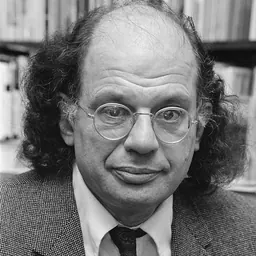
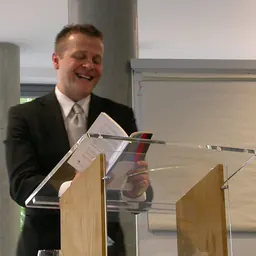



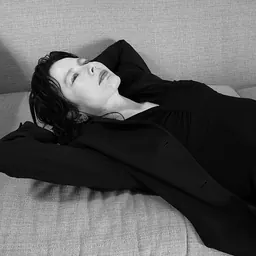
Related people
Same field, nearest in time





Contemporaries
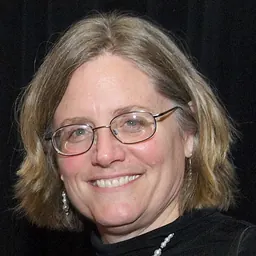
People whose lives overlapped Kent Johnson's


Frequently asked questions
Who was Kent Johnson?
American poet, translator, critic, and anthologist
When was Kent Johnson born?
Kent Johnson was born in 1995.
When did Kent Johnson die?
Kent Johnson died in 2022.
What was Kent Johnson's occupation?
Kent Johnson was a translator, literary critic and journalist.
What nationality was Kent Johnson?
Kent Johnson was American.
Sources & further reading
· DBpedia: Kent Johnson (poet)
Cite this page
APA: Biography.guide. (2026). Kent Johnson. https://biography.guide/kent-johnson/
MLA: "Kent Johnson." Biography.guide, https://biography.guide/kent-johnson/.
Chicago: "Kent Johnson." Biography.guide. https://biography.guide/kent-johnson/.
Data last updated: 2026-09-20 · Spot an error? Report a correction.
Page generated 2026-09-27 05:13 UTC