
About Kenneth W. Ford
Lived 1926 – 2025 (aged 99). Kenneth W. Ford was an American physicist, author and university teacher, known for Project Matterhorn.
Kenneth William Ford (May 1, 1926 – December 5, 2025) was an American theoretical physicist, teacher, and writer, residing near Philadelphia, Pennsylvania. He was the first chair of the physics department at the University of California, Irvine, and later served as president of the New Mexico Institute of Mining and Technology (New Mexico Tech) and as Executive Director and CEO of the American Institute of Physics.
Early life and education Ford was born on May 1, 1926, in West Palm Beach, Florida, to parents Paul Hammond Ford (1892–1961) and Edith Timblin Ford (1892–1992) and was the second of their three children. He spent most of his childhood in Kentucky, living one year in Georgia when he was eight and nine.
He attended Highlands High School in Fort Thomas, Kentucky, from 1940 to 1942, then Phillips Exeter Academy in Exeter, NH, graduating in 1944. In 1948, he received an A.B. from Harvard University, graduating summa cum laude. He received his Ph.D. in physics from Princeton University in 1953, studying under John Archibald Wheeler. During 1950-1952 he interrupted his graduate studies to join the H-bomb design team at Los Alamos National Laboratory (then Los Alamos Scientific Laboratory) and at Princeton University's Project Matterhorn.
US Navy In April 1944, just before his 18th birthday, while still at Exeter, Ford enlisted in the US Navy. After summer employment at the Marine Biological Laboratory in Woods Hole, Massachusetts, Ford was called to active service and began the Navy's Electronic Technician Training. In June 1945, he transferred into the V-12 Navy College Training Program, studying at John Carroll University in Cleveland, Ohio, and at the University of Michigan in Ann Arbor. In three four-month semesters completed in one year, he was able to secure credit for two years of college work and entered Harvard University as a junior in the fall of 1946 following his discharge from the Navy in June of that year.
Graduate work and the H-bomb In the fall of 1948, Ford began graduate studies in physics at Princeton University. In 1950, he took a leave of absence from graduate work to work on the H-bomb at Los Alamos National Laboratory (then called the Los Alamos Scientific Laboratory) with his mentor John Wheeler.
Cessation of weapons work In the summer of 1968, influenced by his opposition to the Vietnam War, Ford announced at a talk in Cloudcroft, NM that he would no longer do weapons work or other secret work.
Research, Teaching, Administration and Writing Ford's principal research was in the theory of nuclear structure, with some work in particle and mathematical physics. He exploited the nuclear shell model and the collective, or unified, model, and also worked extensively on muonic atoms. His first paper, co-authored with David Bohm in 1950, used data from low-energy neutron scattering to give evidence for the transparency of nuclei to neutrons. A 1953 paper showed how regularities in the energies of the first excited states of even-even nuclei can be interpreted in terms of the deformations of these nuclei. Later papers analyzed muonic-atom data to give evidence on the distribution of electric charge within nuclei. Ford's 1959 papers with John Wheeler provided a semiclassical theory of scattering. In 1963, he participated, with Henry Kolm and Eiichi Goto, in a search for magnetic monopoles.
Although Ford's initial appointment at Indiana University in 1953 was as a postdoctoral researcher, he was given the opportunity to teach a graduate course. In later appointments at Indiana and other universities, he continued to teach both graduate students and undergraduate. Subsequent to retirement, he taught high-school physics at Germantown Academy (1995–98) and at Germantown Friends School (2000-2001).
In 1958, after a year's leave from Indiana University in Los Alamos, Ford took up new faculty duties at Brandeis University, where he continued research, supervision of graduate students, and, for the first time, taught introductory physics. He also served as department chair at Brandeis, 1963–64. In 1964, he was recruited by the soon-to-open new campus of the University of California at Irvine as its first physics chair. he was instrumental in recruiting future Nobel Prize laureate Frederick Reines to the faculty at Irvine.
In 1970, for family reasons, Ford left Irvine for the University of Massachusetts Boston, where he was a professor. In 1975, he accepted the job of president of the New Mexico Institute of Mining and Technology (NM Tech). He spent 7 years at New Mexico Tech, resigning after receiving a vote of no confidence from the faculty. Ford then became executive vice president of the University of Maryland System. That job lasted for slightly more than a year, during 1982–83, before Ford took his first non-academic job as president of Molecular Biophysics Technology in Philadelphia.
When Molecular Physics of Technology's research results failed to measure up to expectations and the company had to shut down, Ford took a position as education officer of the American Physical Society. Then, in 1987, he became the director of the American Institute of Physics and later helped to shepherd its move from New York City (to which he'd been commuting from Philadelphia) to College Park, MD. Ford's retirement from the institute in 1993, at age 67, coincided with its move to College Park, along with other physics organizations.
Post-retirement After officially retiring, Ford conducted some consulting work, worked for the David and Lucile Packard Foundation, tutored students, both in person and online, taught high-school physics, and, as noted above, wrote six books. He lived outside Philadelphia.
Personal life and death Ford married Karin Stehnike on August 27, 1953, and fathered two children; Paul Thomas Ford (born 1957) and Sarah Elizabeth Ford (born 1958). They divorced in 1961.
He married Joanne Baumunk on June 9, 1962, gained one stepdaughter, Nina Tannenwald (born 1959), and fathered four more children: Caroline Amanda Ford (now Caroline Richards; born 1963), Adam Baumunk Ford (born 1964), Jason Lawrence Ford (born 1966), and Lucas Wheeler (now Star Lucia Ford; born 1968). He had 13 grandchildren and three step-grandchildren. Ken and Joanne celebrated 60 years of marriage in June 2022, before Joanne’s death on September 5, 2022.
Ford died on December 5, 2025, at the age of 99.
Selected honors 1944 Westinghouse Science Talent Search winner 1944 Prize for General Excellence, Phillips Exeter Academy 1948 Phi Beta Kappa, Sigma Xi, Harvard College 1955–56 Fulbright Fellow, Max Planck Institut, Göttingen, Germany 1961–62 National Science Foundation (NSF) Senior Postdoctoral Fellow, Imperial College, London, and M.I.T. 1976 Distinguished Service Citation, American Association of Physics Teachers 2006 Oersted Medal, American Association of Physics Teachers Fellow, American Physical Society, American Association for the Advancement of Science, and American Association of Physics Teachers
Selected bibliography The World of Elementary Particles (Blaisdell Publishing Co., 1963). Translated into Italian, German, and Russian. (Library of Science selection in the United States, science writing prize in Italy.) Basic Physics (Blaisdell, 1968). Introductory text for nonscience students. (Re-released, repurposed to serve as a resource for physics teachers, by World Scientific in 2017.) Classical and Modern Physics (Xerox College Publishing, 1972–74). Introductory text for students of science and engineering. 3 volumes. Geons, Black Holes, and Quantum Foam: A Life in Physics, with John Archibald Wheeler (W. W. Norton, 1998). Wheeler's autobiography. Translated into Chinese and Greek. (1999 American Institute of Physics Science Writing Prize.) The Quantum World: Quantum Physics for Everyone (Harvard University Press, 2004). Translated into several languages. Paperback with “Quantum Questions,” 2005. Answer Manual available. In Love With Flying (H Bar Press, 2007). Memoir on 50 years of flying small planes and gliders. 101 Quantum Questions: What You Need to Know About the World You Can’t See (Harvard University Press, 2011). Translated into several languages. Building the H Bomb: A Personal History (World Scientific, 2015). The First 95 Years (H Bar Press, 2021).
Don’t just read it —
keep it.
Full-length biographies made to live with: read them, listen on the way to work, watch them tonight.
- E-book
- Audio
- Video
Instant download · yours to keep · every purchase keeps this site free
Important facts
People in Kenneth W. Ford's life
Named in this biography and alive at the same time

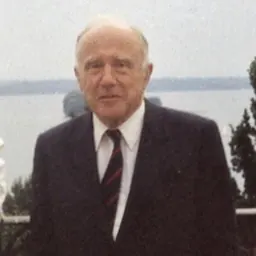

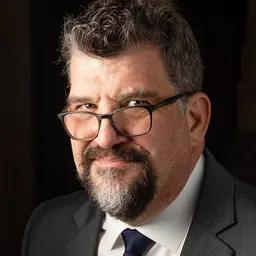
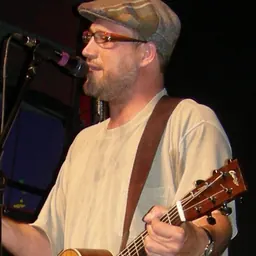



Related people
Same field, nearest in time
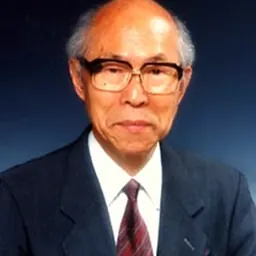




Contemporaries
People whose lives overlapped Kenneth W. Ford's



Frequently asked questions
Who was Kenneth W. Ford?
American physicist
When was Kenneth W. Ford born?
Kenneth W. Ford was born on 1 May 1926 in West Palm Beach, United States.
When did Kenneth W. Ford die?
Kenneth W. Ford died on 5 December 2025.
What was Kenneth W. Ford's occupation?
Kenneth W. Ford was a physicist, author and university teacher.
What was Kenneth W. Ford known for?
Kenneth W. Ford was known for Project Matterhorn.
What nationality was Kenneth W. Ford?
Kenneth W. Ford was American.
Sources & further reading
Cite this page
APA: Biography.guide. (2026). Kenneth W. Ford. https://biography.guide/kenneth-w-ford-physicist/
MLA: "Kenneth W. Ford." Biography.guide, https://biography.guide/kenneth-w-ford-physicist/.
Chicago: "Kenneth W. Ford." Biography.guide. https://biography.guide/kenneth-w-ford-physicist/.
Data last updated: 2026-09-20 · Spot an error? Report a correction.
Page generated 2026-09-27 05:20 UTC