
About Kenneth M. Taylor
Lived 1919 – 2006 (aged 86). Kenneth M. Taylor was an American military officer and aviation insurance.
Kenneth Marlar Taylor (December 23, 1919 – November 25, 2006) was a United States Air Force officer and a flying ace of World War II. He was then a new United States Army Air Corps second lieutenant pilot stationed at Wheeler Field during the Japanese attack on Pearl Harbor on December 7, 1941. Along with his fellow pilot and friend George Welch, Taylor managed to get a fighter plane airborne under fire. Taylor claimed to have shot down four Japanese dive bombers but only two were confirmed. Taylor was injured during the incident and received several awards for his efforts, including the Distinguished Service Cross and the Purple Heart.
Taylor later commanded several squadrons while stationed in the United States and elsewhere, and served for 27 years of active duty. He joined the Alaska Air National Guard until 1971 and worked in the insurance industry before retiring in 1985. His Pearl Harbor experience was portrayed in the 1970 film Tora! Tora! Tora! and the film Pearl Harbor.
Early years and military training Shortly after his birth in Enid, Oklahoma, Taylor's father, Joe K. Taylor, moved his family to Hominy, Oklahoma, where Taylor graduated high school in 1938. He entered the University of Oklahoma as a pre-law student in the same year and joined the Army Air Corps two years later. In June 1941, he was assigned to the 47th Pursuit Squadron at Wheeler Army Airfield in Honolulu, Hawaii, and began flying two weeks later. Although the 47th had several types of aircraft — some obsolete — he began his training in the advanced Curtiss P-40B tomahawk fighter.
Pearl Harbor
Prior to the attack on Pearl Harbor on December 7, 1941, Taylor spent the night before playing poker and dancing at the officers' club at Wheeler with fellow pilot George Welch, and did not go to sleep until 6:30 a.m. local time. Taylor and Welch awoke less than an hour and a half later at 7:55 a.m. to the sounds of low-flying planes, machine-gun fire, and explosions. Without orders, he told the ground crews to get two P-40s armed and ready for takeoff. The new Buick he drove was strafed by Japanese aircraft as the two pilots sped the to Haleiwa; Taylor at times reached speeds of . At the airstrip, they climbed into their Curtiss P-40B Warhawk fighters, which were fueled but armed with only .30 cal Browning ammunition.
After they took off, they headed towards Barber's Point at the southwest tip of Oahu, and initially saw an unarmed group of American B-17 Flying Fortress bombers arriving from the mainland United States. They soon arrived at Ewa Mooring Mast Field, which was being strafed by at least 12 Aichi D3A "Val" dive bombers of the second Japanese attack wave after dropping their bombs at Pearl Harbor. Although the two pilots were outnumbered six-to-one, they immediately began firing on the dive bombers. Taylor shot down two dive bombers and was able to damage another (the third damaged aircraft was considered Taylor's first probable kill When both pilots ran out of ammunition, they headed for Wheeler Field to get additional .50 cal ammunition, since Haleiwa did not carry any. Once he was on the ground, several officers told Taylor and Welch to leave the airplanes, but the two pilots were able to convince the officers into allowing them to keep fighting. A Japanese rear-gunner from a dive bomber fired at Taylor's aircraft and one of the bullets came within an inch of Taylor's head and exploded in the cockpit. One piece went through his left arm and shrapnel entered his leg. On the 13th anniversary of the Pearl Harbor attack, the United States Air Force stated that they could not determine which of the two pilots shot down the first Japanese bomber: "Each of them in his first attack shot down an enemy bomber, so the difference in time would have been but a few seconds in any case." While in the air during the dogfight, the two pilots agreed that whoever survived the battle would claim credit to the title for the first kill. Taylor later reacted to the attack, saying "I believed I was a better-trained pilot than the enemy. I had good equipment, and I was proud of it."
For their action on December 7, the U.S. War Department in Communiqué No. 19 on December 13, 1941, designated Taylor and Welch as the first two American heroes of World War II, and awarded both the Distinguished Service Cross on January 8, 1942. However, no documentation has been found to support that the Medal of Honor was denied for these reasons, or even submitted.
Personal life and depictions in film On May 9, 1942, Taylor married Flora Love Morrison of Hennessey, Oklahoma, whom he had met when she was visiting her father in Hawaii. Married for 64 years, the Taylors had two children (daughter Jo Kristina "Tina" Hartley and son Kenneth Marlar Taylor, Jr.), three grandchildren, and two great-grandchildren.
At a 50th anniversary symposium of the Pearl Harbor attack, Taylor met with a Japanese pilot who was part of the first wave of bombers to attack Pearl Harbor. The pilot reflected on Taylor's efforts, "I was impressed by Mr. Taylor's grit to storm into the pack of Japanese fighters", and Taylor also told a reporter "I have no hatred against Japanese people, but I do against those who started the war."
Taylor was a technical adviser for and was portrayed in the 1970 film Tora! Tora! Tora! by Carl Reindel. The 2001 film Pearl Harbor featured a sequence in which the characters portrayed by Ben Affleck and Josh Hartnett took to the skies to fight the Japanese. This sequence is understood to be a fill-in for Taylor's and Welch's roles, but the characters do not bear any other similarities to Taylor and Welch. Unlike Tora! Tora! Tora!, Taylor was not consulted for the Pearl Harbor film, and later called the film "... a piece of trash...over-sensationalized and distorted." He was cremated and later buried at the Arlington National Cemetery in June 2007 with full military honors. Alaska Senator Ted Stevens gave a eulogy at the United States Senate prior to the service at Arlington.
Don’t just read it —
keep it.
Full-length biographies made to live with: read them, listen on the way to work, watch them tonight.
- E-book
- Audio
- Video
Instant download · yours to keep · every purchase keeps this site free
Important facts
People in Kenneth M. Taylor's life
Named in this biography and alive at the same time



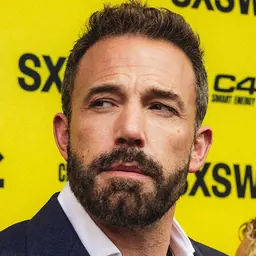
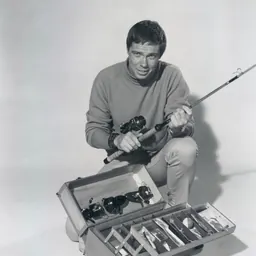
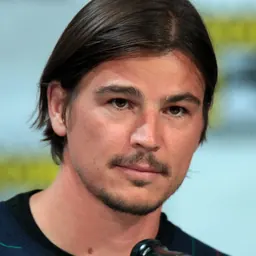
Related people
Same field, nearest in time
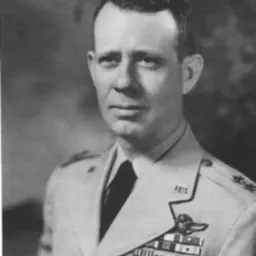



Contemporaries
People whose lives overlapped Kenneth M. Taylor's


Frequently asked questions
Who was Kenneth M. Taylor?
World War II pilot and flying Ace (1919–2006)
When was Kenneth M. Taylor born?
Kenneth M. Taylor was born on 23 December 1919 in Enid.
When did Kenneth M. Taylor die?
Kenneth M. Taylor died on 25 November 2006 in Tucson.
What was Kenneth M. Taylor's occupation?
Kenneth M. Taylor was a military officer and aviation insurance.
What nationality was Kenneth M. Taylor?
Kenneth M. Taylor was American.
Sources & further reading
· Wikipedia: Kenneth M. Taylor
Cite this page
APA: Biography.guide. (2026). Kenneth M. Taylor. https://biography.guide/kenneth-m-taylor/
MLA: "Kenneth M. Taylor." Biography.guide, https://biography.guide/kenneth-m-taylor/.
Chicago: "Kenneth M. Taylor." Biography.guide. https://biography.guide/kenneth-m-taylor/.
Data last updated: 2026-09-27 · Spot an error? Report a correction.
Page generated 2026-09-27 05:16 UTC