
About Kenan Evren
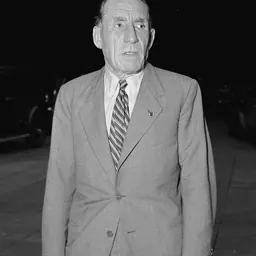
Lived 1917 – 2015 (aged 97). Kenan Evren was a Turkish statesperson, military personnel and politician.
Ahmet Kenan Evren (17 July 1917 – 9 May 2015) was a Turkish military officer who served as the 7th president of Turkey from 1982 to 1989. He assumed the post by leading the 1980 military coup.
On 18 June 2014, a Turkish court sentenced him to life imprisonment and demotion of his military rank, (down to private from army general) for leading the military coup in 1980. He was found guilty of obstructing democracy by deposing the prime minister Süleyman Demirel and of abolishing the parliament, senate and the constitution. This sentence was under appeal at the time of his death.
Early life Ahmet Kenan Evren was born in Alaşehir, Manisa Province. His father, who was an imam, was of Albanian origins. He was originally from the town of Preševo and immigrated to Turkey to live with his uncle, who was in Istanbul. Kenan Evren's mother was from a Turkish Bulgarian background. After going to elementary school and middle school in Manisa, Balıkesir and Istanbul, he attended military high school in Maltepe, Ankara. In 1938, he graduated from army school and in 1949 from military academy as a staff officer. He became Chief of General Staff in March 1978.
President of Turkey
After the coup, Kenan Evren was elected as President of Turkey on 7 November 1982 with the 91.37% approval of the new constitution that was submitted to a controversial referendum, replacing the older constitution which, according to him, had liberties too "luxurious" for Turkey.
Kenan Evren, after leading the 1980 military coup in Turkey, used a combination of brutal repression, ideological indoctrination, and legal restructuring to instill obedience in the population. He oversaw mass arrests of over 600,000 people, widespread torture, and dozens of executions, and mass firings, which created a climate of fear. Political parties, unions, and dissenting voices were silenced, while media and education were tightly controlled to promote the military's nationalist and conservative ideology, particularly the "Turkish-Islamic Synthesis" which blended Sunni Islam with Turkish nationalism to foster obedience. A new 1982 constitution centralized power in the presidency (which Evren assumed), gave the military a lasting role in governance, and enforced loyalty to the state as a legal and educational principle. Through this system of fear, ideological control, and institutional redesign, Evren aimed to create a disciplined and obedient citizenry loyal to the military-led order.
In Summary, Evren suspended many forms of civil liberties and human rights on the grounds that it was necessary to establish stability. He professed great admiration for the founder of the Republic of Turkey, Mustafa Kemal Atatürk.
Kenan Evren despite being a staunch defender of Kemalism used a religious rhetoric in his speeches to make his remarks more relatable.
Evren took strong measures to ensure that the division between the political left and right would not turn into violence again; the new constitution limited the rights and depoliticized the youth.
Kenan Evren's junta regime stressed the importance of family planning and passed more liberal laws on abortion.
According to a report on the Susurluk scandal of 1996, prepared by Prime Ministry Inspection Board Deputy Chairman Kutlu Savaş, quoted by the Human Rights Foundation of Turkey, "Fascists had been released from prison in return for 'finishing some jobs' under Evren's rule after 12 September 1980".
Concerning Kurds, he denied their existence and claimed the word Kurd comes from the noise that is heard when walking in the snow. Referring to Kurds he used the term Mountain Turk.
A previous attempt in 1996 had already been tracked down when two members of the assassination team spoke on a cellphone eavesdropped by the police, and the Islamic call to prayer (adhan) could be heard during their conversation. Since the timing of the adhan was 4–5 minutes after Istanbul, a point slightly more to the west by that time margin was sought and the team members were caught in Marmaris itself.
In 2004, he revealed that his daughter, Şenay Gürvit, and son-in-law, Erkan Gürvit, are members of the National Intelligence Organization. His daughter presided over the reprisal operations against the militant Armenian organization ASALA.
After Bülent Ecevit's death, he expressed remorse over the arrest of political leaders after the 1980 coup, but defended the coup itself and the 35 executions.
Civilian resentment exists, and there were demands for his being called to account following the Ergenekon investigation.
Trial and conviction On 10 January 2012, Turkish courts decided to press charges against General Kenan Evren and General Tahsin Şahinkaya, former Commander of the Turkish Air Force, for their role in the 1980 coup. Prosecutors sought life sentences against them. The first court hearing of the case was scheduled for 4 April 2012. Both were sentenced to life imprisonment on 18 June 2014 by a court in Ankara. In accordance with Article 30 of the Military Penal Code, Evren and Şahinkaya were demoted to the lowest rank of private; as the decision was appealed and Evren died before the final decision of the court of appeals, the demotion was not final. On his gravestone he is commemorated as the seventh President of Turkey.
Personal life Evren married Sekine Evren in 1944. They had a child that died in infancy and three daughters, Şenay, Gülay and Miray. Sekine died in 1982. In 1990, he was awarded the Atatürk International Peace Prize. He was also fluent in English.
Illness and death
Evren was hospitalized for massive gastrointestinal bleeding on 3 August 2009, in Yalıkavak, Bodrum, where his summer house is located. A temporary artificial pacemaker was applied to Evren while in intensive care due to bradycardia. His large intestine was removed a week later at the Gülhane Military Medical Academy (GATA) in Haydarpaşa, Istanbul where he was transferred. He was discharged on 24 September 2009.
Evren died at a military hospital in Ankara on 9 May 2015, aged 97. On 12 May, he was buried in the Turkish State Cemetery in Ankara following the funeral service held at Ahmet Hamdi Akseki Mosque. The funeral was attended by his close relatives and military personnel. In protest, political parties sent no representatives to the former president's funeral. A number of people protested during the religious service in the mosque's courtyard.
Don’t just read it —
keep it.
Full-length biographies made to live with: read them, listen on the way to work, watch them tonight.
- E-book
- Audio
- Video
Instant download · yours to keep · every purchase keeps this site free
Important facts
Family & relationships
People in Kenan Evren's life
Named in this biography and alive at the same time
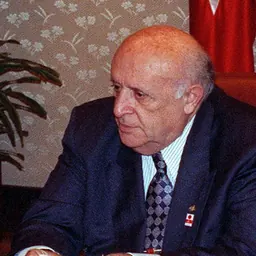
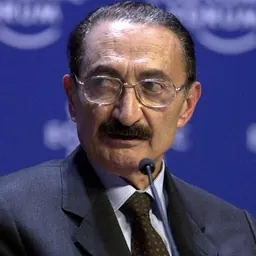




Related people
Same field, nearest in time
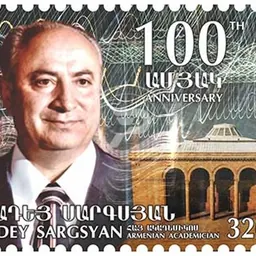
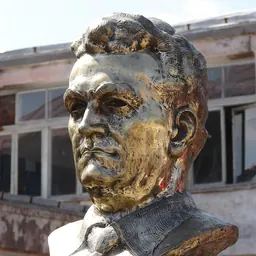
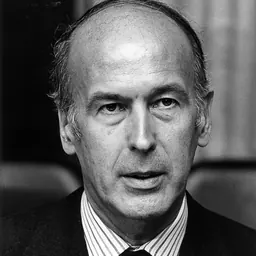

Contemporaries
People whose lives overlapped Kenan Evren's

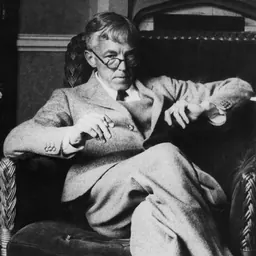
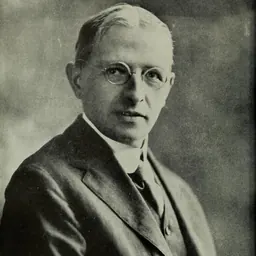
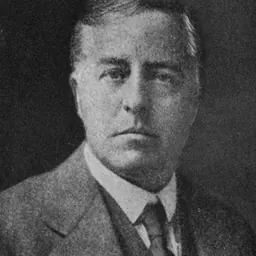
Frequently asked questions
Who was Kenan Evren?
President of Turkey (1917–2015)
When was Kenan Evren born?
Kenan Evren was born on 17 July 1917 in Kula.
When did Kenan Evren die?
Kenan Evren died on 9 May 2015 in Ankara.
What was Kenan Evren's occupation?
Kenan Evren was a statesperson, military personnel and politician.
What nationality was Kenan Evren?
Kenan Evren was Turkish.
Sources & further reading
Cite this page
APA: Biography.guide. (2026). Kenan Evren. https://biography.guide/kenan-evren/
MLA: "Kenan Evren." Biography.guide, https://biography.guide/kenan-evren/.
Chicago: "Kenan Evren." Biography.guide. https://biography.guide/kenan-evren/.
Data last updated: 2026-09-20 · Spot an error? Report a correction.
Page generated 2026-09-27 05:30 UTC