
About Kazimieras Vasiliauskas
Lived 1922 – 2001 (aged 79). Kazimieras Vasiliauskas was a Lithuanian priest.
Kazimieras Vasiliauskas (April 9, 1922 – October 14, 2001) was a Lithuanian Catholic priest and monsignor who emerged as one of the most prominent clergy members of the Lithuanian Catholic Church in the latter half of the 20th century. Renowned for his unwavering resistance to Soviet occupation, he was a staunch defender of religious and civil rights, as well as an advocate for tolerance, compassion, and humanism. Throughout his life, he was known to promote principles of forgiveness and reconciliation.
Early life Kazimieras Vasiliauskas was born on April 9, 1922, in the village of , near Vabalninkas, in Biržai County, to a farm family, the youngest of three children. His parents were Juozas Vasiliauskas (1874–1961) and Valerija Vasiliauskienė (1897–1984). Raised in a devout Catholic family, he attended Čypėnai Elementary School before enrolling in Biržai Gymnasium, where he developed a love for literature and poetry. He frequently participated in student literary evenings, reciting the works of his favorite poets. As a teenager, he became an active member and leader of , a Catholic youth organization dedicated to fostering faith and civic responsibility among young people in Lithuania.
In 1940, following the Soviet Union's occupation of Lithuania, 19-year-old Vasiliauskas soon came face to face with the policies of the new regime. The Soviet authorities outlawed all organizations, including . As a prominent leader within this now-illegal organization, Vasiliauskas discovered that he had been placed on an NKVD arrest list. In the spring of 1941, Vasiliauskas and several gymnasium friends attempted to cross the border into East Prussia, Germany. However, after crossing they were detained by the German authorities and transferred to the Soldau concentration camp, where they were held for three months.
At Soldau, Vasiliauskas experienced the brutality of German guards, witnessed Jewish prisoners being led to execution, as well as the torture of Polish priests. For him, the Nazi concentration camp experience was a prelude to his future deportation to Siberia by Soviet authorities. Upon his release from Soldau, Vasiliauskas stayed briefly in the Prussian city of Königsberg, taking odd jobs to support himself. In September 1941, he decided to return to Lithuania and pursue his calling to become a priest.
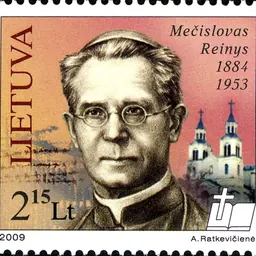
He entered the Kaunas Priest Seminary in 1941 and transferred to the Vilnius Seminary in 1942. He was ordained a priest on June 16, 1946, by Archbishop Mečislovas Reinys of Vilnius. By this point Lithuania was once again occupied by the Soviet Union, which pursued a policy of repression for all religious institutions. While the Soviet authorities did not outlaw all religious activities, they were severely curtailed and monitored.
Early ministry It was in this context that in 1946, Vasiliauskas began his priesthood by serving as a vicar in Kalesninkai, Švenčionys, as well as the parish of St. Teresa and the Chapel of the Gates of Dawn in Vilnius. During this period, he joined the secret self-education society College of the Virgin Mary of the Gates of Dawn, which was dedicated to theological and philosophical studies. In 1948, he was reassigned as the administrator of Rimšė parish in the Zarasai district. In 1949, Vasiliauskas was arrested by Soviet authorities on charges of anti-Soviet activities. Accused of aiding partisans and refusing to report their activities to Soviet officials, he was sentenced to 10 years of forced labor in Siberia. He was sent to coal mines in Inta and Vorkuta, Komi ASSR, where he endured harsh physical labor and dire living conditions. Despite these circumstances, he secretly celebrated Mass, heard confessions, and provided spiritual support to fellow prisoners. His parents were deported to Siberia in 1949 as part of Soviet policies aimed at eradicating well-to-do farmers. Their property was confiscated. They were released in 1956 and returned to Lithuania.
Return to Lithuania In 1968, Vasiliauskas was permitted to return to Lithuania, where he was appointed parish priest in Varėna. He served there until 1975 before being assigned as vicar adjutor at the Church of St. Raphael the Archangel in Vilnius.
He signed multiple protests and appeals to Soviet authorities, defending the rights of the Church and opposing restrictions on religious freedom. Notable actions included:
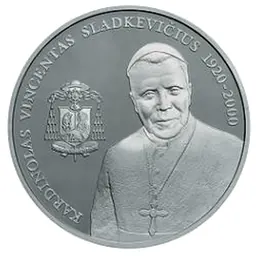
Defending bishops Vincentas Sladkevičius and Julijonas Steponavičius (1971–1972). Advocating for the publication of religious literature. Protesting against restrictions on believers' rights and government interference in Church affairs (1977). Condemning the arrests of priests Alfonsas Svarinskas and Sigitas Tamkevičius (1983).
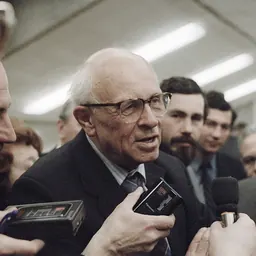
He maintained ties with members of the Lithuanian Helsinki Group, providing moral and spiritual support to anti-Soviet dissidents. During the 1975 trial of dissident Sergei Kovalyov in Vilnius, human rights activist Andrei Sakharov stayed at Vasiliauskas' home.
Later years In 1989, during Lithuania's independence movement, Vasiliauskas was appointed the first parish priest of the restored Vilnius Cathedral. That same year, Pope John Paul II conferred upon him the title of monsignor. From 1993 to 1995, he served as rector of the Vilnius Seminary. In 1997, he retired from his role at Vilnius Cathedral and became an emeritus priest at St. Nicholas Church in Vilnius.
Despite facing health challenges, he remained actively engaged in public life and was widely admired for his kindness and inclusivity. During this period, his interpretation of Christianity, where he emphasized tolerance toward others and the necessity for forgiveness, became more publicly evident and widely recognized. Monsignor Vasiliauskas was often regarded as the "conscience of the Lithuanian nation."
Kazimieras Vasiliauskas died on October 14, 2001, in Vilnius. He was buried at Antakalnis Cemetery, on the Hill of Artists. His gravestone features the words of his favorite poet, Jurgis Baltrušaitis: "There is light even in darkness." In 2009, his name was inscribed on a Tree of Unity, a sculpture by Tadas Gutauskas, recognizing him as one of Lithuania's 100 most prominent personalities. To honor his centenary in 2022, Lithuania issued in a commemorative postage stamp in his memory. During his lifetime, Kazimieras Vasiliauskas received numerous awards, "He quelled vengeance and hatred, helping everyone to rise and unite." — Poet Justinas Marcinkevičius "A priest who taught the patience of life and faith as the greatest wisdom." — Academician Viktorija Daujotytė
Don’t just read it —
keep it.
Full-length biographies made to live with: read them, listen on the way to work, watch them tonight.
- E-book
- Audio
- Video
Instant download · yours to keep · every purchase keeps this site free
Important facts
People in Kazimieras Vasiliauskas's life
Named in this biography and alive at the same time



Related people
Same field, nearest in time



Contemporaries
People whose lives overlapped Kazimieras Vasiliauskas's
Frequently asked questions
Who was Kazimieras Vasiliauskas?
Lithuanian Catholic priest (1922–2001)
When was Kazimieras Vasiliauskas born?
Kazimieras Vasiliauskas was born on 9 April 1922.
When did Kazimieras Vasiliauskas die?
Kazimieras Vasiliauskas died on 14 October 2001 in Vilnius.
What was Kazimieras Vasiliauskas's occupation?
Kazimieras Vasiliauskas was a priest.
What nationality was Kazimieras Vasiliauskas?
Kazimieras Vasiliauskas was Lithuanian.
Sources & further reading
· Wikipedia: Kazimieras Vasiliauskas
· DBpedia: Kazimieras Vasiliauskas (monsignor)
Cite this page
APA: Biography.guide. (2026). Kazimieras Vasiliauskas. https://biography.guide/kazimieras-vasiliauskas/
MLA: "Kazimieras Vasiliauskas." Biography.guide, https://biography.guide/kazimieras-vasiliauskas/.
Chicago: "Kazimieras Vasiliauskas." Biography.guide. https://biography.guide/kazimieras-vasiliauskas/.
Data last updated: 2026-09-25 · Spot an error? Report a correction.
Page generated 2026-09-27 05:09 UTC