
About Kawahara Keiga
Lived 1786 – 1862 (aged 75–76). Kawahara Keiga was a Japanese painter, artist, botanical illustrator and ukiyo-e artist.
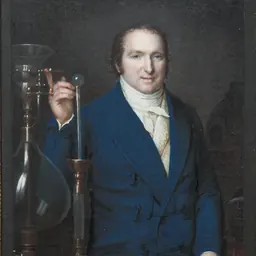
Kawahara Keiga (, also known as Taguchi Takumi or Toyosuke, Nagasaki, 1786–1860?) was a late Edo period Japanese painter of plants, fishes, birds, reptiles, crustaceans, social scenes, landscapes and portraits at the Dutch Factory of Dejima, and at Edo, Kyoto and Nagasaki. His works can be found in museums in Japan (about a hundred works) and in the Netherlands (about a thousand), among others.
Career Kawahara was born in Nagasaki as the son of the painter Kawahara Kozan. He studied with the painter Yūshi Ishizaki (1768–1846). With special permission from the Japanese government, Kawahara worked as a painter at the Dutch factory of Dejima, Nagasaki, from 1811 to 1842. At the request of successive directors at Dejima, Kawahara documented many aspects of life of Japan in general and at Dejima in particular.
From 1823 to 1829, Kawahara drew and coloured detailed images of Japanese flora and fauna, at the behest of Dejima commander De Stürler and the physician and botanist Philipp Franz von Siebold. In 1825 Carl Hubert de Villeneuve (1800–1874) came to Dejima and taught Kawahara the fundamentals of Western painting techniques. As a result, Keiga introduced Western techniques in traditional Japanese painting. In 1826 he accompanied Von Siebold together with Heinrich Bürger and director (opperhoofd) De Stürler during his visit to the court at Edo, and documented many objects, street and court scenes. In 1829, he was imprisoned by the Tokugawa shogunate for involvement in a spying incident of Siebold, who was subsequently expelled from Japan.
In 1842, Kawahara was punished again, now for depicting the harbor of Nagasaki with family crests showing and therefore was dismissed from Nagasaki. In 1846 he put his signature on five ceiling paintings in the main hall of the Buddhist temple Wakimisaki Kannon (now in Wakimisakimachi, Nagasaki-shi, Nagasaki).
Kawahara's images have been fundamental for biological publications by Coenraad Jacob Temminck and Hermann Schlegel.
Techniques Kawahara used watercolor-coloured pencil drawing on paper for his biological work. For other works he also painted on silk and wood, like his paintings on the ceilings of several temples in Japan.
Gallery of Kawahara's work
Museum collections with his work For instance British Museum, London Fukuoka City Museum Nagasaki Museum of History and Culture Naturalis Biodiversity Center, Leiden SieboldHuis, Leiden Museum Volkenkunde, Leiden
Don’t just read it —
keep it.
Full-length biographies made to live with: read them, listen on the way to work, watch them tonight.
- E-book
- Audio
- Video
Instant download · yours to keep · every purchase keeps this site free
Important facts
People in Kawahara Keiga's life
Named in this biography and alive at the same time


Related people
Same field, nearest in time


Contemporaries
People whose lives overlapped Kawahara Keiga's


Frequently asked questions
Who was Kawahara Keiga?
Japanese painter
When was Kawahara Keiga born?
Kawahara Keiga was born in 1786 in Nagasaki.
When did Kawahara Keiga die?
Kawahara Keiga died in 1862.
What was Kawahara Keiga's occupation?
Kawahara Keiga was a painter, artist, botanical illustrator and ukiyo-e artist.
What nationality was Kawahara Keiga?
Kawahara Keiga was Japanese.
Sources & further reading
Cite this page
APA: Biography.guide. (2026). Kawahara Keiga. https://biography.guide/kawahara-keiga/
MLA: "Kawahara Keiga." Biography.guide, https://biography.guide/kawahara-keiga/.
Chicago: "Kawahara Keiga." Biography.guide. https://biography.guide/kawahara-keiga/.
Data last updated: 2026-09-20 · Spot an error? Report a correction.
Page generated 2026-09-27 05:27 UTC