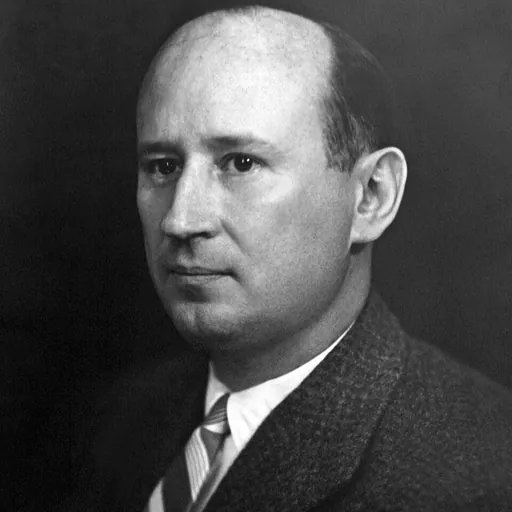
About Kaúlza de Arriaga
Lived 1915 – 2004 (aged 89). Kaúlza de Arriaga was a Portuguese writer, politician and military personnel.
Kaúlza de Oliveira de Arriaga, OA, GCC, OC, OIH (18 January 1915 – 2 February 2004) was a Portuguese general, writer, professor and politician. He was Secretary of State (junior minister) of the Air Force between 1953 and 1955 and commander of the Terrestrial Forces in Mozambique from 1969 until 1974 during the Mozambican War of Independence.
Ancestry He was a son of Manuel dos Santos Lima de Arriaga Nunes (1885–1940), a sculptor and son of a medical doctor from Pico Island, Azores, and his Portuguese Brazilian wife, Felicidade Eugénia Martins de Oliveira (1894–1987), daughter and granddaughter of goldsmiths. The couple married in Porto on 20 June 1914.
Career Arriaga completed a degree in mathematics and engineering at the University of Porto and then volunteered for the Portuguese Army on 1 November 1935. Taking a military and civil engineering course in the Military Academy which he graduated from in 1939, he was later assigned to the general staff of the Portuguese Institute of Military Studies. Here he petitioned for reforms to the conscription system, as well as training and the integration of paratroopers into the Portuguese Air Force.
Arriaga commanded, as the Commander in Chief of the Armed Forces, the Portuguese forces in Mozambique from 1969 until 1974, taking over from General António Augusto dos Santos and organizing Operação Nó Górdio ("Operation Gordian Knot") in 1970. This operation, the largest and most expensive military operation performed by the Portuguese Armed Forces during the entire Portuguese Colonial War (1961–1974), aimed to attack FRELIMO in its Northern Mozambican support base, but only led to increased support for the rebellion among the populace.
Arriaga was a major political figure in the Estado Novo regime before the Carnation Revolution of 25 April 1974 in Lisbon, holding a number of public positions such as Head of the Ministry of Defense Cabinet, Secretary of State for Aeronautics, Professor of the Institute of High Military Studies, President of the Nuclear Energy Joint Commission and Executive President of the oil company Angol SA.
In March 1974, he organised an abortive coup d'état against Prime Minister Marcelo Caetano in an attempt to move the regime to the right and ensure a hard line on Portugal's colonial empire. Following the Carnation Revolution, he was arrested on 28 September 1974 and spent sixteen months in prison. In 1977 he founded the Independent Movement for the National Reconstruction (MIRN), a right-wing political organisation which appealed to ultranationalist youth and contested the 1980 Portuguese legislative election as Party of the Portuguese Right (PDP) in coalition with the Christian Democratic Party and the National Front, receiving 0.4% of the vote. He was the movement's president and then the party's chairman until its extinction in 1984.
He died from Alzheimer's disease in 2004, in Lisbon.
Decorations Arriaga received a number of awards and citations during his career, including:
Medal of Aeronautical Merit of the Portuguese Air Force
Family Arriaga married in Reguengos de Monsaraz, at the Chapel of o Monte de São Mamede, on 19 May 1955 Maria do Carmo Fernandes Formigal (b. 1932), Dame Commander of the Order of the Holy Sepulchre, daughter of Mário Formigal (1899-1954), a landowner and son of another, and his wife (m. 1922) Maria Adelaide Rosado Fernandes (1903-1981), of a family of farmers and landowners in Évora, Alto Alentejo, by whom he had five children, including the second wife of former prime minister Pedro Santana Lopes.
Published works Atomic Energy - 1949 the Portuguese National Defense in Last the 40 years and the Future - 1966 Some Nuclear Questions in Portugal - 1969 Lições de estratégia de curso de altos comandos—1966/67 (Lessons Of Strategy in the Course of High Command, 1966/67), Vol. 12 (1971) The Portuguese Answer - 1973 Courage, Tenacity and Faith - 1973 the National Conjuncture and My Position before the Moment Portuguese Politician - 1976 In the way of the Solutions of the Future - 1977 Africa - the Betrayed Victory (co-author) - 1977 War and Politics - On behalf of the Decisive Truth, Years (two editions) - 1987 Global Strategy - 1988 Syntheses (two editions) - 1992 Maastricht - 1992
Don’t just read it —
keep it.
Full-length biographies made to live with: read them, listen on the way to work, watch them tonight.
- E-book
- Audio
- Video
Instant download · yours to keep · every purchase keeps this site free
Important facts
People in Kaúlza de Arriaga's life
Named in this biography and alive at the same time



Related people
Same field, nearest in time


Contemporaries
People whose lives overlapped Kaúlza de Arriaga's



Frequently asked questions
Who was Kaúlza de Arriaga?
Portuguese general (1915-2004)
When was Kaúlza de Arriaga born?
Kaúlza de Arriaga was born on 18 January 1915 in Porto.
When did Kaúlza de Arriaga die?
Kaúlza de Arriaga died on 3 February 2004 in Lisbon.
What was Kaúlza de Arriaga's occupation?
Kaúlza de Arriaga was a writer, politician and military personnel.
What nationality was Kaúlza de Arriaga?
Kaúlza de Arriaga was Portuguese.
Sources & further reading
· Wikipedia: Kaúlza de Arriaga
Cite this page
APA: Biography.guide. (2026). Kaúlza de Arriaga. https://biography.guide/kaulza-de-arriaga/
MLA: "Kaúlza de Arriaga." Biography.guide, https://biography.guide/kaulza-de-arriaga/.
Chicago: "Kaúlza de Arriaga." Biography.guide. https://biography.guide/kaulza-de-arriaga/.
Data last updated: 2026-09-23 · Spot an error? Report a correction.
Portrait: Wikimedia Commons · author & licence
Page generated 2026-09-27 05:07 UTC