
About Katherine Hughes
Lived 1876 – 1925 (aged 48). Katherine Hughes was a Canadian activist, journalist and archivist.
Katherine Angelina Hughes (November 12, 1876 – April 26, 1925) was a Canadian journalist, author, archivist, and political activist. She founded the Catholic Indian Association in 1901 and was the secretary of the Catholic Women's League of Canada. She was the first provincial archivist for Alberta. As a journalist, Hughes worked for the Montréal Daily Star and the Edmonton Bulletin.
Greatly affected by a visit to Ireland in 1914 and by the 1916 Easter Rising, she became active in the Irish War of Independence, and was tapped by Éamon de Valera to be the Canadian National Organizer for the Irish Self-Determination League. Hughes established branches of the Friends of Irish Freedom while touring the southern United States.
Early life and education Hughes was born on November 12, 1876, in Emerald, Prince Edward Island, to John Wellington Hughes, the owner of a livery yard and shop, and Annie Laurie O'Brien. Her family was Irish Catholic. She had four siblings: two brothers, P. A. Hughes and Mark Hughes, and two sisters, Mrs. Robert H. Kenll and Mrs. James O'Regan. at the Notre Dame Convent and the Prince of Wales College, graduating in 1892 with a first-class teacher's license. an organization that sought to find employment for graduated students outside the reserve. Hughes was hired for her teaching position by the Department of Indian Affairs and had an annual salary of $300. She ended her position as a teacher at Akwesasne in 1902 to become a writer. In 1906, she switched to the Edmonton Bulletin, covering the Alberta Legislature for this paper.
In 1906, Hughes published her first book, which was a biography of her uncle entitled Archbishop O'Brien: Man and Churchman. The book was translated into various languages, and was favourably reviewed by The New York Times. In 1909, Hughes published her travels across Alberta's terrain as a memoir entitled In The Promised Land of Alberta's North. During her two-month trip, Hughes travelled thousands of kilometers. Her biography of Albert Lacombe, entitled Father Lacombe, the black-robe voyageur, was published in 1911. The book was favourably reviewed by the New York Times Review of Books, one excerpt reading " good biographer is 'rarer than hen's teeth', but Miss Hughes is one. Out of her book stands a figure as compelling as any in history. She has painted him as an artist ... She has literally written history like a novel."
Hughes contributed to The Life and Work of Sir William Van Horne, which was published under the name William Vaughan, who was a close family friend. According to Ó Siadhail, who analysed manuscripts of the work, Vaughan was more of an editor than the writer, as he relied heavily on Hughes' work. The heirs of William Van Horne had specified that Hughes not be credited as the author, Hughes believed this caveat was because of her political activism.
Alberta In 1902, using stage coach, canoe, and boats, Hughes traveled alone through the Peace River and Athabasca districts of northern Alberta, acquiring artifacts for the Alberta archives. She became the first provincial archivist for Alberta in 1908, while residing in Edmonton.
Hughes participated in the Women's Canadian Club of Edmonton in the early 20th century. In 1912, Hughes founded the Catholic Women's League of Edmonton, which nationalized into the Catholic Women's League of Canada in 1920. It was modelled after the Catholic Women's League of England, which Hughes had inquired about while travelling in England. The organization welcomed new immigrants, ran an affordable hostel named Rosary Hall, offered a free job placement service, and acted as one of the first social services in Alberta.
Work for Irish independence In 1913, Hughes moved to London, England, where she worked as secretary to John Reid, Alberta's first Agent General, in his Charing Cross offices. Early in 1914 she travelled to Ireland then at the height of the Home Rule crisis. She described her own ideological journey as being from "Canadian imperialist to Irish – a proper Irish person." Hughes believed that the British government would never be fair with Irish aspirations. Hughes likely met Pádraic Ó Conaire through the Gaelic League. Hughes and Ó Conaire collaborated on the 1915 play The Cherry Bird.
Hughes' principal task in London was recruitment of immigrants to Alberta; but, opposed to Canada's entry into the World War, she was thoroughly disaffected. By 1918, Hughes had lectured in every Canadian province and in several U.S. states. Hughes wrote about her views in Ireland, an 85-page book that was published in 1917. In 1917, Hughes finally resigned her position in London. In 1918, she began working as a propagandist and orator for the Irish National Bureau in Washington, D.C. Hughes established branches of the Friends of Irish Freedom while touring the southern U.S. in 1919. She was chosen to be the Canadian National Organizer for the Irish Self-Determination League. Robert Lindsay Crawford, an Irish Protestant journalist who in Ulster had led an independent breakaway from the Orange Order, allied with Hughes for this task. In 1910, he reported for the Toronto Globe until he broke from the liberal-unionist editorial line after the Easter Rising. In October 1920, Crawford was named as the SDIL president at the League's Ottawa convention. In 1918, Hughes was hired by the Irish Progressive League as a propagandist.
After organising the Irish nationalist community within Canada, in late 1920, de Valera agreed that Hughes should travel to Australia to organise further branches of the Self-Determination for Ireland movement, as part of the broader global aspect of the Irish revolution. Thanks to Hughes' efforts, the new Self-Determination for Ireland League of Australia was established in February 1921. Hughes was also responsible for the formation of a similar organisation in New Zealand, after Osmond Grattan Esmonde was detained at the outset of his mission. Following these two missions abroad, Hughes was the principal organiser of the Global Irish Race Conference in Paris in January 1922.
Personal life Hughes had relationships with various men, but she never married. One of her suitors was Paul von Aueberg, who was Protestant. Aueberg's letters to Hughes survived, and indicate that the couple discussed whether children should be raised in the faith of their mother or their father.
In her later years, Hughes lived in New York City. She died of cancer on April 26, 1925,
Legacy According to research produced by the staff of the Fort Edmonton Park, her work was initially "forgotten, or perhaps ignored", only being acknowledged long after her death.
Selected works Bush light and shade by K.H., 1895 A New Year's tale of the North, 1900 Archbishop O'Brien, Man and Churchman, 1906 The cherry bird : a comedy-drama in three acts, 1915 (with Pádraic Ó Conaire) Ireland, studies., 1917 The red book of Ireland : a compilation of facts from court and press records, 1920 (with James D Phelan) The Life and Work of Sir William Van Horne, 1921 (with William Vaughan) Ireland, 1924
Don’t just read it —
keep it.
Full-length biographies made to live with: read them, listen on the way to work, watch them tonight.
- E-book
- Audio
- Video
Instant download · yours to keep · every purchase keeps this site free
Important facts
People in Katherine Hughes's life
Named in this biography and alive at the same time



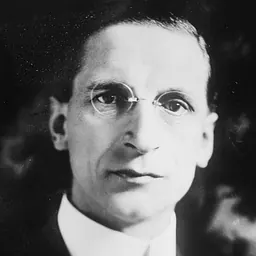
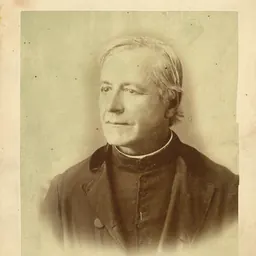

Related people
Same field, nearest in time
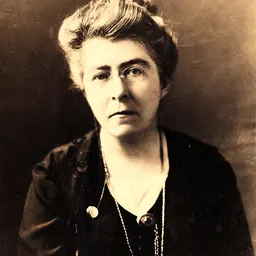
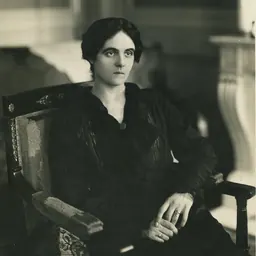



Contemporaries
People whose lives overlapped Katherine Hughes's
Frequently asked questions
Who was Katherine Hughes?
Canadian activist, journalist and writer (1876–1925)
When was Katherine Hughes born?
Katherine Hughes was born on 12 November 1876 in Emerald.
When did Katherine Hughes die?
Katherine Hughes died on 26 April 1925 in The Bronx.
What was Katherine Hughes's occupation?
Katherine Hughes was an activist, journalist and archivist.
What nationality was Katherine Hughes?
Katherine Hughes was Canadian.
Sources & further reading
· DBpedia: Katherine Hughes (activist)
Cite this page
APA: Biography.guide. (2026). Katherine Hughes. https://biography.guide/katherine-hughes/
MLA: "Katherine Hughes." Biography.guide, https://biography.guide/katherine-hughes/.
Chicago: "Katherine Hughes." Biography.guide. https://biography.guide/katherine-hughes/.
Data last updated: 2026-09-25 · Spot an error? Report a correction.
Page generated 2026-09-27 05:10 UTC