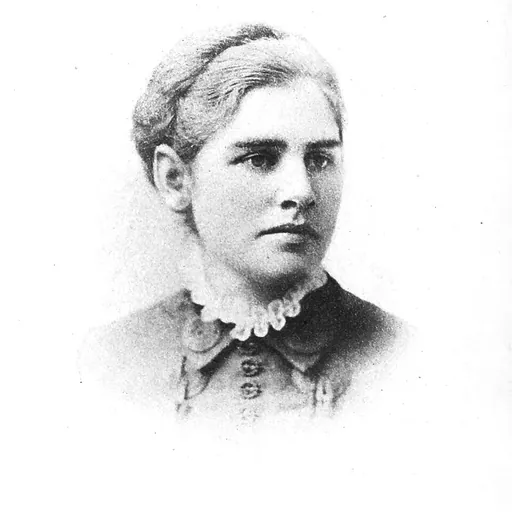
About Katharine Coman
Lived 1857 – 1915 (aged 57). Katharine Coman was an American economist, university teacher, writer and historian.
Katharine Ellis Coman (November 23, 1857 – January 11, 1915) was an American social activist and professor. She was based at the women-only Wellesley College, Massachusetts, where she created new courses in political economy, in line with her personal belief in social change. As dean, she established a new department of economics and sociology.
Among other admired works, Coman wrote The Industrial History of the United States and Economic Beginnings of the Far West: How We Won the Land Beyond the Mississippi. She was the first female statistics professor in the US, the only woman co-founder of the American Economics Association, and author of the first paper published in The American Economic Review. A believer in trades unionism, social insurance and the settlement movement, Coman travelled widely to conduct her research, and took her students on field trips to factories and tenements. She shared a home with poet Katharine Lee Bates.
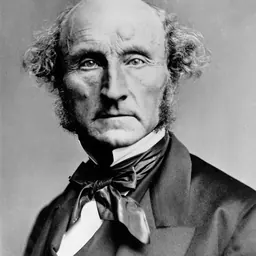
Early life Coman was born in 1857 to Martha Ann Seymour Coman (1826–1911) and Levi Parsons Coman (1826–1889) in Newark, Ohio. Her mother had graduated from an Ohio female seminary, and her father had been educated at Hamilton College, and thus Coman received much of her early education at home. She attended the University of Michigan for two years, left college to teach in Ottawa, Illinois for two years, and then returned to university. She earned a Bachelor of Philosophy (PhB) degree in 1880, one of only a handful of women to do so. She was influenced by the work of John Stuart Mill, which is evident in her later work as economist and historian. In 1883, she was promoted to full professor of history.
Coman developed and taught several new courses in economics, history, and rhetoric, including Statistical Study of Economic Problems, Industrial History of the United States, and Conservation of Our Natural Resources, all framed by sociological insights related to social justice. In 1885, at the age of 28, she became professor of history and economics. Two of her students, Helen Frances Page Bates and Helen Laura Sumner Woodbury, were among the first American women to earn PhDs in economics. while Helen Bates became a noted social worker. becoming professor emeritus. In writing about the farewell dinner held in her honor, the New York Times said: "Miss Coman has been so closely associated with the history and development of Wellesley for so long a time that her loss is felt very deeply by the whole college." In 1921, the college established the Katharine Coman Professorship of Industrial History to honor her service. The book outlined the economic history of the American West. (It included chapters on the early Spanish explorers, Spanish missions in California, Santa Fe trade, the Russian exploration of the Pacific Northwest, the beaver fur trade, the Mexican–American War and subsequent cession of what became the American Southwest, the Mormon migration to Utah, early explorers of the West, and the creation of the states of Kansas and Oregon.) Coman also worked with the Women's Trade Union League. Working with her economist and sociologist friend Emily Greene Balch and other women, Coman co-founded Denison House in 1892, a college women's settlement house located in Boston, serving as its first chair. with Wellesley professor and poet Katharine Lee Bates, the author of "America the Beautiful". Such partnerships were so common among Wellesley faculty that they were called "Wellesley marriages". Coman frequently traveled for her research on economic history; she visited Europe, the American West, Scandinavia, and Egypt. Coman died at home in January 1915 at the age of 58.
During Coman's illness, friends of her and Bates — many of them also in "Wellesley marriages" — took Coman out for walks and visits, and invited her to stay at their country homes. They prepared meals for Coman and Bates, brought flowers and fresh vegetables, and performed tasks and services to keep Coman's spirits up. Bates chronicled Coman's illness in her diary, noting hospital visits, surgical procedures, and details about Coman's pain and suffering. Leopold believes that the book, For Katharine Coman's Family and Innermost Circle of Friends, is the first breast cancer narrative in American literature. In the poem, "In Cedar Hill Cemetery (Newark, Ohio)," Bates writes: O ashes, memory of moral love, Sealed in your urn beneath the greensward, pure From evil, what am I to weep above Your beautiful and tranquil sepulture?
Assessment
A review of Coman's book Economic Beginnings of the Far West: How We Won the Land Beyond the Mississippi (1912) in the San Francisco Chronicle stated that "the author is one of those new women who have shown what may be accomplished in the way of research by method and industry and a great deal of enthusiasm." In a 1913 review of her book, economist Thomas Nixon Carver praised Coman's narrative style and lively prose. Also writing in 1913, economist Frederic Paxson criticized the book, arguing that there were factual errors and inaccurate citations, and that the data for the book were already widely available in university research libraries. Paxson does credit Coman with having prepared an extensive bibliography and for providing extensive notes. The two-volume book is today hailed as a classic and was reprinted twice; Macmillan in 1925, and Kelly in 1969. The article analyzed water rights, access, and availability. Also in this issue of The American Economic Review, economist Gary D. Libecap noted that Coman's work continued to be relevant, particularly for scholars interested in the economics of climate change.
Selected publications Books
(reprinted 1908, 1911, 1914) (reprinted in 1906, 1907, 1908; revised 1910; reprinted 1912, 1918, 1973) (reprinted 1925; 1969)
Articles
Coman, Katharine. (1911). "Some Unsettled Problems of Irrigation." The American Economic Review 1(1): 1–19. Reprinted in 2011 as The American Economic Review 101: 36–48.
Don’t just read it —
keep it.
Full-length biographies made to live with: read them, listen on the way to work, watch them tonight.
- E-book
- Audio
- Video
Instant download · yours to keep · every purchase keeps this site free
Important facts
Family & relationships
People in Katharine Coman's life
Named in this biography and alive at the same time




Related people
Same field, nearest in time



Contemporaries
People whose lives overlapped Katharine Coman's



Frequently asked questions
Who was Katharine Coman?
American economist (1857-1915)
When was Katharine Coman born?
Katharine Coman was born on 23 November 1857 in Newark.
When did Katharine Coman die?
Katharine Coman died on 11 January 1915 in Wellesley.
What was Katharine Coman's occupation?
Katharine Coman was an economist, university teacher, writer and historian.
What nationality was Katharine Coman?
Katharine Coman was American.
Sources & further reading
Cite this page
APA: Biography.guide. (2026). Katharine Coman. https://biography.guide/katharine-coman/
MLA: "Katharine Coman." Biography.guide, https://biography.guide/katharine-coman/.
Chicago: "Katharine Coman." Biography.guide. https://biography.guide/katharine-coman/.
Data last updated: 2026-09-22 · Spot an error? Report a correction.
Portrait: Wikimedia Commons · author & licence
Page generated 2026-09-27 05:03 UTC