
About Katerina Clark
Lived 1941 – 2024 (aged 82–83). Katerina Clark was an Australian and American slavist, russian studies scholar, philologist and literary scholar.
Katerina Clark (20 June 1941 – 1 February 2024) was an Australian scholar of Soviet studies. After getting her postgraduate degrees at Australian National University and Yale University, she began working as a professor of Russian and Slavic studies, including at Yale. As an academic, she wrote several books: The Soviet Novel; Mikhail Bakhtin (1986), which she wrote with her husband Michael Holquist; Petersburg: Crucible of Cultural Revolution (1998); Moscow, the Fourth Rome (2011); and Eurasia without Borders (2021). Biography Early life and education Katerina Clark was born on 20 June 1941 at Mosgiel Private Hospital in Surrey Hills, Victoria, daughter of historian Manning Clark and linguist Dymphna Clark. She spent several periods during her postgraduate career in the Soviet Union, including a brief stay at Moscow State University while at ANU and several visits to Moscow as part of her PhD.
Academic career In 1981, Clark published the book The Soviet Novel, which Vera Sandomirsky Dunham called "a brave and intelligent study of the Soviet novel"; In 1986, she and her husband co-authored Mikhail Bakhtin, a study of the Russian scholar of the same name, and she was awarded a Guggenheim Fellowship for "a study of the intellectual life of Petersburg/Petrograd/Leningrad, 1913–1931"; this later became her 1998 book Petersburg: Crucible of Cultural Revolution. She also won the 1996 Wayne S. Vucinich Book Prize.
Clark and Dobrenko were co-editors of Soviet Culture and Power, a 2005 volume in Yale University Press' Annals of Communism Series. She was awarded the 2008 American Association of Teachers of Slavic and East European Languages Award for Outstanding Contribution to Scholarship. By the 2010s, her research had shifted towards the Soviet regime's interwar period approach towards Eurasianism. She won the 2021 Matei Calinescu Prize for her book Eurasia without Borders. Personal life and death Clark married Holquist in 1974, and they had two sons.
Clark died on 1 February 2024, after a year and a half of suffering from lymphoma, aged 82. Her younger brother Andrew wrote her Sydney Morning Herald obituary. (with Michael Holquist) Mikhail Bakhtin (1986) Petersburg: Crucible of Cultural Revolution (1998) (ed. with Evgeny Dobrenko) Soviet Culture and Power (2007) Moscow, the Fourth Rome (2011) Eurasia without Borders (2021)
Don’t just read it —
keep it.
Full-length biographies made to live with: read them, listen on the way to work, watch them tonight.
- E-book
- Audio
- Video
Instant download · yours to keep · every purchase keeps this site free
Important facts
People in Katerina Clark's life
Named in this biography and alive at the same time
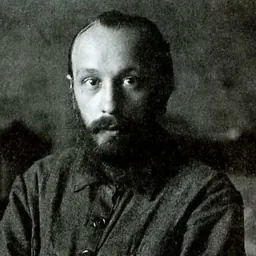




Related people
Same field, nearest in time




Contemporaries
People whose lives overlapped Katerina Clark's


Frequently asked questions
Who was Katerina Clark?
Australian-American Slavist (1941–2024)
When was Katerina Clark born?
Katerina Clark was born in 1941.
When did Katerina Clark die?
Katerina Clark died on 1 February 2024 in Hamden.
What was Katerina Clark's occupation?
Katerina Clark was a slavist, russian studies scholar, philologist and literary scholar.
What nationality was Katerina Clark?
Katerina Clark was Australian and American.
Sources & further reading
Cite this page
APA: Biography.guide. (2026). Katerina Clark. https://biography.guide/katerina-clark/
MLA: "Katerina Clark." Biography.guide, https://biography.guide/katerina-clark/.
Chicago: "Katerina Clark." Biography.guide. https://biography.guide/katerina-clark/.
Data last updated: 2026-09-20 · Spot an error? Report a correction.
Page generated 2026-09-27 05:27 UTC