
About Käte Duncker
Lived 1871 – 1953 (aged 81). Käte Duncker was a German politician, resistance fighter, editing staff, orator and teacher.
Käte Duncker (born Paula Kathinka Döll; 23 May 1871 – 2 May 1953) was a German political and feminist activist who became a politician in the Social Democratic Party of Germany and then the Communist Party of Germany.
Life Provenance and early childhood Paula Kathinka Döll was born in Lörrach (Baden), directly across the border to the north of Basel.
Politics trumps teaching She attended an all-girls' school in Friedrichroda and the commercial school in Gotha before moving on to the Teacher Training College in Eisenach between 1888 and 1890. She returned to Leipzig where, despite not being enrolled at the university, she was able to attend certain lectures on a "guest basis", notably those delivered by Karl Bücher.
She married Hermann Duncker, by now an economics student, towards the end of 1898. Their daughter, Hedwig, was born in 1899. In the meantime, Käte immersed herself in the leftwing politics of the city, becoming first a member of the Social Democratic Party ("Sozialdemokratische Partei Deutschlands" / SPD) and then a party worker, Duncker's particular area of responsibility on the paper was the section entitled "For our children", which became a great favourite with working-class families. ).
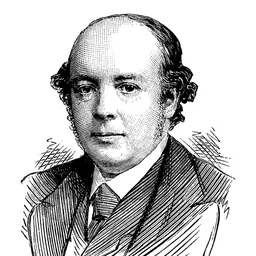
In 1911 Duncker gave a presentation to the SPD Party Conference, held that year in Jena, where, according to one source, she had her first encounter with Rosa Luxemburg. right|Jacob Walcher, writing in 1949 Hermann and Käte Duncker passionately opposed funding for the war, and as economic destitution on the home front mounted, the call for an end to the slaughter on the front line would only grow louder. In 1915 Käte Duncker, was a co-founder of the news-sheet, "The International", to which she became a frequent contributor. However, much of her attention was devoted to planning for future developments of socialism and the labour movement in Germany. which had a depressive impact on the family. Their younger son, Wolfgang, also went into exile in 1935, relocating with his Swiss-born wife, Erika, to Moscow. During 1936 Käte Duncker moved back from Berlin to Friedrichroda. In November 1936, she emigrated to the United States where she lived in a New York apartment block and was able to find work as a cleaner and as a language teacher. (Wolfgang's widow had survived the war, working in a (military) tank factory, and returned to the Soviet occupation zone in 1945 accompanied by her second husband and her two surviving children.)
Käte Duncker died at Bernau bei Berlin on 2 May 1953. Less than a year earlier she had called in a favour from another old comrade, writing on behalf of her friend, the journalist Jacob Walcher, to Walter Ulbricht. Walcher had been thrown out of the party because of doctrinal differences. It is not known whether Duncker's plea to Ulbricht in 1952 played any part in triggering her friend's formal rehabilitation in 1956.
Celebration
The East German state needed to find suitable heroes and heroines: Käte Duncker evidently satisfied the criteria. Before 1990 a number of places had streets named after her. In Friedrichroda the street in which her mother had run a small guest house during the closing decades of the nineteenth century became "Käte-Duncker-Straße".
Inevitably, however, heroes of the German Democratic Republic lost a little of their lustre after the changes that led to the demise of the régime, followed by German reunification in October 1990. In a public park ("Kurpark") in Friedrichroda the memorial statue showing Duncker as a teacher instructing three pupils was removed in 2009 in order to clear the way for a new walkway. The memorial statue was put up again in 2022.
On 15 October 2013 Germany's Die Linke (The Left) party renamed its meeting room at the Regional Parliament in Thuringia (where she sat as a Communist Party member in the 1920s) the "Käte Duncker room" .
Don’t just read it —
keep it.
Full-length biographies made to live with: read them, listen on the way to work, watch them tonight.
- E-book
- Audio
- Video
Instant download · yours to keep · every purchase keeps this site free
Important facts
Family & relationships
People in Käte Duncker's life
Named in this biography and alive at the same time

Related people
Same field, nearest in time





Contemporaries
People whose lives overlapped Käte Duncker's



Frequently asked questions
Who was Käte Duncker?
politician (1871-1953)
When was Käte Duncker born?
Käte Duncker was born on 23 May 1871 in Lörrach.
When did Käte Duncker die?
Käte Duncker died on 2 May 1953 in Bernau bei Berlin.
What was Käte Duncker's occupation?
Käte Duncker was a politician, resistance fighter, editing staff, orator and teacher.
What nationality was Käte Duncker?
Käte Duncker was German.
Sources & further reading
Cite this page
APA: Biography.guide. (2026). Käte Duncker. https://biography.guide/kate-duncker/
MLA: "Käte Duncker." Biography.guide, https://biography.guide/kate-duncker/.
Chicago: "Käte Duncker." Biography.guide. https://biography.guide/kate-duncker/.
Data last updated: 2026-09-22 · Spot an error? Report a correction.
Page generated 2026-09-27 05:27 UTC