
About Katarina Witt
Born 1965. Katarina Witt is a German figure skater.
Katarina Witt (, ; born 3 December 1965) is a German former figure skater. A two-time Olympic champion, Witt is regarded as one of the greatest ladies' singles figure skaters of all time.
Witt won the first of her two Olympic gold medals for East Germany at the 1984 Sarajevo Olympics, before winning a second at the 1988 Calgary Olympics. She is one of only two skaters to defend a ladies' singles Olympic title, the other being Norwegian Sonja Henie. Witt is a four-time World Champion (1984, 1985, 1987, 1988) and two-time World silver medalist (1982, 1986). She won six consecutive European Championships (1983–1988), a feat equalled only by Henie among female skaters. Between 1984 and 1988, Witt won ten gold medals in eleven major international events, making her one of the most successful figure skaters ever.
Retiring from competitive skating after defending her Olympic title in 1988, Witt reappeared at the 1994 Winter Olympics where she represented a reunified Germany while skating a Robin Hood-themed program, a comeback performance which saw her receive the Goldene Kamera award. Since her subsequent retirement, Witt has worked in film and television.
Early life Witt was born in Staaken (at that time a district of Falkensee) in East Germany, just outside West Berlin, which is today part of Berlin. Her mother worked in a hospital as a physiotherapist and her father was a farmer.
In 1988, Witt started a professional career – rare for East German athletes. She spent three years on tour in the United States with Brian Boitano, also an Olympic champion. Their show, "Witt and Boitano Skating", was so successful that for the first time in ten years, New York's Madison Square Garden was sold out for an ice show. Later, she continued at Holiday on Ice in the United States and in western Europe. She also became an actress in the film Carmen on Ice (1989), which expanded upon her gold-medal free program in Calgary. In 1990, she received an Emmy Award for her role in this film. As a professional she was never as successful competitively as an amateur, often placing last of four or five women in her appearances at the two biggest professional championships (Challenge of Champions and World Professional Championships in Landover), but she continued to receive great acclaim as an entertainer and show skater.
In 1994, Witt made a comeback to the competitive skating scene, coached again by Jutta Müller. She was expected to be in a fierce three-person fight for only two spots on the German Olympic team with both young rising star Tanja Szewczenko and veteran Marina Kielmann, who was almost the same age as Witt. She finished second at the German Championships behind Szewczenko, but above Kielmann.
Witt's first international competition for the reunified country of Germany, following eleven years competing for East Germany, was the 1994 European Championships. She finished eighth, again behind Szewczenko who finished in fifth, but again ahead of Kielmann who was ninth. She and Szewczenko thus gained the two available spots ahead of Kielmann for the 1994 Winter Olympics in Lillehammer, Norway, where she finished seventh. Witt performed a solid short program, where some of the contenders with more a difficult jump combination (Lu Chen, Josée Chouinard, Yuka Sato, Tonya Harding) faltered. This left her 6th, and included in the long program. She had not been expected to make it that far. In the buildup, she would also draw last to skate, and get to close the show in her final Olympic skate, after the medalists had already been determined. Her free program to the music "Sag mir wo die Blumen sind" (an arrangement of the Pete Seeger folksong "Where Have All the Flowers Gone?") was said to be a peace message from her to the people of Sarajevo, the site of her first Olympic victory. While she had some technical problems, completing only three of her planned five triples, she delivered emotional and moving performances. She received the Golden Camera for her Olympic comeback.
Witt's taste in figure-skating costumes sometimes caused debate. At the 1983 European Championships, she skated her Mozart short program in knee breeches instead of a skirt. Her blue, skirtless feather-trimmed 1988 costume for a showgirl-themed short program was considered too theatrical and sexy, and led to a change in the ISU regulations dubbed the "Katarina rule" which required female skaters to wear more modest clothing; skirts were required to cover the buttocks and crotch. In 1994, skating a Robin Hood-themed program, Witt stated, "I wore the Robin Hood – like a man's costume – because I didn't want to be accused of seducing the judges this time."
In 1994, Witt published her autobiography Meine Jahre zwischen Pflicht und Kür (My Years between Compulsories and Freestyle). In 1995, Witt was inducted into the World Figure Skating Hall of Fame. Her farewell from show skating tour took place in February and March 2008.
Post-skating career
In 1996, Witt received the Golden Plate Award of the American Academy of Achievement.
In 1996, Witt had a cameo appearance in the movie Jerry Maguire, and on the television show Everybody Loves Raymond.
She starred in a German-language film called Die Eisprinzessin - The Ice Princess, providing the vocals for the theme song, "Skate with Me".
She appeared as herself in two episodes of the comedy series Arli$$ that aired in 1997 and 1998.
Witt posed nude for Playboy magazine, and the pictures were published months later in the December 1998 issue, which was the second ever sold-out issue of the magazine. (The first sold-out issue was the inaugural one including photos of Marilyn Monroe.) Witt said she did not care for the "cute, pretty, ice princess image" of figure skaters and wanted to "change people's perceptions".
In January 2013, Witt appeared on German TV in her first leading role, playing a figure skater who is pursued by a stalker. The made-for-television movie thus has autobiographical elements, as Witt herself had been stalked in the United States 20 years earlier.
Programs
Season Short program Free skating Exhibition 1993–1994 Robin Hood: Prince of Thievesby Michael Kamen Where Have All the Flowers Gone?by Pete Seeger 1987–1988 Jerry's Girlsby Jerry Herman Carmen Suiteby Rodion Shchedrin Put the Blame on Mameby Rita Hayworth Love Story Big Spenderby Shirley Bassey Badby Michael Jackson I Am What I Am from "La Cage Aux Folles"by Shirley Bassey 1986–1987 In the Moodby Glenn Miller West Side Storyby Leonard Bernstein 1985–1986 Theme from "Caravans"by Mike Batt Make Believe It's Your First Timeby The Carpenters 1984–1985 Flamenco FantasyI Got Rhythm Embraceable You Mona Lisaby George Gershwin 1983–1984 Csárdásby Vittorio Monti Love Me Tenderby Elvis Presley Die Juliska aus Budapestfrom Maske in Blauby Fred Raymond 1982–1983 Rondò Veneziano Medley Mozart Medley Rhapsody in Black 1981–1982 Supermanby John Williams 1980–1981 The Muppet Show
Results +Competition placements at senior level Event 1978–79 1979–80 1980–81 1981–82 1982–83 1983–84 1984–85 1985–86 1986–87 1987–88 1993–94 Olympics 1st 1st 7th Worlds 10th 5th 2nd 4th 1st 1st 2nd 1st 1st Europeans 14th 13th 5th 2nd 1st 1st 1st 1st 1st 1st 8th Skate Canada 1st NHK Trophy 2nd 1st 1st 1st Blue Swords 1st 2nd 1st International Challenge Cup 2nd 1st 1st Golden Spin of Zagreb 3rd East German 3rd 2nd 1st 1st 1st 1st 1st 1st 1st 1st German 2nd
Don’t just read it —
keep it.
Full-length biographies made to live with: read them, listen on the way to work, watch them tonight.
- E-book
- Audio
- Video
Instant download · yours to keep · every purchase keeps this site free
Important facts
People in Katarina Witt's life
Named in this biography and alive at the same time



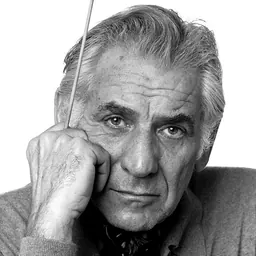
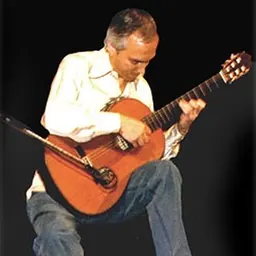
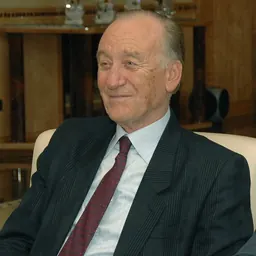


Related people
Same field, nearest in time

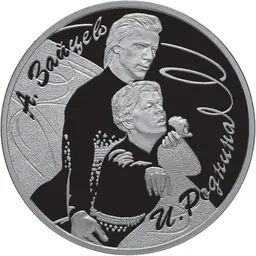

Contemporaries
People whose lives overlapped Katarina Witt's

Frequently asked questions
Who is Katarina Witt?
German figure skater
When was Katarina Witt born?
Katarina Witt was born on 3 December 1965 in Staaken.
What is Katarina Witt's occupation?
Katarina Witt is a figure skater.
What nationality is Katarina Witt?
Katarina Witt is German.
Sources & further reading
Cite this page
APA: Biography.guide. (2026). Katarina Witt. https://biography.guide/katarina-witt/
MLA: "Katarina Witt." Biography.guide, https://biography.guide/katarina-witt/.
Chicago: "Katarina Witt." Biography.guide. https://biography.guide/katarina-witt/.
Data last updated: 2026-09-26 · Spot an error? Report a correction.
Page generated 2026-09-27 05:15 UTC