
About Karol Borsuk
Lived 1905 – 1982 (aged 76). Karol Borsuk was a Polish mathematician, topologist, university teacher, philosopher, pedagogue and author, known for Borsuk's conjecture and Borsuk–Ulam theorem.
Karol Borsuk (8 May 1905 – 24 January 1982) was a Polish mathematician. His main area of interest was topology. He made significant contributions to shape theory, a term which he coined. He also obtained important results in functional analysis. He was a professor of mathematics at the University of Warsaw, a member of the Polish Academy of Sciences, the Polish Mathematical Society and a leading representative of the Warsaw School of Mathematics.
Life and career Early life and education Borsuk was born in 1905 in Warsaw to father Marian, a surgeon, and mother Zofia . In 1923, he graduated from the Stanisław Staszic State Gymnasium in Warsaw. Between 1923 and 1927, he studied mathematics at the Faculty of Philosophy of the University of Warsaw.
He received his master's degree and doctorate from Warsaw University in 1927 and 1930, respectively. His PhD thesis title was On Retracts and Related Sets and his advisor was Stefan Mazurkiewicz. From 1929 to 1934, he worked at the Faculty of Mathematics at the University of Warsaw. He became a professor in 1938. In the interwar period, Borsuk visited Lwów, which was a thriving center of mathematics of the Second Polish Republic, and began his collaboration with Stanisław Ulam, especially in the field of topology. Borsuk joined the mathematicians in the Scottish Café and contributed to the open problems which they wrote down in the famous book. In the years 1939–1944, he gave secret lectures at the University of Warsaw. In 1943, he was arrested for his participation in the resistance movement and spent a couple of months at the Pawiak Prison. During the Warsaw Uprising in 1944, he was transported alongside his family to the Dulag 121 Camp in Pruszków. He managed to escape from the camp and remained in hiding until the end of the war.
Later career In 1945, he completed a project in collaboration with Bronisław Knaster and Kazimierz Kuratowski concerning the establishment of the Institute of Mathematics of the Polish Academy of Sciences. In 1946, he returned to the University of Warsaw where he served as the Head of the Institute of Mathematics from 1952 to 1964. In 1952, he became a member of the Polish Academy of Sciences, and in 1953, a corresponding member of the Bulgarian Academy of Sciences. He was also a member of the Polish Mathematical Society. He worked as an editor-in-chief of Dissertationes Mathematicae and deputy editor-in-chief of Fundamenta Mathematicae. In 1946–47, he lectured at the Institute for Advanced Study in Princeton, New Jersey, in 1959–60 at the University of California at Berkeley, in 1963–64 at the University of Wisconsin at Madison, and in 1967–68 at Rutgers University–New Brunswick. In 1976, he was awarded an honorary doctorate by the University of Zagreb.
Borsuk's students include: Samuel Eilenberg, Andrzej Kirkor, Jan Jaworowski, Andrzej Granas, Antoni Kosiński, Karol Sieklucki, Włodzimierz Holsztyński, Rafał Molski, Hanna Patkowska, Andrzej Jankowski, Włodzimierz Kuperberg, Stanisław Spież, Krystyna Kuperberg, Jerzy Dydak, Andrzej Trybulec, Marian Orłowski, Alfred Surzycki.
Research
Borsuk introduced the theory of absolute retracts (ARs) and absolute neighborhood retracts (ANRs), and the cohomotopy groups, later called Borsuk–Spanier cohomotopy groups. He also founded shape theory. He has constructed various beautiful examples of topological spaces, e.g. an acyclic, 3-dimensional continuum which admits a fixed point free homeomorphism onto itself; also 2-dimensional, contractible polyhedra which have no free edge.
His topological and geometric conjectures and themes stimulated research for more than half a century; in particular, his open problems stimulated the infinite-dimensional topology. Some of the notable mathematical concepts that bear Borsuk's name include Borsuk's conjecture, Borsuk–Ulam theorem and Bing–Borsuk conjecture.
Private life In 1936, he married Zofia Paczkowska. One of his two daughters, Magdalena, who was a professor of paleontology, was married to Polish mathematician Andrzej Białynicki-Birula. He died in Warsaw in 1982 and was buried at the Powązki Cemetery. In 2008, a commemorative plaque in honor of Borsuk was unveiled at the entrance to the tenement house in Warsaw at Filtrowa 63 Street where the mathematician used to live.
Works Geometria analityczna w n wymiarach (1950) (translated to English as Multidimensional Analytic Geometry, Polish Scientific Publishers, 1969) Podstawy geometrii (1955) Foundations of Geometry (1960) with Wanda Szmielew, North Holland publisher Theory of Retracts (1967), PWN, Warszawa. Theory of Shape (1975) Collected papers vol. I, (1983), PWN, Warszawa.
Don’t just read it —
keep it.
Full-length biographies made to live with: read them, listen on the way to work, watch them tonight.
- E-book
- Audio
- Video
Instant download · yours to keep · every purchase keeps this site free
Important facts
People in Karol Borsuk's life
Named in this biography and alive at the same time


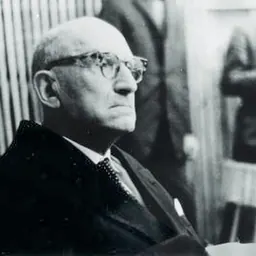
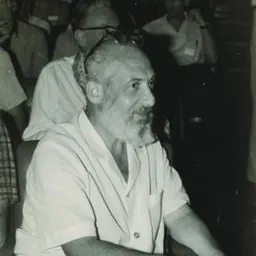

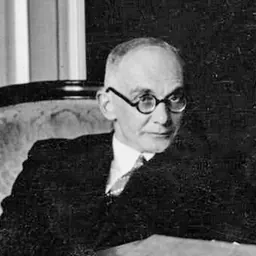

Related people
Same field, nearest in time
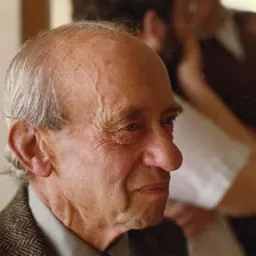


Contemporaries
People whose lives overlapped Karol Borsuk's



Frequently asked questions
Who was Karol Borsuk?
Polish mathematician (1905–1982)
When was Karol Borsuk born?
Karol Borsuk was born on 8 May 1905 in Warsaw.
When did Karol Borsuk die?
Karol Borsuk died on 24 January 1982 in Warsaw.
What was Karol Borsuk's occupation?
Karol Borsuk was a mathematician, topologist, university teacher, philosopher, pedagogue and author.
What was Karol Borsuk known for?
Karol Borsuk was known for Borsuk's conjecture and Borsuk–Ulam theorem.
What nationality was Karol Borsuk?
Karol Borsuk was Polish.
Sources & further reading
Cite this page
APA: Biography.guide. (2026). Karol Borsuk. https://biography.guide/karol-borsuk/
MLA: "Karol Borsuk." Biography.guide, https://biography.guide/karol-borsuk/.
Chicago: "Karol Borsuk." Biography.guide. https://biography.guide/karol-borsuk/.
Data last updated: 2026-09-20 · Spot an error? Report a correction.
Page generated 2026-09-27 05:25 UTC