
About Karl Weigert
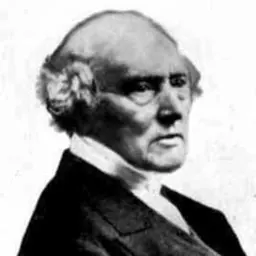
Lived 1845 – 1904 (aged 59). Karl Weigert was a German pathologist, university teacher and anatomist.
Karl Weigert, Carl Weigert (19 March 1845 in Münsterberg in Silesia – 5 August 1904 in Frankfurt am Main) was a German Jewish pathologist. His nephew was Fritz Weigert and his cousin was Paul Ehrlich.
He received his education at the universities of Berlin, Vienna, and Breslau, graduating in 1868. After having taken part in the Franco-Prussian War as assistant surgeon, he settled in Breslau, and for the following two years, was an assistant to Heinrich Waldeyer; from 1870 to 1874 to Hermann Lebert, and then to Julius Cohnheim, who he followed to the University of Leipzig in 1878. There he became an associate professor of pathology in 1879. In 1884, he was appointed professor of pathological anatomy at the Senckenbergsche Stiftung in Frankfurt am Main, and received the title of "Geheimer Medizinal-Rat" in 1899. He is buried in Old Jewish Cemetery, Frankfurt (Juedischer Friedhof Rat-Beil-Straße).
Weigert assisted Cohnheim in many of his researches, and wrote much on the staining of bacteria in microscopy. In 1884, he introduced a precise method for staining myelin sheaths. He is credited with the discovery of vascular tuberculosis, and was the first to demonstrate how tuberculous material could enter the bloodstream.
He contributed many essays to medical journals. Among his works are: "Zur Anatomie der Pocken" (Breslau, 1874) "Färbung der Bacterien mit Anilinfarben" (ib. 1875) "Nephritis" (Leipzig, 1879) "Fibrinfärbung" (1886) "Beiträge zur Kenntniss der Normalen Menschlichen Neuroglia" (Frankfort am Main, 1895) "Elastische Fasern" (ib. 1898)
Weiger–Meyer law The Weigert–Meyer law describes the anatomical relationship of two ureters in a duplicated renal collecting system, as well as the resulting patterns of hydronephrosis, obstruction, and reflux. This pattern was first described by Weigert in 1877 and further defined as a "law" by Dr. Robert Meyer in 1946.
Don’t just read it —
keep it.
Full-length biographies made to live with: read them, listen on the way to work, watch them tonight.
- E-book
- Audio
- Video
Instant download · yours to keep · every purchase keeps this site free
Important facts
People in Karl Weigert's life
Named in this biography and alive at the same time



Related people
Same field, nearest in time



Contemporaries
People whose lives overlapped Karl Weigert's



Frequently asked questions
Who was Karl Weigert?
German pathologist (1845–1904)
When was Karl Weigert born?
Karl Weigert was born on 19 March 1845 in Ziębice.
When did Karl Weigert die?
Karl Weigert died on 5 August 1904 in Frankfurt.
What was Karl Weigert's occupation?
Karl Weigert was a pathologist, university teacher and anatomist.
What nationality was Karl Weigert?
Karl Weigert was German.
Sources & further reading
Cite this page
APA: Biography.guide. (2026). Karl Weigert. https://biography.guide/karl-weigert/
MLA: "Karl Weigert." Biography.guide, https://biography.guide/karl-weigert/.
Chicago: "Karl Weigert." Biography.guide. https://biography.guide/karl-weigert/.
Data last updated: 2026-09-25 · Spot an error? Report a correction.
Page generated 2026-09-27 05:12 UTC