
About Hans Chiari
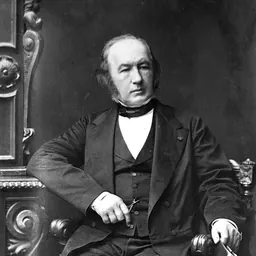
Lived 1851 – 1916 (aged 64). Hans Chiari was an Austrian pathologist, university teacher and anatomist, known for Arnold–Chiari malformation, Budd–Chiari syndrome and Chiari Network.
Biography Chiari studied medicine in Vienna, where he was an assistant to Karl Freiherr von Rokitansky (1804–1878) and Richard Ladislaus Heschl (1824–1881). In 1878 he received his habilitation in pathological anatomy, and within a few years became an associate professor at the University of Prague. At Prague he was also superintendent of the pathological-anatomical museum. In 1906 he relocated to the University of Strasbourg as a professor of pathological anatomy.
Chiari's research dealt largely with postmortem examinations, and most of his numerous writings are the result of autopsies. In the 1890s he described a condition involving deformities of the cerebellum, and brainstem in children with herniation of the spinal cord. The phenomenon was later to become known as the "Arnold–Chiari malformation", named after Chiari and German pathologist, Julius Arnold (1835–1915). The malformation was given its name in 1907 by two of Dr. Arnold's students.
Another medical term named after Chiari is the Budd–Chiari syndrome, which is ascites and cirrhosis of the liver caused by an obstruction of the hepatic veins due to a blood clot. It is named in conjunction with British physician George Budd (1808–1882). Lastly, Chiari is also famous for describing the "Chiari network", an embryonic remnant found in the right atrium, first published in 1897.
Publications "Über Veränderungen des Kleinhirns infolge von Hydrocephalie des Grosshirns", Deutsche medicinische Wochenschrift, Berlin, 1891, 17: 1172–1175 – On cerebellar changes caused by hydrocephalus of the cerebrum. "Über Veränderungen des Kleinhirns, der Pons und der Medulla oblongata, infolge von congenitaler Hydrocephalie des Grosshirns", Denkschriften der Akademie der Wissenschaften in Wien, 1895, 63: 71. – On changes to the cerebellum, pons and the medulla oblongata, caused by hydrocephalus of the cerebrum.
Don’t just read it —
keep it.
Full-length biographies made to live with: read them, listen on the way to work, watch them tonight.
- E-book
- Audio
- Video
Instant download · yours to keep · every purchase keeps this site free
Important facts
People in Hans Chiari's life
Named in this biography and alive at the same time


Related people
Same field, nearest in time


Contemporaries
People whose lives overlapped Hans Chiari's


Frequently asked questions
Who was Hans Chiari?
Austrian pathologist (1851–1916)
When was Hans Chiari born?
Hans Chiari was born on 4 September 1851 in Vienna.
When did Hans Chiari die?
Hans Chiari died on 6 May 1916 in Strasbourg.
What was Hans Chiari's occupation?
Hans Chiari was a pathologist, university teacher and anatomist.
What was Hans Chiari known for?
Hans Chiari was known for Arnold–Chiari malformation, Budd–Chiari syndrome and Chiari Network.
What nationality was Hans Chiari?
Hans Chiari was Austrian.
Sources & further reading
Cite this page
APA: Biography.guide. (2026). Hans Chiari. https://biography.guide/hans-chiari/
MLA: "Hans Chiari." Biography.guide, https://biography.guide/hans-chiari/.
Chicago: "Hans Chiari." Biography.guide. https://biography.guide/hans-chiari/.
Data last updated: 2026-09-20 · Spot an error? Report a correction.
Page generated 2026-09-27 05:18 UTC