
Karl Otfried Müller
German scholar of classical Greek studies
About Karl Otfried Müller
Lived 1797 – 1840 (aged 42). Karl Otfried Müller was a German classical archaeologist, classical philologist, university teacher, mythographer, historian of classical antiquity and epigrapher.
Karl Otfried Müller (; 28 August 1797 – 1 August 1840) was a German professor, scholar of classical Greek studies and philodorian.
Biography
He was born at Brieg (modern Brzeg) in Silesia, then in the Kingdom of Prussia. His father was a chaplain in the Prussian army, and he was raised in the atmosphere of Protestant Pietism. He attended the gymnasium of his town. His university education was partly at Breslau (now Wrocław) and partly at Berlin. In Berlin, he was spurred towards the study of Greek literature, art and history by the influence of August Böckh. In 1817, after the publication of his first work, Aegineticorum liber, on the Aeginetans, he received an appointment at the Magdaleneum in Breslau, and in 1819 he was made adjunct professor of ancient literature at the University of Göttingen, his subject being the archaeology and history of ancient art. He deepened his understanding of Greek art by travelling in the summer of 1822 to the Netherlands, England and France.
Turning away from the Enlightenment conception of Greek myth as a reflection of a universal religion in its infancy, Müller placed the study squarely as the outcome of an encounter between the particular character of a people and a specific historical setting, where, in the broadest sense it has remained, though his convictions that the core of each culture is uniquely its own led him to deny the influence of Egyptian art on Greek art, already being recognised at the time.
Müller's position at Göttingen was made difficult by the political troubles which followed the accession of Ernest Augustus, King of Hanover, in 1837, and he applied for permission to travel, leaving Germany in 1839. In April of the following year he reached Greece, having spent the winter in Italy. He investigated the remains of ancient Athens, visited numerous places in Peloponnesus, and finally went to Delphi, where he began excavations. He was attacked by intermittent fever, of which he died at Athens. His grave is on the Colonus hilltop in Athens next to that of Charles Lenormant. In 1841 a medal was struck in his honor.
Work
His aim was to form a vivid conception of Greek life as a whole. The latter work was continued and completed by Friedrich Wieseler (1846–56).
In the last years of his life, he undertook to prepare for the English Society for the Diffusion of Useful Knowledge, a history of Greek literature, which in 1841 appeared posthumously as Geschichte der griechischen Litteratur bis auf das Zeitalter Alexanders (4th edition, revised and continued by Heitz, 1882–84). It was translated into English from the author's manuscript as History of the Literature of Ancient Greece and published the previous year in London. Chapters i.-xxii. were translated by Sir George Cornewall Lewis; chapters xxiii.-xxxvi. by J. W. Donaldson, who carried the work down to the taking of Constantinople by the Turks. It remained one of the best books on the subject for many years.
Müller also published an admirable translation of the Eumenides of Aeschylus with introductory essays (1833). This was the object of a profound controversy in which Gottfried Hermann and his followers attacked him with great bitterness. Müller published new editions of Varro, De Lingua Latina (Leipzig, 1833) and Festus, De Significatione Verborum (Leipzig, 1839).
Quotes "A democracy likes a large mass and hates all divisions."
Family His brothers were Julius Müller (1801–1878), a theologian, and Eduard Müller (1804–1875), a philologist.
Don’t just read it —
keep it.
Full-length biographies made to live with: read them, listen on the way to work, watch them tonight.
- E-book
- Audio
- Video
Instant download · yours to keep · every purchase keeps this site free
Important facts
People in Karl Otfried Müller's life
Named in this biography and alive at the same time
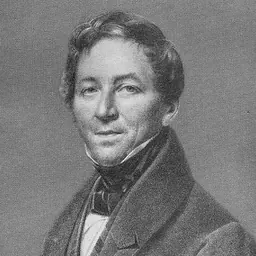
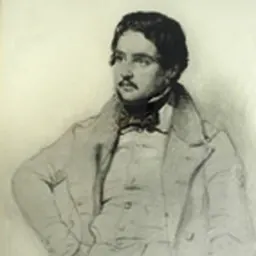

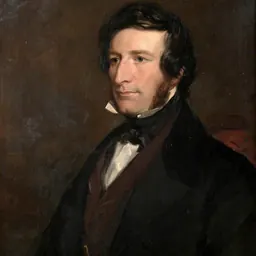
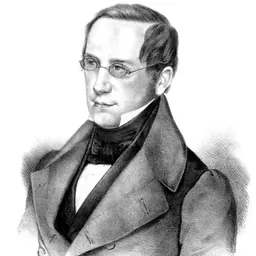

Related people
Same field, nearest in time



Contemporaries
People whose lives overlapped Karl Otfried Müller's






Frequently asked questions
Who was Karl Otfried Müller?
German scholar of classical Greek studies (1797–1840)
When was Karl Otfried Müller born?
Karl Otfried Müller was born on 28 August 1797 in Brzeg.
When did Karl Otfried Müller die?
Karl Otfried Müller died on 1 August 1840 in Athens.
What was Karl Otfried Müller's occupation?
Karl Otfried Müller was a classical archaeologist, classical philologist, university teacher, mythographer, historian of classical antiquity and epigrapher.
What nationality was Karl Otfried Müller?
Karl Otfried Müller was German.
Sources & further reading
· Wikipedia: Karl Otfried Müller
· DBpedia: Karl Otfried Müller
Cite this page
APA: Biography.guide. (2026). Karl Otfried Müller. https://biography.guide/karl-otfried-muller/
MLA: "Karl Otfried Müller." Biography.guide, https://biography.guide/karl-otfried-muller/.
Chicago: "Karl Otfried Müller." Biography.guide. https://biography.guide/karl-otfried-muller/.
Data last updated: 2026-09-25 · Spot an error? Report a correction.
Page generated 2026-09-27 05:09 UTC