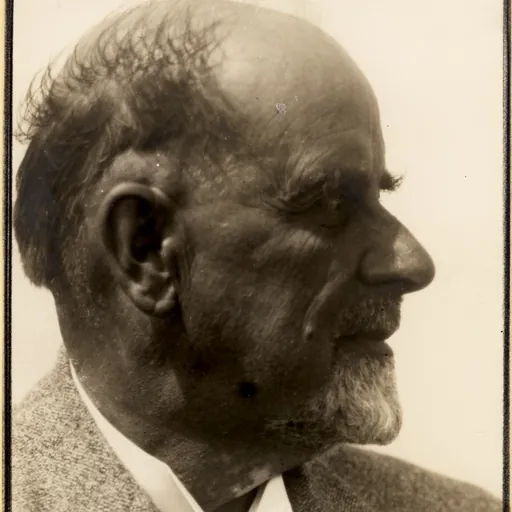
About Karl Moser
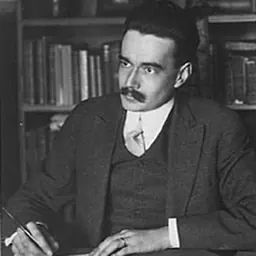
Lived 1860 – 1936 (aged 75). Karl Moser was a Swiss architect, university teacher and author.
Karl Coelestin Moser (10 August 1860 – 28 February 1936) was a Swiss architect and professor who became known in Switzerland as the "father of modern architecture". As co-founder of Curjel & Moser, he designed major public buildings including the Kunsthaus Zürich, the main building of the University of Zurich and Basel Badischer Bahnhof. Over the course of his career, his work shifted from historically influenced architecture towards modern design, exemplified by St. Anton Church in Basel. Moser later taught at ETH Zurich and served as the inaugural president of the Congrès Internationaux d’Architecture Moderne from 1928 to 1930.
Biography Karl Coelestin Moser was born in Baden, Switzerland, on 10 August 1860. His father, Robert Moser, was an architect. He studied architecture at the Zurich Polytechnic from 1878 to 1882 under Alfred Friedrich Bluntschli. In 1887, he married Euphemie Lorenz. From 1907 to 1912, he worked for the Baden state railways as an architectural adviser.
Curjel & Moser
Within Curjel & Moser, Karl Moser generally directed the firm’s Swiss projects, while Robert Curjel concentrated more heavily on residential and commercial work in Karlsruhe. Moser also took the leading role in the firm’s architectural design. Its work included churches, schools, houses, commercial buildings and industrial projects. The church combined a Romanesque-influenced central plan with extensive figurative sculpture and contemporary Jugendstil elements. During a journey to England with Laeuger in 1896, he encountered the Arts and Crafts movement and the work of the American architect Henry Hobson Richardson. International exchange remained important throughout Moser's career, and he drew on contemporary developments in architecture in shaping his own work. The villa combined elements of the English country-house tradition and German Jugendstil with a modern internal layout. For the Kunsthaus façade, Moser worked with the sculptor Carl Burckhardt, whose reliefs were incorporated into the architectural composition. which became one of Moser's major works. The canton sought a monumental building, but Moser developed an individual design shaped by the site and contemporary architectural concerns. In the early 1920s, Moser and the architect Paul Ulrich developed a small group of houses on Rainstrasse in Wollishofen. Their restrained forms and uniform design marked a departure from the Jugendstil villas built there earlier. Switzerland’s first church built with exposed concrete, the building left its concrete exposed on both the interior and exterior. The interior is a high three-aisled hall, with the central nave supported by slender concrete piers. Its exposed concrete attracted both admiration and criticism when the church opened.
In a 1933 redevelopment plan for Zurich’s Niederdorf, Moser proposed replacing most of the historic buildings with simple cubic structures, while keeping only a small number of monuments. The plan drew on ideas associated with Le Corbusier’s Plan Voisin and reflected the increasingly radical character of Moser’s approach to modern urban planning. He was nevertheless appointed after his professional experience and body of work were judged favourably. His students included architects who later became prominent representatives of the New Building movement.
Selected works A selection of Moser's architectural works includes: During his lifetime, Le Corbusier reportedly called him the "father of modernism". By the 1920s, he was also widely known in Switzerland as the "father of modern architecture". His reforms to architectural education and sustained support for younger designers contributed to the international recognition of modern Swiss architecture.
Gallery
Don’t just read it —
keep it.
Full-length biographies made to live with: read them, listen on the way to work, watch them tonight.
- E-book
- Audio
- Video
Instant download · yours to keep · every purchase keeps this site free
Important facts
People in Karl Moser's life
Named in this biography and alive at the same time




Related people
Same field, nearest in time




Contemporaries
People whose lives overlapped Karl Moser's
Frequently asked questions
Who was Karl Moser?
Swiss architect (1860-1936)
When was Karl Moser born?
Karl Moser was born on 10 August 1860 in Baden.
When did Karl Moser die?
Karl Moser died on 28 February 1936 in Zurich.
What was Karl Moser's occupation?
Karl Moser was an architect, university teacher and author.
What nationality was Karl Moser?
Karl Moser was Swiss.
Sources & further reading
Cite this page
APA: Biography.guide. (2026). Karl Moser. https://biography.guide/karl-moser/
MLA: "Karl Moser." Biography.guide, https://biography.guide/karl-moser/.
Chicago: "Karl Moser." Biography.guide. https://biography.guide/karl-moser/.
Data last updated: 2026-09-23 · Spot an error? Report a correction.
Portrait: Wikimedia Commons · author & licence
Page generated 2026-09-27 05:06 UTC