
About Karl Jarres
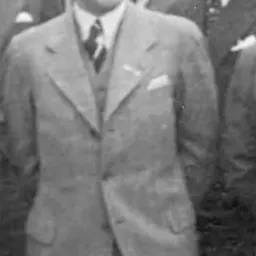
Lived 1874 – 1951 (aged 77). Karl Jarres was a German politician, industrialist, jurist and lawyer.
Karl Jarres (21 September 1874 – 20 October 1951) was a German lawyer and politician of the German People's Party (Deutsche Volkspartei, or DVP) during the Weimar Republic. From 1923 to 1924, he was the minister of the Interior and vice-chancellor of Germany. Jarres was also the long-serving mayor of Duisburg from 1914 to 1933. After the Nazis deposed him, he started a career in industry.
Early life Karl Jarres was born on 21 September 1874 in Remscheid, in the Prussian Rhine Province. His father, Rudolf Jarres (1842–1922) was a merchant. His mother was Maria Jarres (1849–1936), née Busch (daughter of merchant and Remscheid city treasurer Robert Busch). Karl studied law at London, Paris, Bonn and Berlin, and was awarded a Dr. jur. in 1897 at the University of Erlangen. After his legal clerkship, Jarres started working in municipal administration. He was Stadtassessor (1901) and then Beigeordneter (1903) at Düren. In 1907, he became Beigeordneter at Cologne. In 1910, he was elected mayor of Remscheid.
Jarres was married in Düren in 1903, to Freya (1880–1945), née Schüll, daughter of a paper manufacturer. They had two daughters.
During World War I Jarres was successful in securing food supplies for the city. During and after the Revolution he opposed the establishment of a far-left Räteherrschaft (rule by workers' and soldiers' councils), at the cost of being at times subject to physical violence. He joined the German People's Party (DVP) when it was created in 1918 (he was previously a member of the National Liberal Party) and remained a member until the DVP dissolved in 1933. However, Jarres never played a leading role in the party. He was also active in the Städtetag.
During the Occupation of the Ruhr in 1923 Jarres was deposed as mayor by the military authorities and served a deportation order by the Belgians. Since he ignored it, a military court sentenced him to two months in prison. After he was released, the Prussian and German governments appointed him Vertrauensmann for the occupied territory. He had become known nationwide for his steadfast stance against the occupation. Strongly nationalistic feeling (he was a Burschenschaft member) and a dedication to liberty made him one of the most ardent supporters of the Versackungspolitik (leaving sole responsibility for the Ruhr to the occupiers). After the end of the Second World War, he was instrumental in the rebuilding of the Ruhr industry. From 1942 to 1951, he was chairman of the supervisory board of Klöckner, because he was a close friend of Peter Klöckner for decades, who died in 1940.
Jarres died on 20 October 1951 at Duisburg.
Don’t just read it —
keep it.
Full-length biographies made to live with: read them, listen on the way to work, watch them tonight.
- E-book
- Audio
- Video
Instant download · yours to keep · every purchase keeps this site free
Important facts
People in Karl Jarres's life
Named in this biography and alive at the same time
Related people
Same field, nearest in time





Contemporaries
People whose lives overlapped Karl Jarres's


Frequently asked questions
Who was Karl Jarres?
German politician (1874–1951)
When was Karl Jarres born?
Karl Jarres was born on 21 September 1874 in Remscheid.
When did Karl Jarres die?
Karl Jarres died on 20 October 1951 in Duisburg.
What was Karl Jarres's occupation?
Karl Jarres was a politician, industrialist, jurist and lawyer.
What nationality was Karl Jarres?
Karl Jarres was German.
Sources & further reading
Cite this page
APA: Biography.guide. (2026). Karl Jarres. https://biography.guide/karl-jarres/
MLA: "Karl Jarres." Biography.guide, https://biography.guide/karl-jarres/.
Chicago: "Karl Jarres." Biography.guide. https://biography.guide/karl-jarres/.
Data last updated: 2026-09-20 · Spot an error? Report a correction.
Page generated 2026-09-27 05:18 UTC