
About Karl Gutzkow
Lived 1811 – 1878 (aged 67). Karl Gutzkow was a German journalist, writer, novelist, playwright, literary critic and philologist.
Karl Ferdinand Gutzkow ( in Berlin – in Sachsenhausen) was a German writer and dramatist who promoted political and social reformism. He studied philosophy and theology with Georg Wilhelm Friedrich Hegel and Friedrich Schleiermacher, and his early works, like the novel Maha-Guru, Geschichte eines Gottes, were satirical. His 1835 novel Wally, die Zweiflerin led to his imprisonment and suppression, marking the start of the Young Germany movement. His plays, especially Uriel Acosta (1847, based on Uriel da Costa), influenced German and Yiddish theater.
Life and work Upbringing and education Born to a poor Berlin war-office clerk, For the Augsburg Confession's tercentenary in June 1830, Hegel delivered an address in Latin as rector, declaring that Protestant Prussia reconciled religion, philosophy, and ethical life .
But news of the July Revolution in Paris stirred radical politics. But Menzel, wrote David Friedrich Strauss, tried "to muzzle the spirit of the times".
Gutzkow continued studies across the University of Jena, Heidelberg University, and the Ludwig-Maximilians-Universität München, publishing Briefe eines Narren an eine Närrin (1832, Hamburg) anonymously. He wrote a fantastic, satirical Tibetan romance novel, Maha-Guru, Geschichte eines Gottes (1833, Stuttgart, Cotta),
The Assembly sentenced Gutzkow to three months' imprisonment, barred him from editing in the German Confederation, and officially suppressed his work. This only amplified it. arguably the first German social novel. Der Zauberer von Rom is a social allegory of Roman Catholic life in southern Germany.
After Die Ritter vom Geiste, Gutzkow founded the journal Unterhaltungen am häuslichen Herd (1852–1865, after Dickens' Household Words).
About 1860: "Carte de visite" of Gutzkow, No. "1170" probably made by an anonymous copyist
Later life An 1864 epileptic seizure reduced his theatrical work, but he wrote the historical novels Hohenschwangau (1868) and Fritz Ellrodt (1872), plus Die Söhne Pestalozzis (1870, based on Kaspar Hauser) and the autobiographical sketches Lebensbilder (1870–1872). After another seizure, Gutzkow visited Italy in 1873 and then retired to the countryside near Heidelberg before returning to Frankfurt, where he died on 16 December 1878.
Legacy Gutzkow was among the first Germans to try to make a living by writing. He promoted the emancipation of the Jews in works like Uriel Acosta, which was translated to become a Yiddish theater staple. A reformer rather than a revolutionary, he grew more conservative with age and fell into neglect by 1910. His polemical work reflected generational struggles and shaped German thought.
Adaptations His five-act comedy Zopf und Schwert (1844) was twice adapted: the 1926 film Sword and Shield by Aafa-Film, and Edmund Nick's 1940 operetta Über alles siegt die Liebe (Love Conquers Everything) to 's libretto.
Don’t just read it —
keep it.
Full-length biographies made to live with: read them, listen on the way to work, watch them tonight.
- E-book
- Audio
- Video
Instant download · yours to keep · every purchase keeps this site free
Important facts
People in Karl Gutzkow's life
Named in this biography and alive at the same time
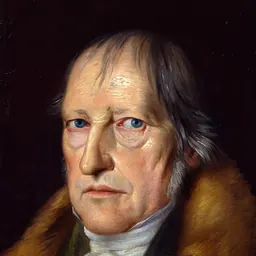
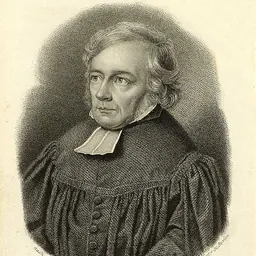
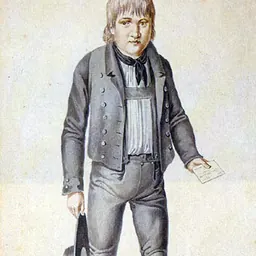
Related people
Same field, nearest in time

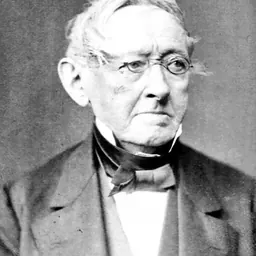

Contemporaries
People whose lives overlapped Karl Gutzkow's




Frequently asked questions
Who was Karl Gutzkow?
German writer (1811-1878)
When was Karl Gutzkow born?
Karl Gutzkow was born on 17 March 1811 in Berlin.
When did Karl Gutzkow die?
Karl Gutzkow died on 16 December 1878 in Frankfurt.
What was Karl Gutzkow's occupation?
Karl Gutzkow was a journalist, writer, novelist, playwright, literary critic and philologist.
What nationality was Karl Gutzkow?
Karl Gutzkow was German.
Sources & further reading
Cite this page
APA: Biography.guide. (2026). Karl Gutzkow. https://biography.guide/karl-gutzkow/
MLA: "Karl Gutzkow." Biography.guide, https://biography.guide/karl-gutzkow/.
Chicago: "Karl Gutzkow." Biography.guide. https://biography.guide/karl-gutzkow/.
Data last updated: 2026-09-20 · Spot an error? Report a correction.
Page generated 2026-09-27 05:26 UTC