
About Karl Fritzsch
Lived 1903 – 1945 (aged 41). Karl Fritzsch was a German military officer, concentration camp guard, politician, roofer and zyklon B.
Karl Fritzsch (10 July 1903 – disappeared 2 May 1945) was a German SS official who served as deputy and acting commandant at the Auschwitz concentration camp from 1940 to 1941. He is best known as the official responsible for the death of priest Maximilian Kolbe and, according to Rudolf Höss, first suggesting using poisonous gas Zyklon B and experimenting with gas chambers for the purpose of mass murder at Auschwitz. Fritzsch served at a number of Nazi concentration camps until 1944 when he was implicated in a corruption scandal and dismissed from his positions. Fritzsch was sent to front line duty and is believed to have died at the Battle of Berlin on 2 May 1945, but this is unconfirmed, and his fate is unknown.
Early life Karl Fritzsch was born on 10 July 1903 in Nassengrub in Bohemia in Austria-Hungary (present-day Mokřiny, Czech Republic) into a Bohemian German family. His father was a stove builder and moved constantly on work assignments, so Fritzsch never received formal education. For some years, he worked as a sailor for First Danube Steamship Company, which operated riverboats on the Danube. Fritzsch's marriage in 1928 to Franziska Stich produced three children but ended in divorce in 1942.
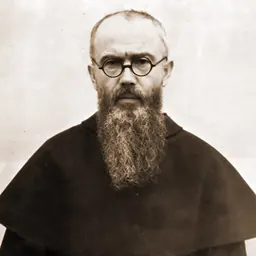
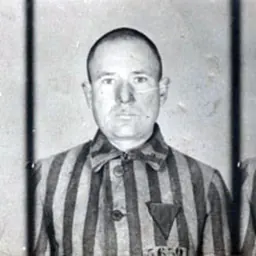
On 29 July 1941, when a headcount found that three prisoners were missing, Fritzsch sentenced 10 remaining prisoners to immurement. One of the condemned, Franciszek Gajowniczek, was reprieved when a fellow prisoner, Franciscan priest Maximilian Kolbe, offered to take his place. After over two weeks of starvation, only Kolbe and three others remained alive. They were killed in the underground bunker by lethal injection. Kolbe was later canonized by Pope John Paul II for his actions.
Fritzsch was also fond of psychological torture. Former Auschwitz prisoner Karol Świętorzecki recalled the first Christmas Eve behind the camp barbed wire, in 1940, was also one of the most tragic. "The Nazis set up a Christmas tree, with electric lights, on the roll-call square. Beneath it, they placed the bodies of prisoners who had died while working or frozen to death at roll call. Lagerführer Karl Fritzsch referred to the corpses beneath the tree as 'a present' for the living, and forbade the singing of Polish Christmas carols."
According to testimony of Höss, it was also Fritzsch who came up with the idea of using Zyklon B for the purpose of mass murder at Auschwitz. While Höss was on an official trip in late August 1941, Fritzsch ordered the killing of Soviet prisoners of war by being locked in cells in the basement of the Bunker. Fritzsch tested Zyklon B inside the cells, which were not air-tight, subjecting the victims to even more torturous death. He repeated the tests on additional victims in the presence of Höss. According to Höss, the preferred method for the mass murders in Auschwitz using Zyklon B was devised on site.
On 4 May 2015, Dutch journalist published an article on his investigation of Fritzsch's disappearance. In it he cites a report from 1966 by the Central Office of the State Justice Administrations for the Investigation of National Socialist Crimes in which Berlin inhabitant Gertrud Berendes claims that Fritzsch had shot himself on 2 May 1945 in the basement of a house at Sächsische Strasse 42 in Berlin. She mentioned that her father and a neighbour had buried Fritzsch in the Preußenpark and she had sent his personal belongings to his wife. In a separate report from 1966 by the Kriminalpolizei Regensburg, Fritzsch's wife states that she had no reason to doubt her husband's death and that she had received his wedding ring and personal letters. However, Duk's book De Beul en de Heilige on Fritzsch that was supposed to be launched first at the end of 2015 and then in 2016 at publisher Prometheus, was postponed indefinitely and has since been removed from the publishers' list of forthcoming books.
Don’t just read it —
keep it.
Full-length biographies made to live with: read them, listen on the way to work, watch them tonight.
- E-book
- Audio
- Video
Instant download · yours to keep · every purchase keeps this site free
Important facts
People in Karl Fritzsch's life
Named in this biography and alive at the same time


Related people
Same field, nearest in time



Contemporaries
People whose lives overlapped Karl Fritzsch's
Frequently asked questions
Who was Karl Fritzsch?
SS officer (1903-1945)
When was Karl Fritzsch born?
Karl Fritzsch was born on 10 July 1903 in Mokřiny.
When did Karl Fritzsch die?
Karl Fritzsch died on 2 May 1945 in Berlin.
What was Karl Fritzsch's occupation?
Karl Fritzsch was a military officer, concentration camp guard, politician, roofer and zyklon B.
What nationality was Karl Fritzsch?
Karl Fritzsch was German.
Sources & further reading
Cite this page
APA: Biography.guide. (2026). Karl Fritzsch. https://biography.guide/karl-fritzsch/
MLA: "Karl Fritzsch." Biography.guide, https://biography.guide/karl-fritzsch/.
Chicago: "Karl Fritzsch." Biography.guide. https://biography.guide/karl-fritzsch/.
Data last updated: 2026-09-20 · Spot an error? Report a correction.
Page generated 2026-09-27 05:24 UTC