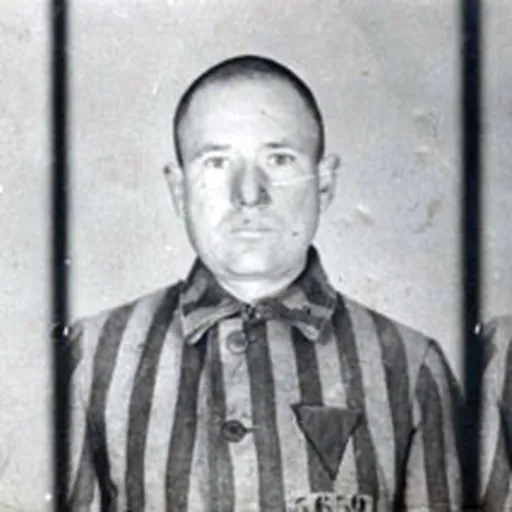
Franciszek Gajowniczek
Polish Army officer
About Franciszek Gajowniczek
Lived 1901 – 1995 (aged 93). Franciszek Gajowniczek was a Polish career soldier, known for Maximilian Kolbe.
Franciszek Gajowniczek (15 November 1901 – 13 March 1995) was a Polish army sergeant whose life was saved at the Auschwitz concentration camp by Catholic priest Maximilian Kolbe, who volunteered to die in his place.
Gajowniczek had been sent to Auschwitz concentration camp from a Gestapo prison in Tarnów. He was captured while crossing the border into Slovakia after the defeat of the Modlin Fortress during the 1939 invasion of Poland by Nazi Germany. Gajowniczek survived the war and afterward became a lay missionary, dedicating his life to spreading the story of Kolbe's sacrifice.
Biography Franciszek Gajowniczek, a Roman Catholic, was born in Strachomin near Mińsk Mazowiecki. After the reconstitution of sovereign Poland, he moved to Warsaw in 1921, married, and had two sons. He was a professional soldier, a Polish army sergeant, who took part in the defense of Wieluń as well as Warsaw in September 1939 during the 1939 invasion of Poland by Nazi Germany. After the Battle of Modlin Gajowniczek was captured by the Gestapo in Zakopane while crossing the border into Slovakia and sentenced to forced labour in Tarnów.
Gajowniczek was transferred to Auschwitz on 8 October 1940. He and Kolbe met as inmates of Auschwitz in May 1941. When a camp prisoner appeared to have escaped, SS-Hauptsturmführer Karl Fritzsch ordered that ten other prisoners be executed by starvation in reprisal. Gajowniczek (prisoner number 5659) was one of those selected at roll call. When priest Maximilian Kolbe heard Gajowniczek cry out in agony over the fate of his family, he offered himself instead, for which he was later canonized. The switch was permitted. After two weeks, Kolbe (prisoner number 16670) and the three other survivors were put to death by an injection of carbolic acid.
After World War II
On 17 October 1971, Gajowniczek was a special guest of Pope Paul VI in the Vatican when Maximilian Kolbe was beatified for his martyrdom. In 1972, Time magazine reported that over 150,000 people made a pilgrimage to Auschwitz to honor the anniversary of Kolbe's beatification. One of the first to speak was Gajowniczek, who declared "I want to express my thanks for the gift of life." He was buried at Niepokalanów, a religious community founded by Maximilian Kolbe, 53 years after Kolbe saved his life. He was survived by his second wife, Janina.
Don’t just read it —
keep it.
Full-length biographies made to live with: read them, listen on the way to work, watch them tonight.
- E-book
- Audio
- Video
Instant download · yours to keep · every purchase keeps this site free
Important facts
People in Franciszek Gajowniczek's life
Named in this biography and alive at the same time
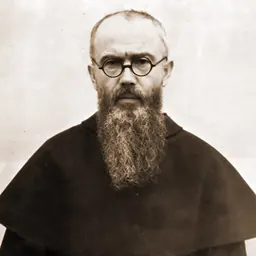

Related people
Same field, nearest in time

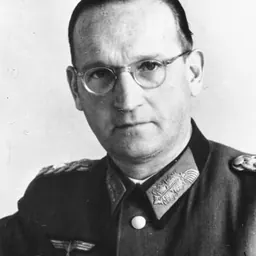



Contemporaries
People whose lives overlapped Franciszek Gajowniczek's




Frequently asked questions
Who was Franciszek Gajowniczek?
Polish Army officer (1901–1995)
When was Franciszek Gajowniczek born?
Franciszek Gajowniczek was born on 15 November 1901 in Strachomin.
When did Franciszek Gajowniczek die?
Franciszek Gajowniczek died on 13 March 1995 in Brzeg.
What was Franciszek Gajowniczek's occupation?
Franciszek Gajowniczek was a career soldier.
What was Franciszek Gajowniczek known for?
Franciszek Gajowniczek was known for Maximilian Kolbe.
What nationality was Franciszek Gajowniczek?
Franciszek Gajowniczek was Polish.
Sources & further reading
· Wikipedia: Franciszek Gajowniczek
· DBpedia: Franciszek Gajowniczek
Cite this page
APA: Biography.guide. (2026). Franciszek Gajowniczek. https://biography.guide/franciszek-gajowniczek/
MLA: "Franciszek Gajowniczek." Biography.guide, https://biography.guide/franciszek-gajowniczek/.
Chicago: "Franciszek Gajowniczek." Biography.guide. https://biography.guide/franciszek-gajowniczek/.
Data last updated: 2026-09-22 · Spot an error? Report a correction.
Portrait: Wikimedia Commons · author & licence
Page generated 2026-09-27 05:02 UTC