
About Karel Plicka
Lived 1894 – 1987 (aged 92). Karel Plicka was a Czech anthropologist, photographer, film director, musicologist, ethnographer and teacher.
Karel Plicka (; 14 October 1894 – 6 May 1987) was a Czechoslovak photographer, film director, cinematographer, folklorist and pedagogue. He is considered a founder of Slovak film education and filmmaking. He helped establish the genre of ethnographic film in Czechoslovakia.
Early life Plicka was born to Czech parents in Vienna. He spent his childhood in Vienna and in Česká Třebová for four years between 1900 and 1909. Following his graduation at the Teachers Institute in Hradec Králové (1909–1913), Plicka studied violin and music theory privately in Prague and Berlin. His early interest in music resulted in founding various choirs in Úpice and Nové Město nad Metují, and most importantly he co-founded the choir of the Czech Philharmonic, together with conductor Václav Talich and composer Jaroslav Křička. Additionally, Plicka focused his interest on collecting Slovak folk songs. From 1919 to 1938, he managed to collect 64,000 melodies and about 100,000 texts of folk songs. His ethnographic works made during that period include over 22,000 photographs and 30 km of film material. During his travels, Plicka also visited exiled Slovaks in Romania, Austria, Yugoslavia, and the United States. His stays were arranged by Matica slovenská in Martin.
Career
In the late 1920s, Plicka began using a camera on his travels and contributed photographs to the Prague illustrated weekly Pestrý týden. He created his first silm films in 1928 (Za Slovenským ludom) and 1929 (Po horách, po dolách). The latter received a Gold Medal at the 1st Venice International Film Festival, held in 1932. In the 1930s and 40s, he collaborated as an expert assistant in production of Slovak and Soviet films (e.g. Jánošík (1935) by Martin Frič and films by Ilya Kopalin and Vasily Belyayev). In 1938, he founded the courses of photography and cinematography at the Škola umeleckých remesiel (School of Applied Arts) in Bratislava. of which he became the first dean.
However, Plicka left FAMU in 1950 due to health issues, and devoted himself mainly to landscape and architectural photography. His photographic and ethnographic work was published in many books and was highly regarded both by public and experts. In his books, Plicka concentrated on documenting folk traditions, Slovak landscape, and Prague. During his life, Plicka received the highest state awards, such as Řád práce (Order of Work) (1954), National Artist (1968), Prize for the Best Book of the Year (1971), National Prize of the Slovak Socialist Republic (1975) and Order of Tomáš Garrigue Masaryk (in memoriam, 1991).
Karel Plicka died in 1987 in Prague. He was buried in the Slovak town of Martin. Since 1988, there has been a museum dedicated to his work in the Slovak municipality of Blatnica.
Books of work by Plicka These lists are not complete.
Photography Slovensko / Slovakei / Slovaquie / Slovakia. Martin: Vydala Matica Slovenská, 1938. City of baroque and gothic: 208 photographs. London: Lincolns-Prager, 1946. Views of Prague. Prague en images / Prague in photographs. Prague: Orbis, 1950. Prague in photographs / Prague en images / Praga w Obrazach. Prague: Artia, 1954. Die Slowakei Prag - Tschechoslowakei, 1953. Praga regia: Das königliche Prag. Royal Prague. Prague royale. Prague: Orbis, 1955. Prague in photographs. Prague: Artia, 1961. Prague: The golden city. London: Hamlyn, 1965. žijeme v Praze. Prague: Orbis, 1964 VLTAVA. Prague: Orbis, 1967. 7 procházek Prahou: fotografický pru̇vodce městem. Prague: Orbis, 1966. Levoča: klenotnica umeleckých pamiatok. Martin: Vydavatel̕stvo Osveta, 1980. Československo. Prague: Orbis, 1974.
Other Eva Studeničová spieva: z piesňovej zbierky Karola Plicku. Martin: Vydateľstvo Osveta, 1984. A collection of folk songs.
Filmography Za slovenským ľudom (1928) Po horách, po dolách (1929) Jaro na Podkarpatské Rusi (1929) Zem spieva (1933) Prezident republiky Dr. Beneš u nás (1935) Za Slovákmi od New Yorku po Mississippi (1936) Věčná píseň (1941) Praha barokní Chebsko (1943) Pán prezident na Slovensku (1945) Roľnícky deň vo Zvolene (1946)
Don’t just read it —
keep it.
Full-length biographies made to live with: read them, listen on the way to work, watch them tonight.
- E-book
- Audio
- Video
Instant download · yours to keep · every purchase keeps this site free
Important facts
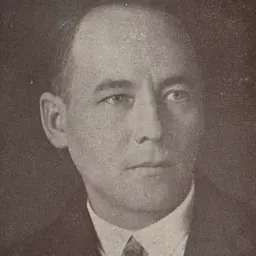
People in Karel Plicka's life
Named in this biography and alive at the same time




Related people
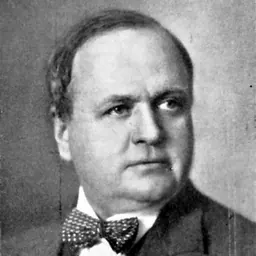
Same field, nearest in time


Contemporaries
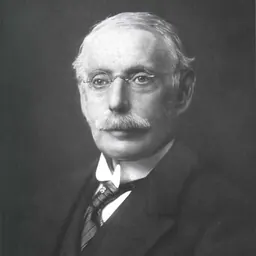
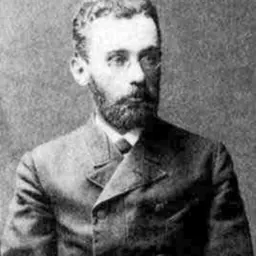
People whose lives overlapped Karel Plicka's

Frequently asked questions
Who was Karel Plicka?
Czech photographer and director (1894–1987)
When was Karel Plicka born?
Karel Plicka was born on 14 October 1894 in Vienna.
When did Karel Plicka die?
Karel Plicka died on 6 May 1987 in Prague.
What was Karel Plicka's occupation?
Karel Plicka was an anthropologist, photographer, film director, musicologist, ethnographer and teacher.
What nationality was Karel Plicka?
Karel Plicka was Czech.
Sources & further reading
Cite this page
APA: Biography.guide. (2026). Karel Plicka. https://biography.guide/karel-plicka/
MLA: "Karel Plicka." Biography.guide, https://biography.guide/karel-plicka/.
Chicago: "Karel Plicka." Biography.guide. https://biography.guide/karel-plicka/.
Data last updated: 2026-09-20 · Spot an error? Report a correction.
Page generated 2026-09-27 05:21 UTC